Interactive · 4 questions
+5 contributors



Multiplication is another prong on the equation-solving fork, along with division, subtraction, and addition. (Yes, that analogy seems a bit odd, but at least it'll be hard to forget).

Image source: By ArnoldReinhold CC BY-SA 4.0, via Wikimedia Commons
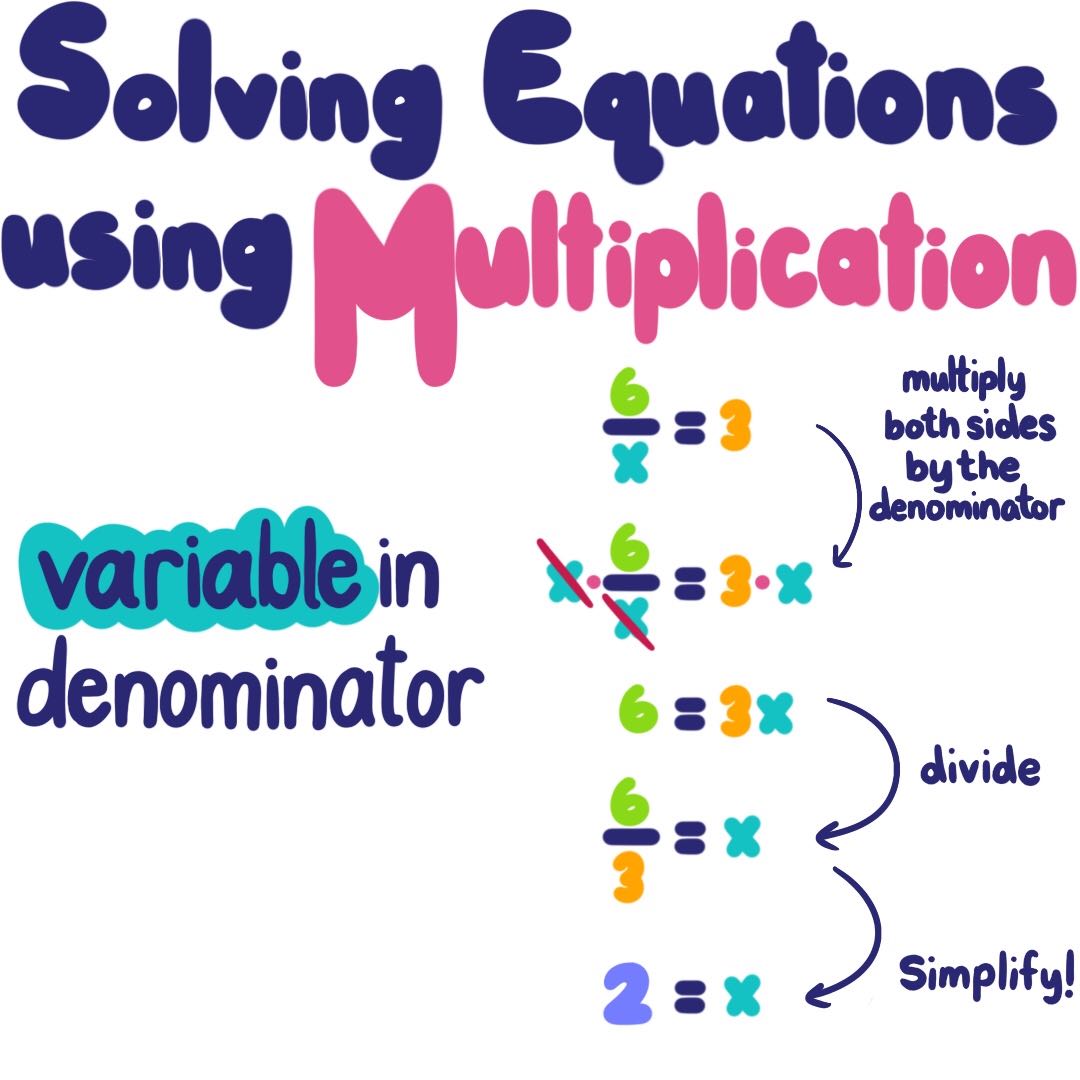
Multiplication and division are inverse operations. This means that they are opposite processes. Another way to think about it is that they undo each other. So, whenever you have an equation with a fraction (which is basically built-in division), using multiplication can help get rid of that and make your equation easier to solve.
Let's look at a few examples of using multiplication to solve equations.
This explanation includes:
- One-step equations
- Two-step equations
- Two step equations with multiple operations (addition and subtraction as well as multiplication)
Solving one-step equations using multiplication
Take a look at this one-step equation:
What is the value of ?
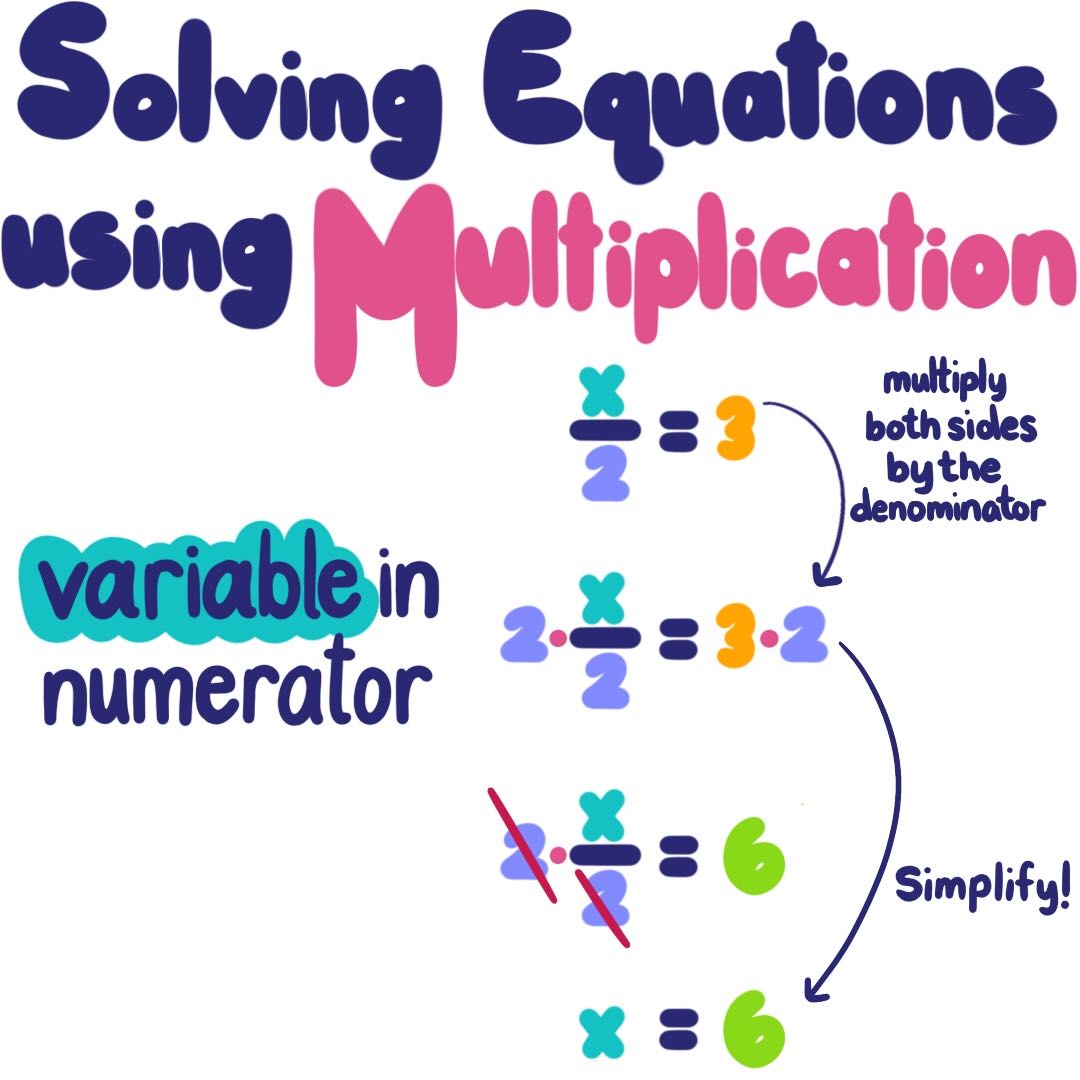
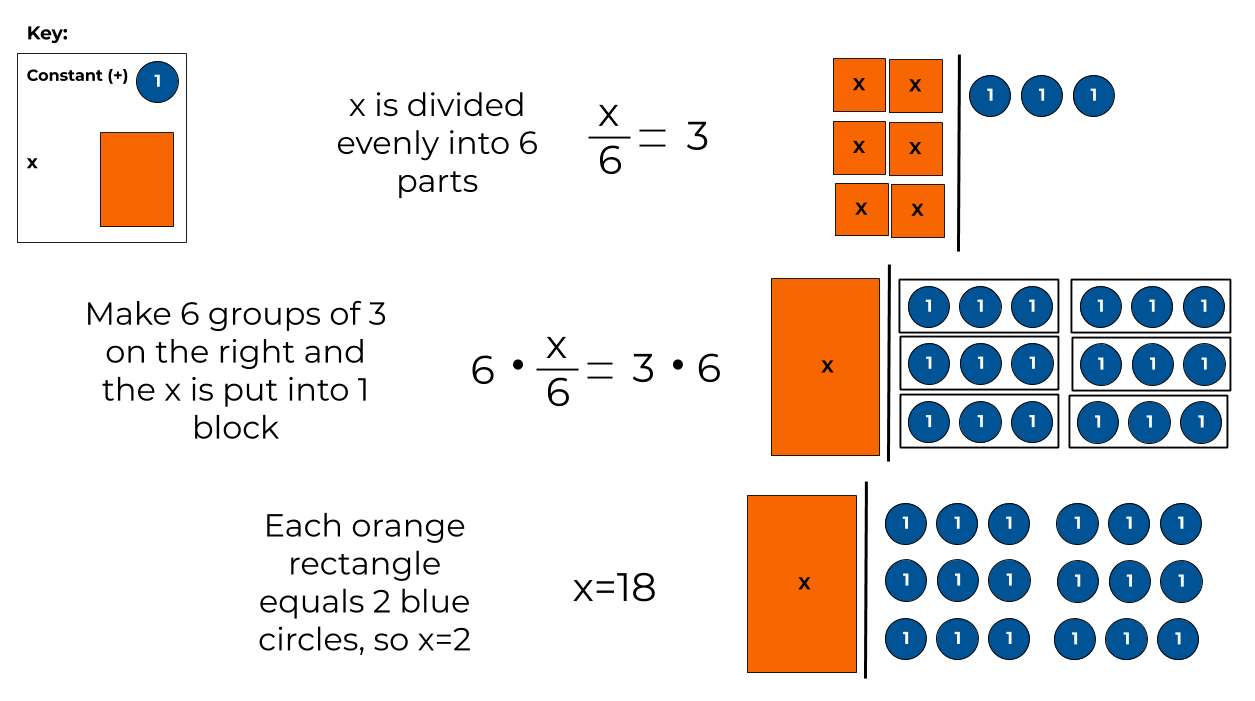
There's a fraction there which, like we mentioned above, is basically like division built in to the equation. The way to eliminate this fraction is to apply the inverse operation: multiply each side of the equation by .
Let's look at how we would model this.
Solving two-step equations using multiplication
Let's make our equation a little more challenging by adding a second step:
What's the first thing we need to do to solve this equation? (Think of the Order of Operations)
Before we can do our multiplication, we need to get rid of the hanging out next to the fraction.
What is the value of ?
Now we can multiply to solve the equation!
Solving two-step equations using multiplication and other operations
For the last example, let's add in another operation to our equation:
We've got parentheses looking back at us now. We need to remember PEMDAS here and take care of those parentheses first by using the distributive property.
(Note that we multiplied the numerator by but not the denominator. It helps to think about the outside the parentheses as "").
Now we are set to isolate the term by itself on one side of the equation.
What is the value of ?
We can (almost) finish solving the equation by multiplying both sides by :
The very last thing to do, in order to get totally alone, is to divide both sides of the equation by .