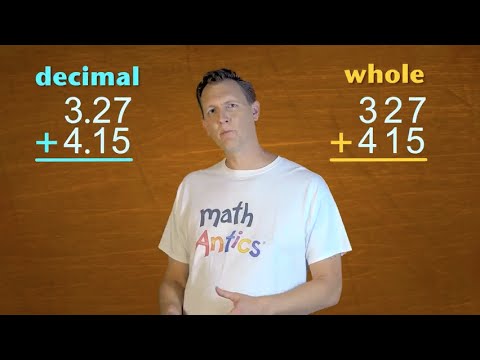
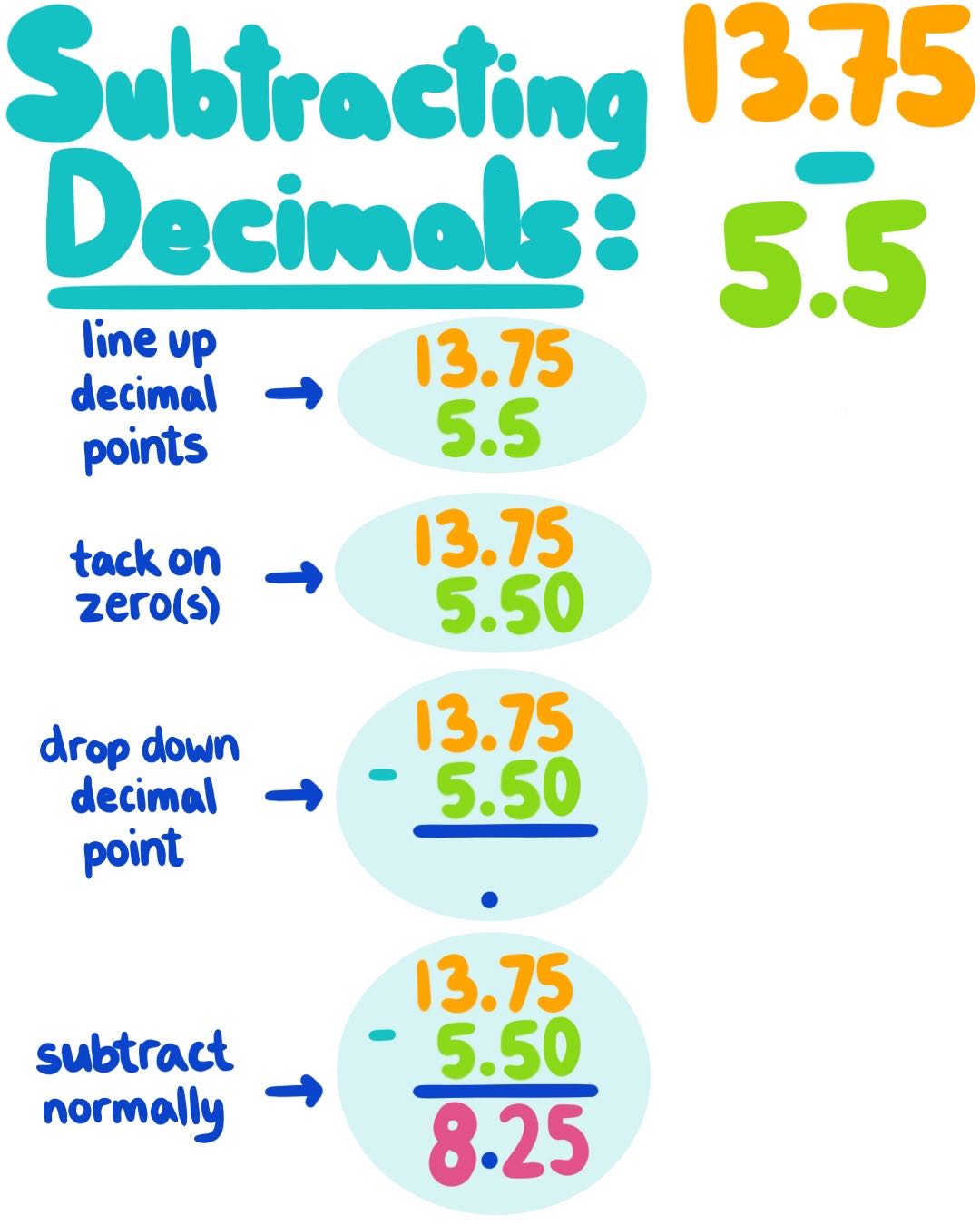
Subtracting decimals works the same way as subtracting whole numbers. For decimals with multiple digits (or decimals that are attached to whole numbers), line up the numbers by place value and then subtract column by column.
The Steps
Subtracting multi-digit numbers can be tricky, so here are some steps:
- Line up the numbers by their decimal point
- Write the decimal point in the same place on your answer line and add 0's to the end of the shorter number so that they're the same length.
- Subtract the numbers column by column, starting with the rightmost digit and moving left.
Let's try it on 32.1−5.986.
Step 1: Line up the numbers.
That's petty simple. Just find the decimal point, then stack the numbers on top of each other so that the decimal points line up.
32−5.1.986
Step 2: Set up the numbers.
Now, just add 0's to the end of the shorter number (in this case, 32.1) so that both numbers are the same length, and find the spot for the decimal point on the line where you're going to write the answer.
32−5.100.986.
Step 3: Subtract column by column.
Now, the actual subtraction begins! To subtract multi-digit numbers, we just subtract each place individually, moving from right to left in the numbers.
In this situation, we'll have to borrow from places with higher value in the number. To do this, we essentially "steal" from the place in the number that's one above the one you're subtracting. For the problem we're doing, that would be the hundredth place...but that's 0 too! So, we have to move up to the tenths place, steal the 1, and sort of cascade down so that we end up with "9" in the hundredths place and "10" in the thousandths place. 10−6=4, so we get 4 in the thousandths place.
We can keep using this strategy to move leftward through the number until we get:
32−526.100.986.114
Done!