Read · 2 min
What is a Barometer?
A barometer is an instrument that measures atmospheric pressure. On average, at sea level, the atmospheric pressure is 1 atm. However, the atmospheric pressure can fluctuate due to weather and other environmental changes.
Most often barometers are used to indicate changes in the weather. The greater the pressure changes, the greater the weather will change. A quick decrease in pressure indicates that rain is likely. A rapid increase in pressure indicates that the weather is improving.
Types of Barometers
-
Water barometer: sometimes called a "weather glass" or weather ball barometer. This apparatus is a sealed container with water inside the main chamber. Attached to the chamber is a smaller arm or spout which starts below the water level and extends above the water level. The spout is open to air while the main water container is sealed under a single air pressure. If the outside air pressure is lower, the water level in the spout will rise. If the outside pressure is higher, water in the spout will decrease.
-
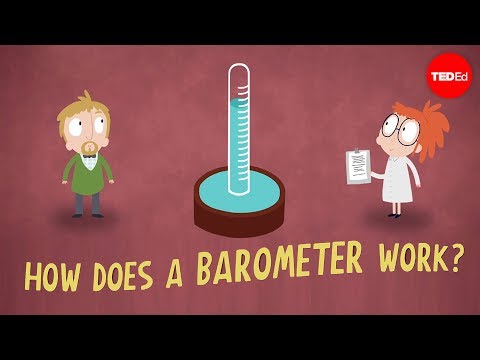
Mercury barometer: a simple mercury barometer has a glass tube placed in an open basin. The tube is closed at the top and the basin is filled with elemental mercury. Remember, it's a liquid at room temperature. When the atmospheric pressure increases, mercury moves into the tube. When the pressure decreases, mercury moves out of the tube and into the basin. This type of measurement is why we have the units, millimeters of mercury (mmHg). We measure the length that mercury moves in its tube. 760 mmHg is equal to 1 atm.
-
Aneroid barometer: this type of barometer does not use a liquid. This instrument has an internal component called an aneroid capsule. The capsules are made of a copper-beryllium metal alloy. The capsules are evacuated which means they contain no matter or air inside. Sometimes a small spring is placed inside each capsule to prevent it from collapsing. Several of these capsules are stacked on each other. When changes in pressure occur, it causes the capsules to expand or contract. This movement causes the mechanical components of the barometer to move. The movement is displayed on the face of the aneroid and is usually indicated with a needle.