Read · 1 min
Fermat's Theorem states that all relative extrema of a function lie at critical numbers.
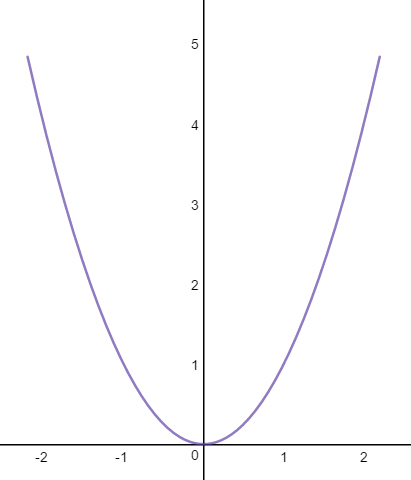
Be careful, though; the converse of Fermat's Theorem does not hold.
A critical number of a function is a number such that or is undefined.
We will prove the result only for a local maximum, and the local minimum will follow by a similar argument.
Suppose for the sake of contradiction that is either positive or negative.
By definition, a function has a local maximum at if there exists some such that for all such that .
Also by definition, for all there exists some such that: for all such that .
Take such that is less than both and .
Thus, we know that and .
Therefore, .
This means that for all .
This means that , since we assumed that .
Now, take such that is less than both and .
Thus, we know that and .
Therefore, .
This means that for all .
This means that , since we assumed that .
We just reached the conclusion that and simultaneously. This is a contradiction!
Thus, our original assumption was incorrect, and is either or undefined.