
Illustrated · 1 min

+1 contributors

DNA vs RNA
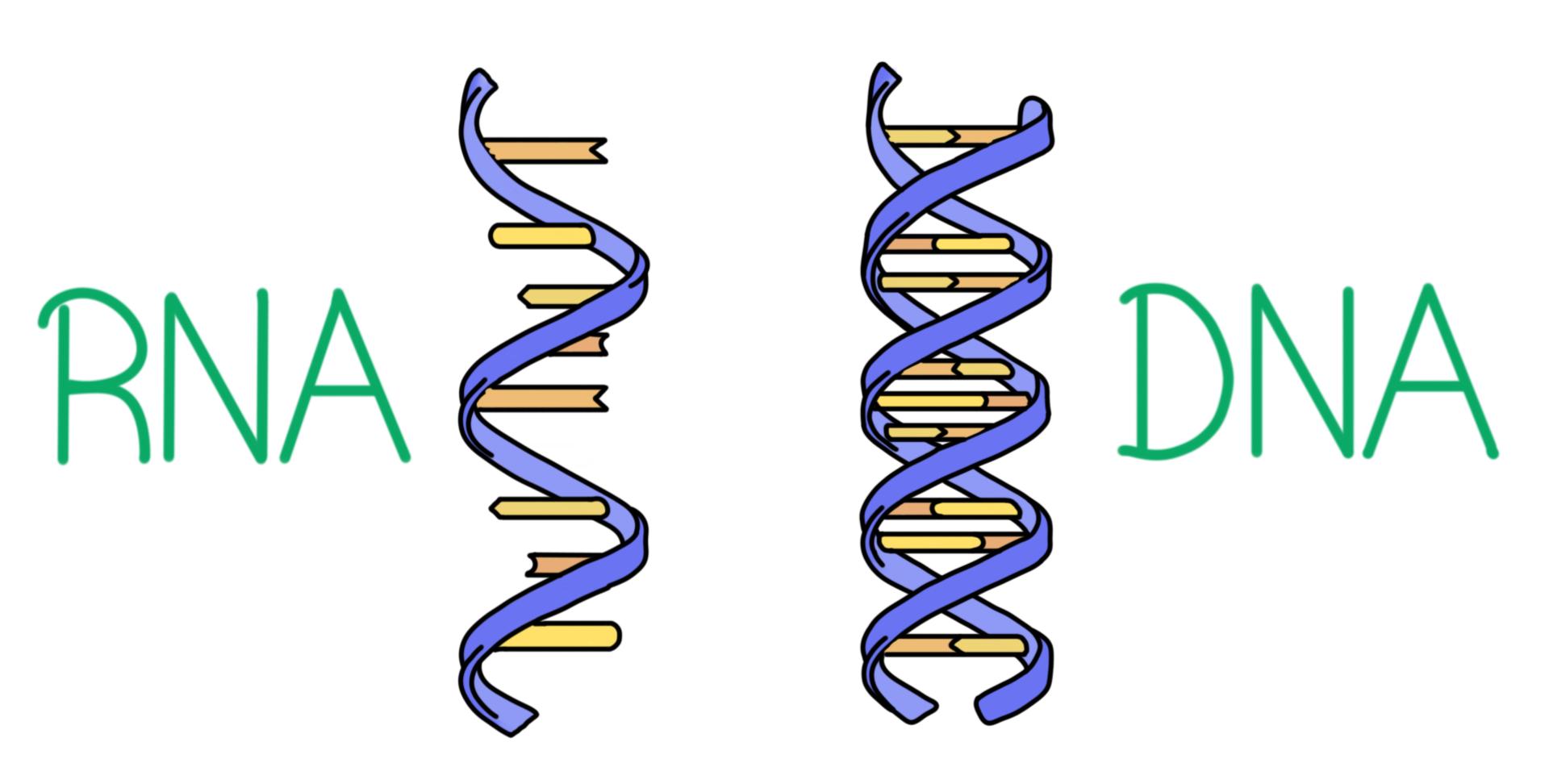
Image source: By Gabi Slizewska
Functions:
DNA (deoxyribonucleic acid) and RNA (ribonucleic acid) are very similar molecules that serve very different functions. DNA is responsible for long term storage of the genetic code. It resides in the nucleus of eukaryotic cells. RNA, on the other hand, is responsible for several important processes including transporting the genetic information found in DNA to other sites in the cell where it can be used to make proteins. It is found in the cytoplasm of a cell.
Structures:
Despite their different jobs, DNA and RNA have almost the same basic structure. Each one is made up of nucleotides. These tiny subunits are made of a sugar, nitrogen base, and phosphate group.

Image source: By Gabi Slizewska
The differences start to show up when we take a closer look at their structures.
The most obvious difference is that DNA is a double-stranded molecule, while RNA is single-stranded. DNA is also much longer than RNA. An entire chromosome is actually just one molecule of DNA.
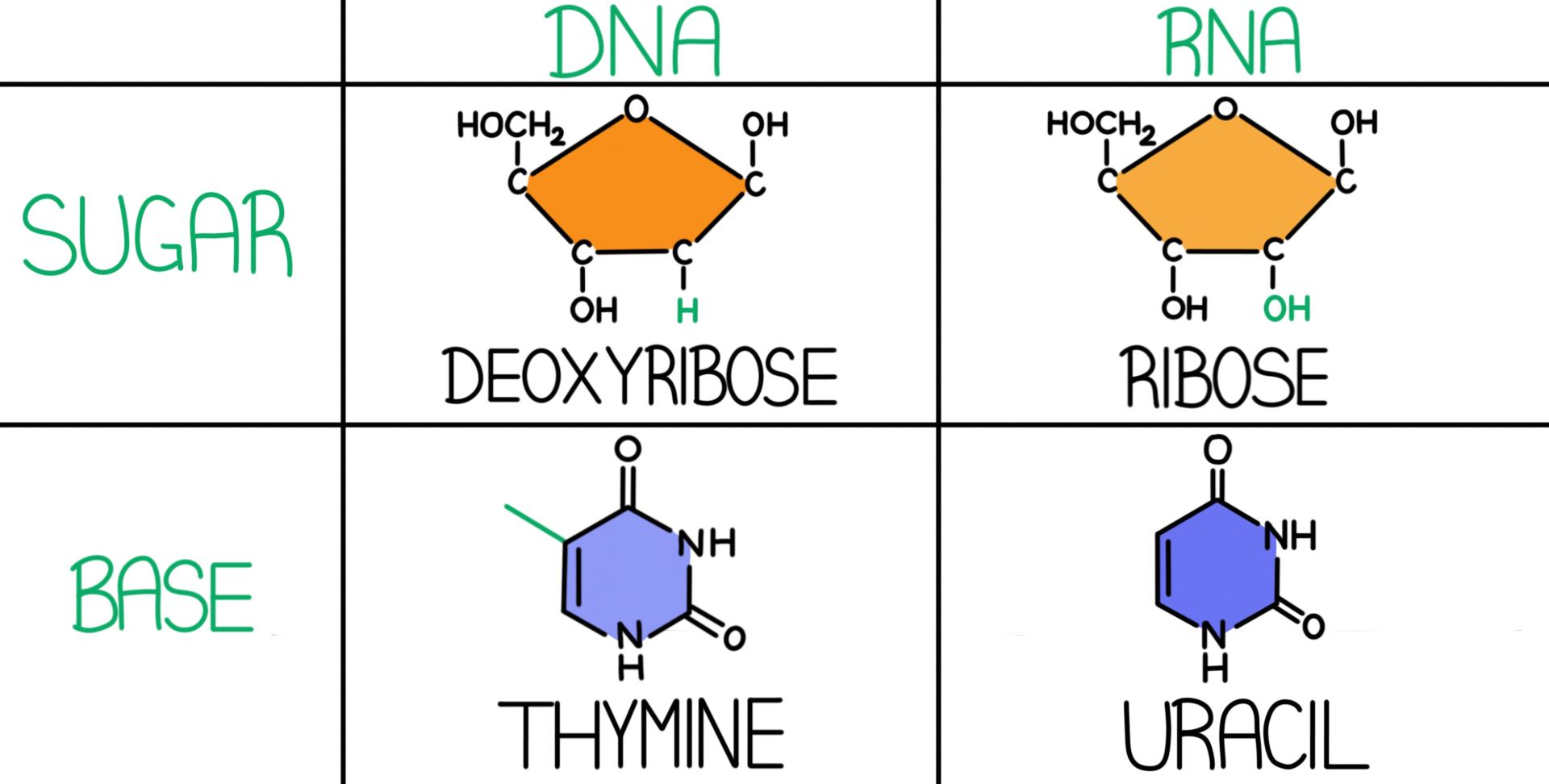
Image source: By Gabi Slizewska
While both DNA and RNA have sugar molecules in their subunits, those sugars are slightly different. DNA uses deoxyribose, but RNA uses ribose, which has an extra hydroxyl group tacked on.
DNA and RNA also have nearly identical nitrogenous bases. Both have the bases adenine, cytosine, and guanine. However, DNA uses a fourth base called thymine. RNA's fourth base is uracil. The only difference here is that uracil is missing a methyl group .




