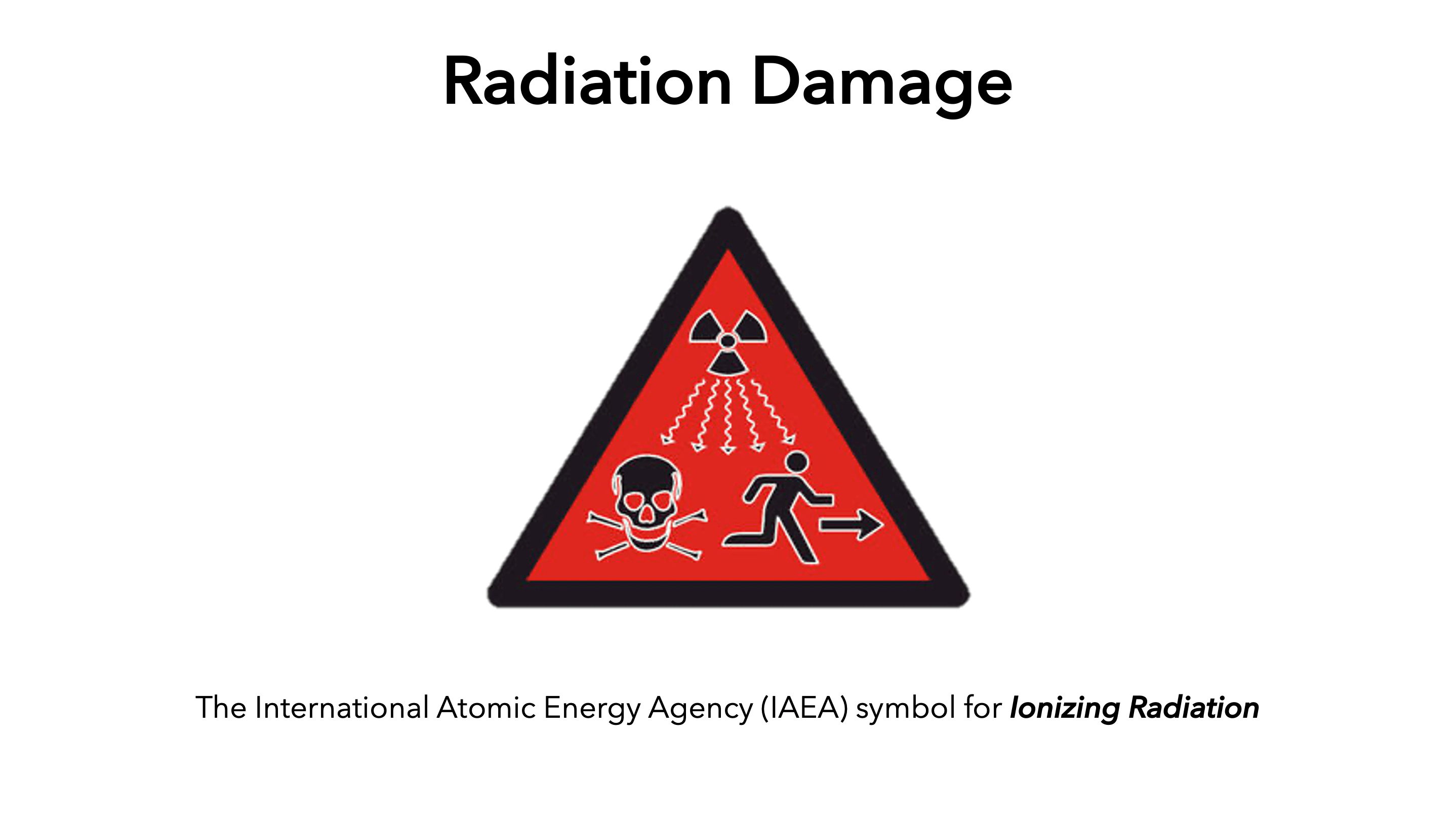
Radiation sickness is like something out of a horror movie. You can't see it! The only way to know you're exposed is with a Geiger counter or dosimeter. Even worse, you don't know when you'll get sick. Some symptoms can happen within minutes. But sometimes, they can take weeks to manifest.
Acute Radiation Snydrome
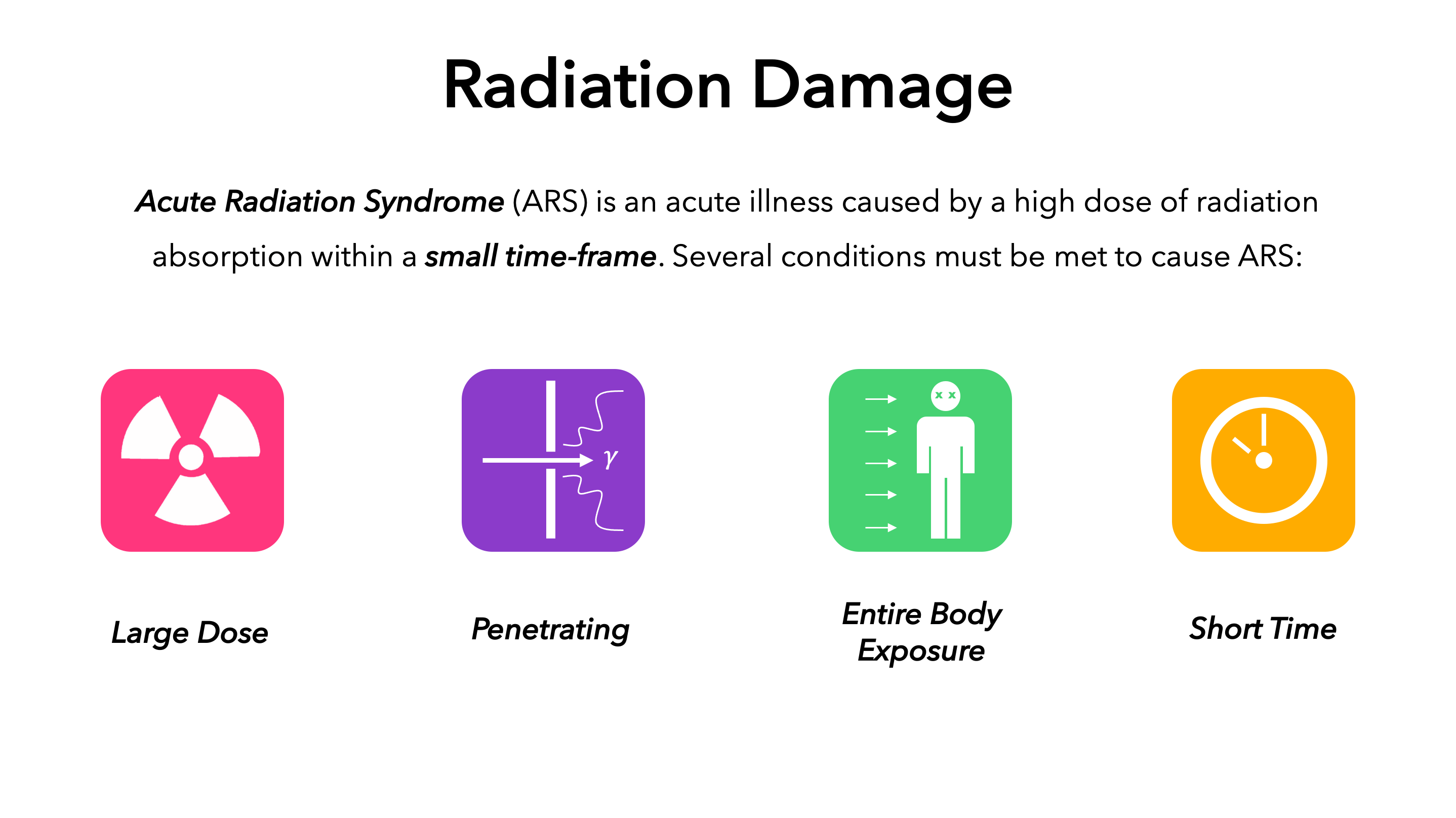
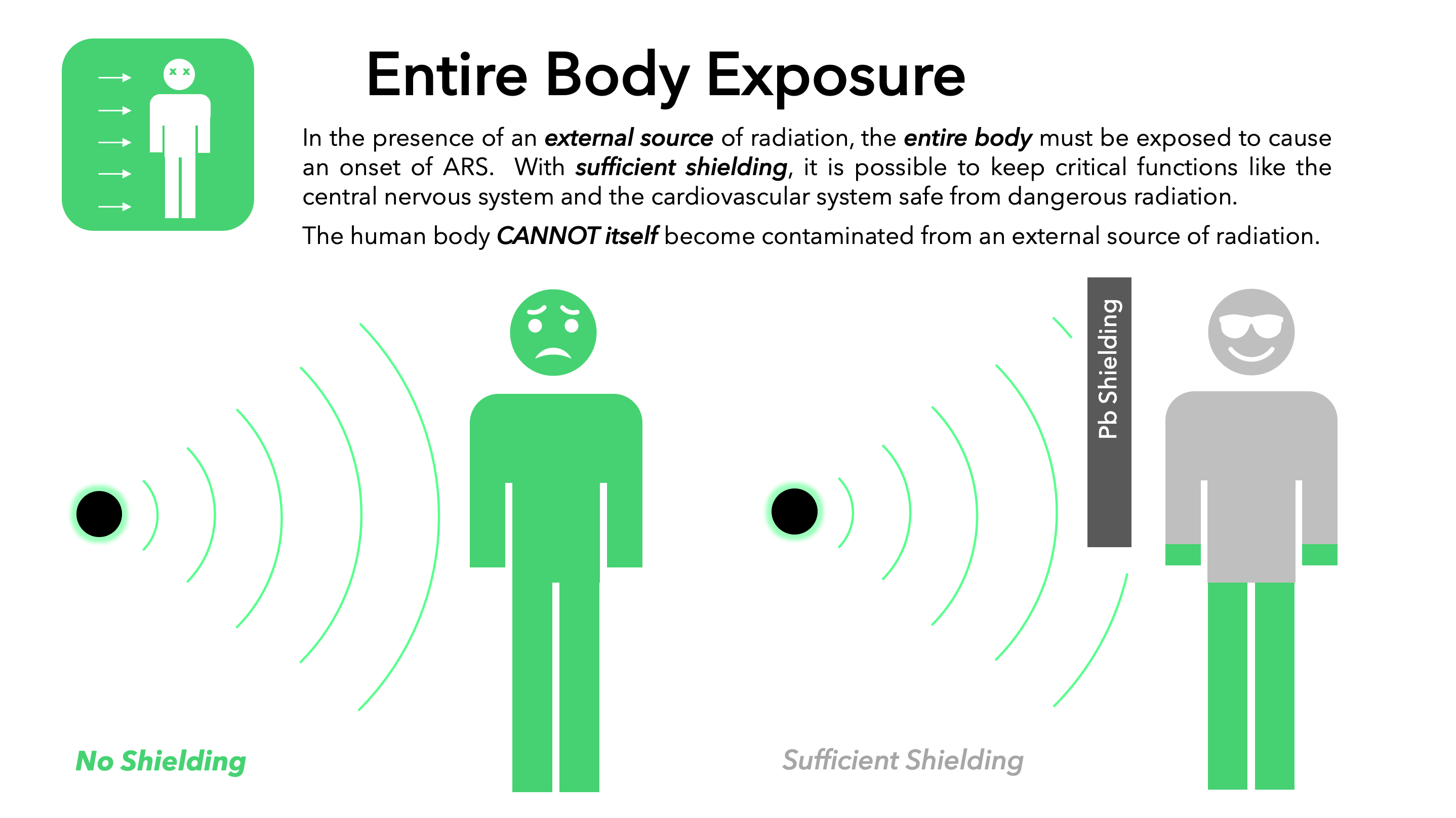
What you see in movies or on television is Acute Radiation Syndrome (ARS). ARS comes from high-intensity penetrating radiation. Often, the exposure covers the full body in a short period. So, what types of radiation are penetrating? The main concerns are beta decay, gamma decay, x-rays, and neutrons. Let's look at each type of radiation. Then we'll examine the dosage and symptoms.
Penetrating Radiation
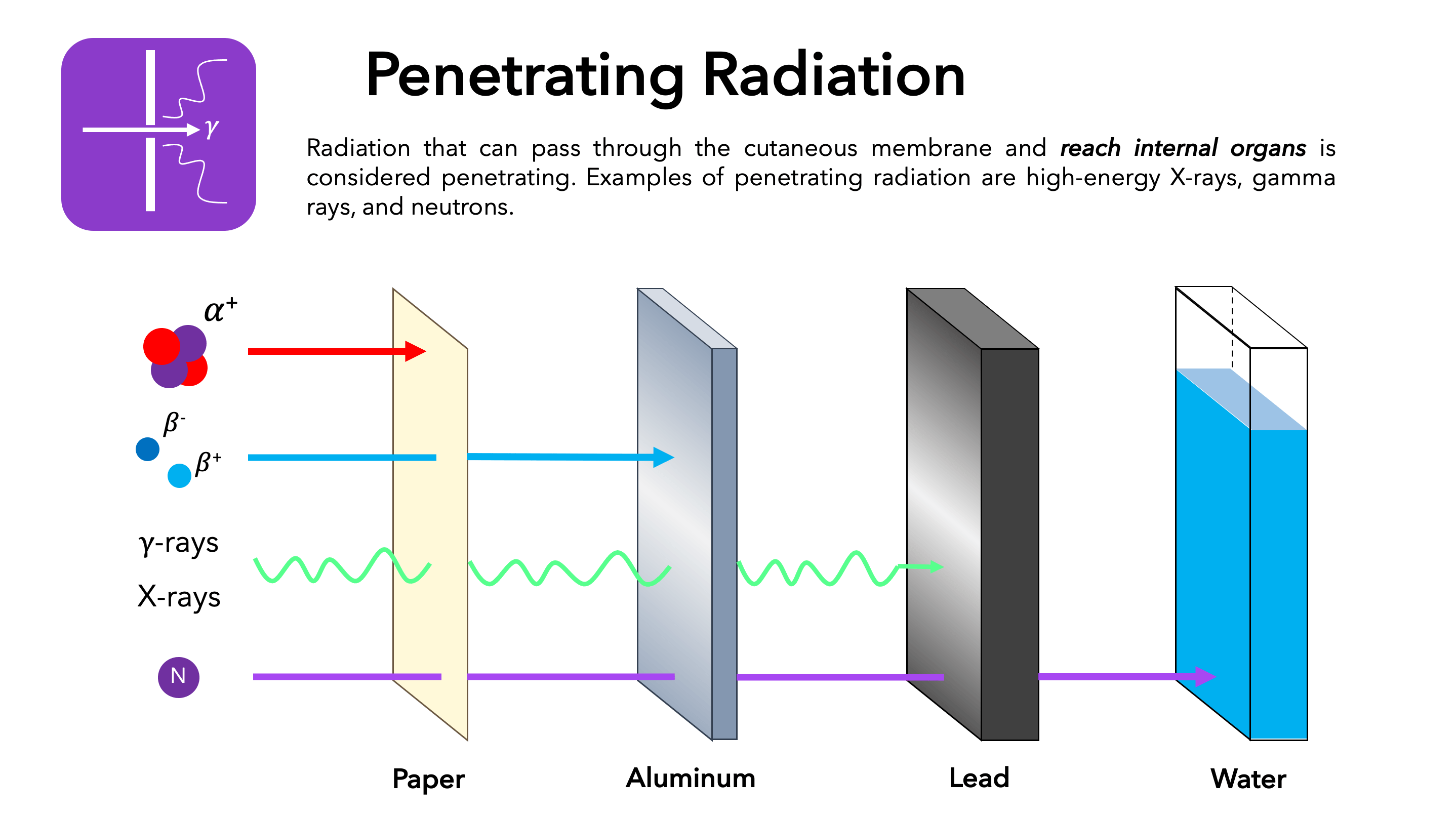
First, why not alpha particles? They are horrible at penetrating objects. A single piece of paper stops them. Remember, the alpha particle is a helium nucleus. So, it's comparatively massive. The particle's size determines how easily it slows down. An alpha particle will collide with any atoms that are in its path. Also, it has an ionic charge of plus two. It experiences a lot of electrostatic interactions that help reduce its speed. So, Alpha particles only penetrate the skin. That means they do very little damage overall.
So, why are beta particles a concern? They're an electron, so they are way tinier than an alpha particle. They are more penetrating than alpha particles. So they can pass through the skin and interact with deeper tissues. They can even enter cells and cause DNA damage. But, there is some good news! Since they have a negative charge, they experience electrostatic interactions. So, there are a couple of mechanisms that delay them. As they pass by atomic nuclei, the attraction slows them. Also, when they approach an atom's electron cloud, they get deflected. To block beta particles, you only need a quarter-inch-thick piece of aluminum metal.
Now let's examine neutrons. At first, they seem harmless. A neutron is immense compared to an electron. And it doesn't have a charge. So, it has a reduced ability to ionize. But, there is a huge problem! There are no electrostatic interactions. So, the only thing to slow them down is collisions. Most likely, they collide with a nucleus. But, there is a lot of empty space between atoms. So they can travel deep into a person and damage the organs. Even worse, sometimes, the neutron incorporates into the nucleus. By adding itself, it disrupts nuclear stability. So, the atom might become radioactive!
What about neutrinos? Thankfully, they are tiny and uncharged. So, they pass through the body without any interactions. The primary source of neutrinos on earth is our sun's nuclear fusion. Every second, hundreds of billions of neutrinos pass through your thumbnail. They travel deep into the planet. Some might even cross all the way through!
Gamma radiation and x-rays are photons. So, they generally pass through the body. But, they have tremendous energies because of their minuscule wavelengths. What happens if they hit an electron? That electron goes flying! So, the original atom is now an ion. But, the electron is now a new radiation source. It can also ionize other atoms. Even worse, they are so penetrating, that ionization can happen anywhere in the body! To impede gamma and x-ray radiation you need a material with high density and atomic number. The most common material is the transition metal lead.
Dosages for Radiation Sickness
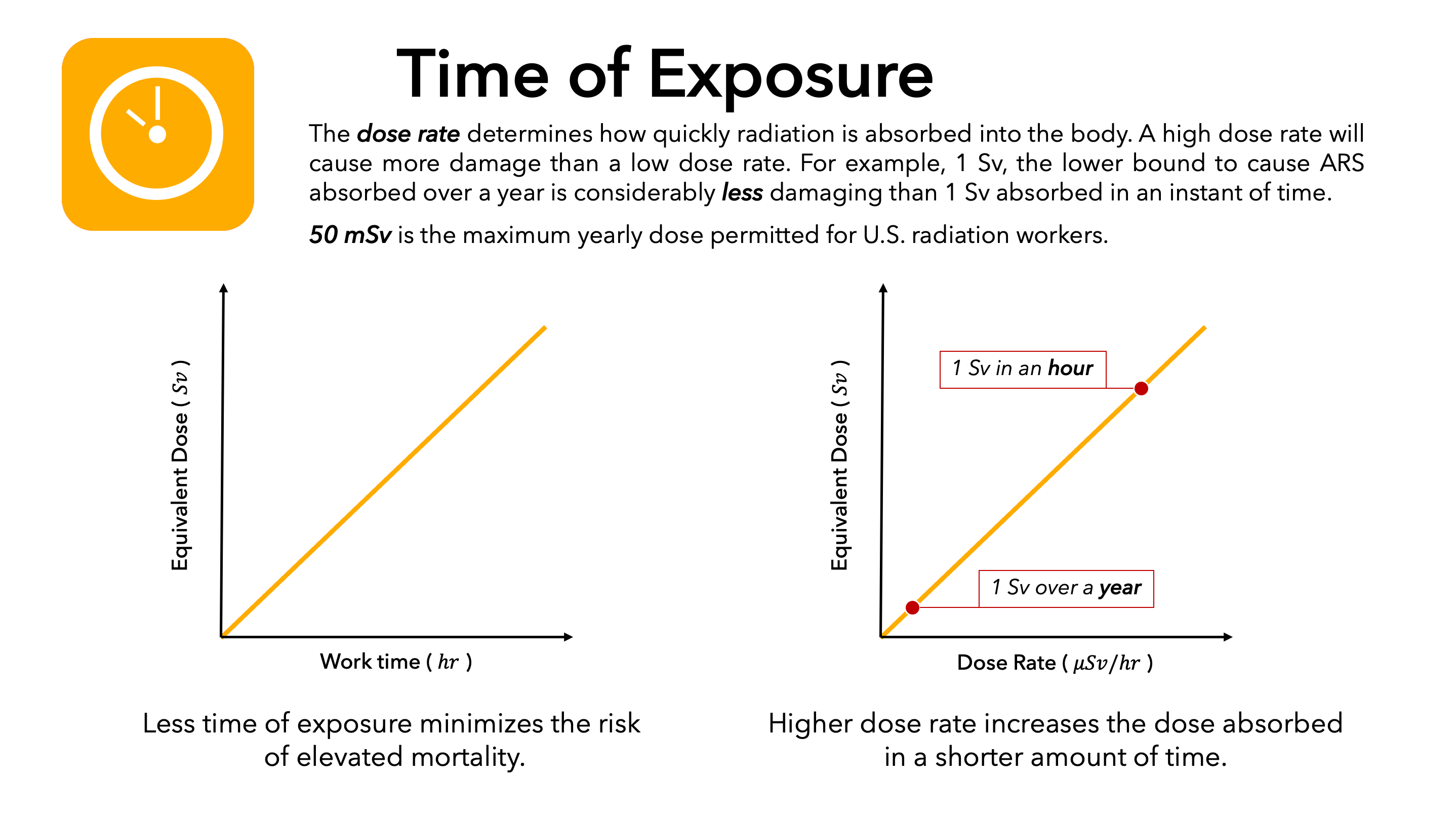
So, how do we measure the dosage? The SI unit for dosage is the Gray. We define it as one joule of absorbed energy per kilogram of matter. So, it only accounts for the radiation that interacts with our cells. Any radiation that passes through us does not get counted. Remember, most radiation energy is in millielectron volts. That's tiny compared to a joule! So, one Gray is a lot. Most often, the radiation is across the whole body. So, we calculate the kilograms based on the person's weight.
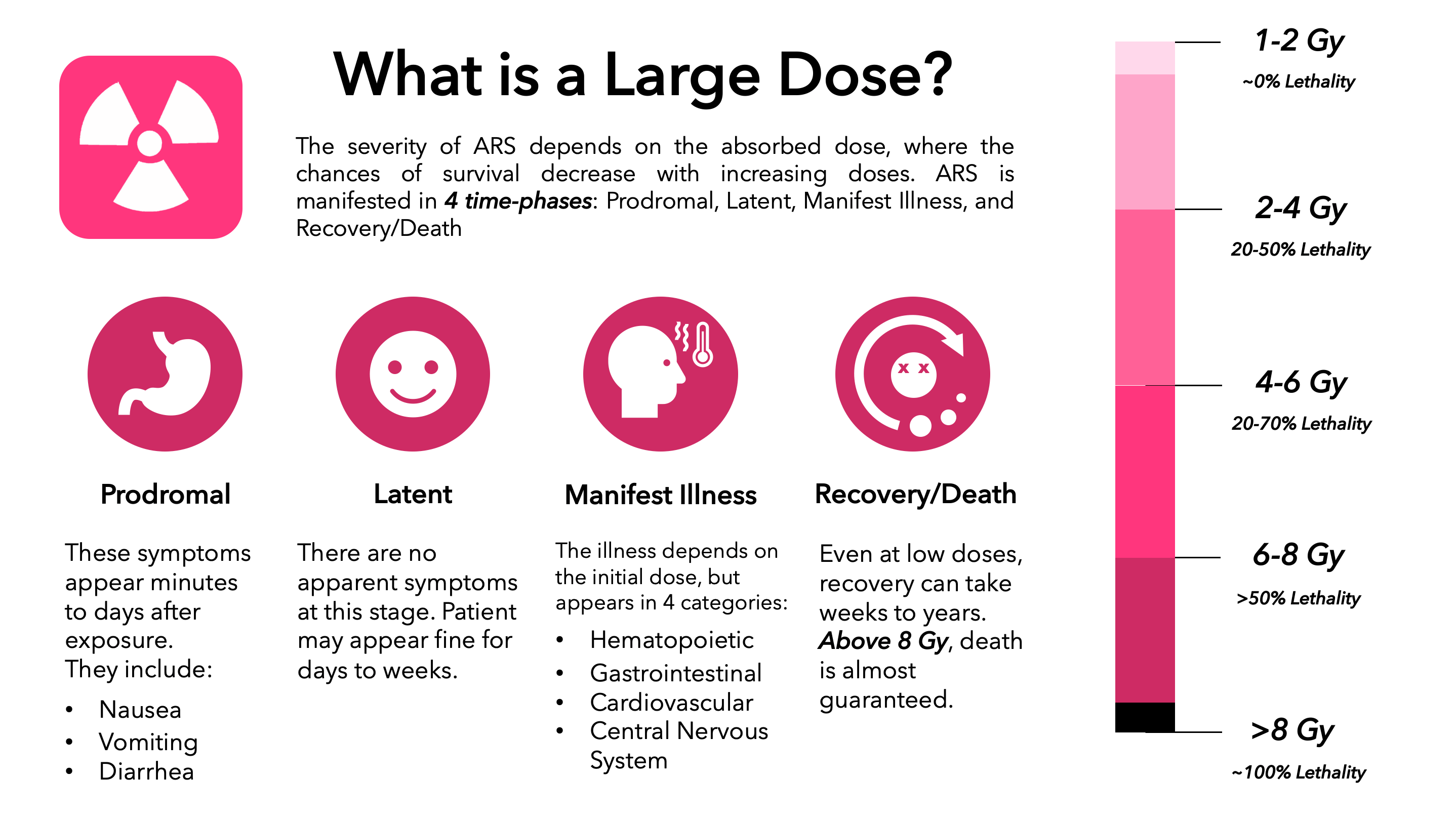
So, how much radiation causes death? The median lethal dose is five Gray. The time frame is two weeks. So that means fifty percent of people exposed to five Gray will die within two weeks. But, five Gray is a significant amount of radiation. So, we only need to worry about nuclear accidents. For comparison, exposure from a PET scan is about 60 milliGray.
Symptoms of Radiation Sickness
The symptoms of radiation exposure depend on the dose. Because radiation causes DNA damage, there are various manifestations. But, symptoms begin with dosages around 0.3 Grays. The most common is decreases in red and white blood cell counts. White blood cells play a critical role in the immune system's defenses. So, patients experience increased rates of bacterial and viral infections. Often, in lower dosage exposures, the infection is what causes death. At one Gray, neurological and gastrointestinal symptoms become common. So patients experience headaches, confusion, vomiting, and diarrhea. Patients have these symptoms because the radiation is impacting the organs. Above about 3 Gray, the risk of death increases. Even when patients survive, cancer risk elevates because of irreparable DNA damage.
Chronic Radiation Exposure
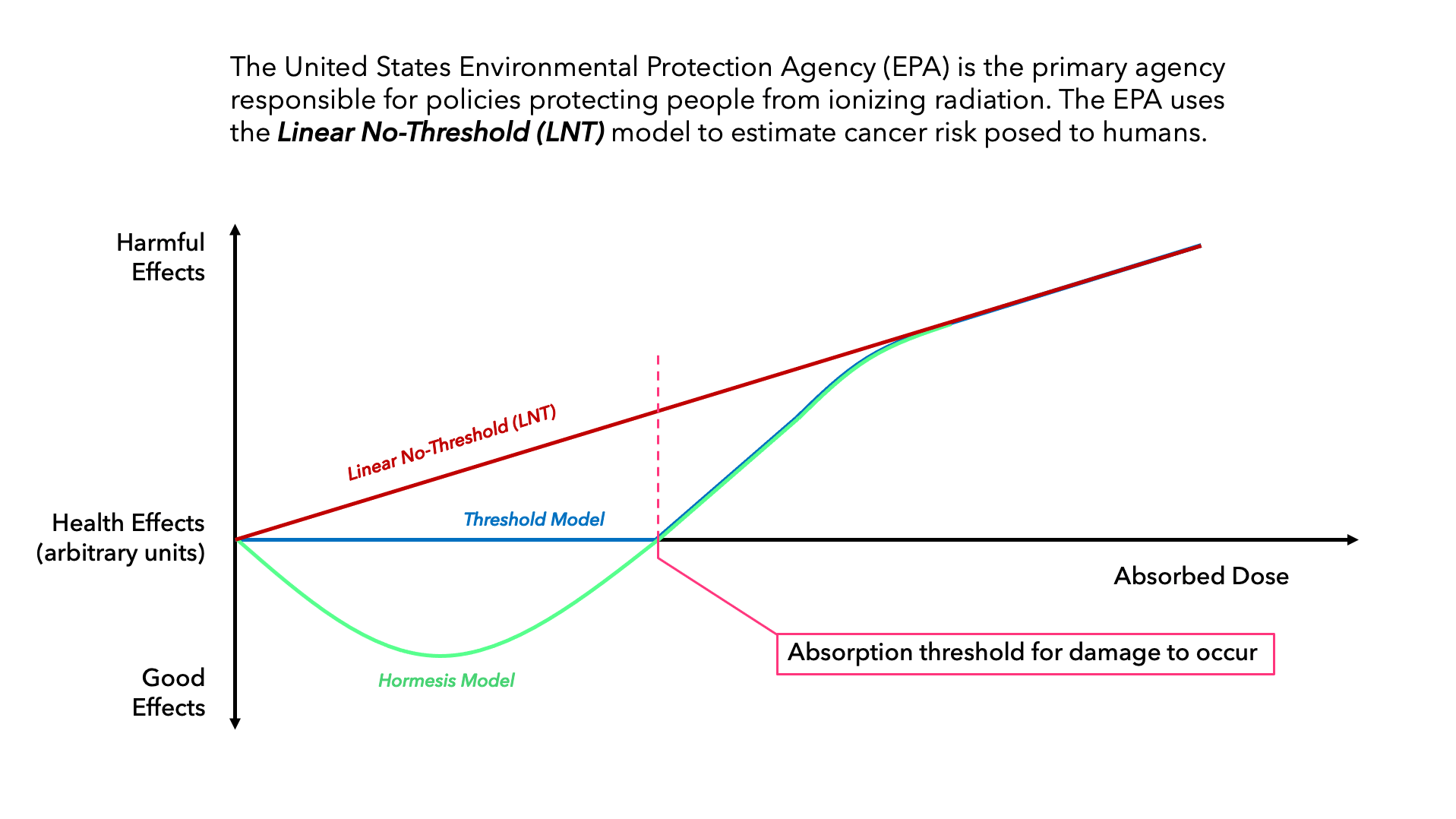
Chronic radiation exposure occurs in repeated low doses over a long period of time. At low doses, our bodies begin to repair the damage. But, the damage happens continuously. So eventually, symptoms appear. The main signs include impaired senses, eye damage, and skin and muscle atrophy. It also increases the risk of developing cancer.
Causes of Acute Radiation Exposure
Historically, radiation exposure is rare. Almost all the cases are from unprecedented events. The most famous events are the Hiroshima and Nagasaki nuclear bomb detonations and the Chernobyl disaster. Anyone within 1000 meters experienced over two Grays of exposure at Hiroshima and Nagasaki. There has been a notable increase in cancer rates among the survivors. In the Chernobyl disaster, first responders absorbed approximately six Grays of radiation. Over 300 people became hospitalized, and many died.