Illustrated · 1 min
+2 contributors

What are linear approximations? They are basically ways to approximate certain values based on a function, using tangent lines and derivatives!
First, what is the equation of a tangent line to a function at the value ? Well, since the slope of the line is , and the line passes through , we can use the slope-intercept form of the line to get:
So the equation of our tangent line, which we'll call , is
How is this useful? Well, let's say we wanted to approximate the value of without a calculator (just using a lot of arithmetic). We'll use linear approximations to do this.
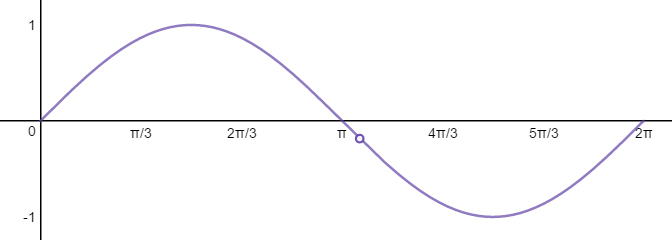
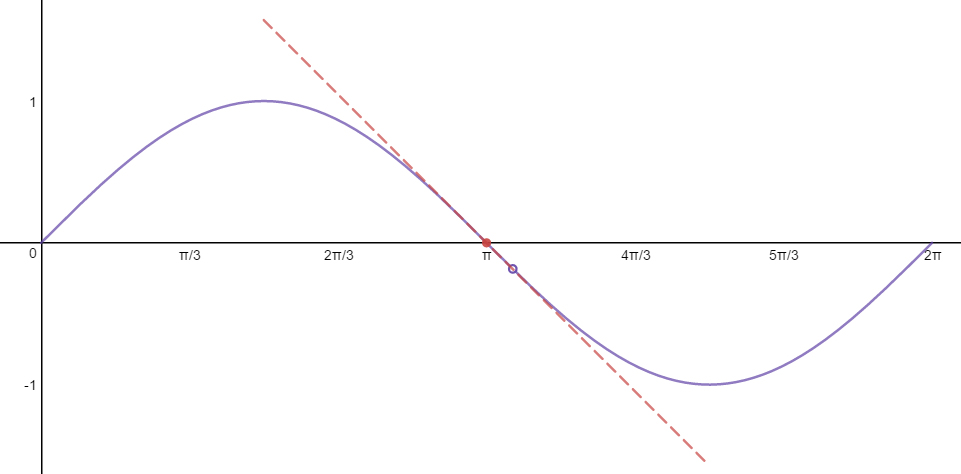
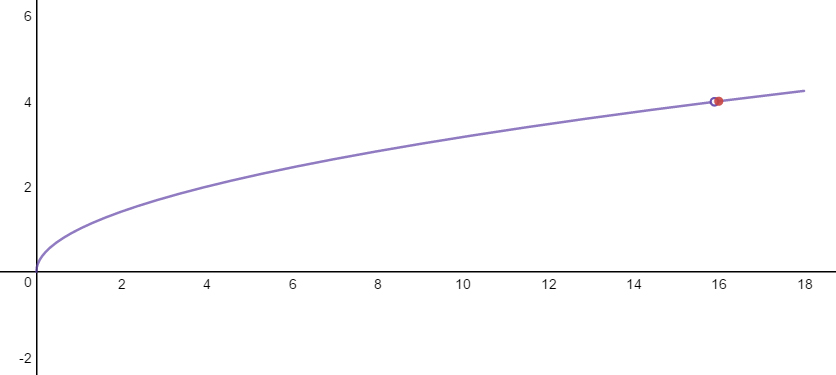
Rather than look at , let's look at the function , and the tangent line at :
What can we do to easily get the value of ? Well, from the graph, the value of this would be really close to the value of evaluated at .
By our above equation of the line, we get that . Substituting, we get that .
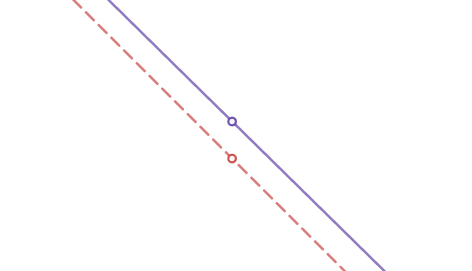
Well, guess what? It turns out that , so this is a really good approximation!
However, when larger values of are chosen, the approximation becomes worse. Therefore, it is advisable, when doing this, to choose a suitable place to make a linear approximation.
So to approximate a certain value, we can generalize the value with a function, then find a linear approximation that's close to our desired value, and evaluate at that value, giving a good approximation.