Find and Use Vertical Angles

Read · 1 min

Vertical angles are a pair of angles with the following two properties:

  1. their sides are determined by the same lines;

  2. they share a vertex but not a side.

The vertical angle theorem states that vertical angles are congruent.

Suppose that the segments ACAC and BDBD meet at a point PP.

Clearly, ∠APB\angle APB and ∠BPC\angle BPC form a linear pair, as do ∠CPD\angle CPD and ∠BPC\angle BPC.

Since two angles in a linear pair add up to 180∘180^\circ: m∠APB+m∠BPC=180∘m\angle APB+m\angle BPC=180^\circ m∠CPD+m∠BPC=180∘m\angle CPD+m\angle BPC=180^\circ

A simple subtraction and rearrangement gives us m∠APB=m∠CPDm\angle APB=m\angle CPD, which means that ∠APB≅∠CPD\angle APB\cong\angle CPD.

The same argument may be applied to any pair of vertical angles, and so we see that vertical angles are congruent.

Video

(Video) Vertical Angles

by MathHelp.com

In the video above, MathHelp.com gives a detailed explanation of what vertical angles are and the qualities they have.

In order for angles to vertical, they must meet the following criteria:

-Share the same vertex

-Be congruent/have equal measures

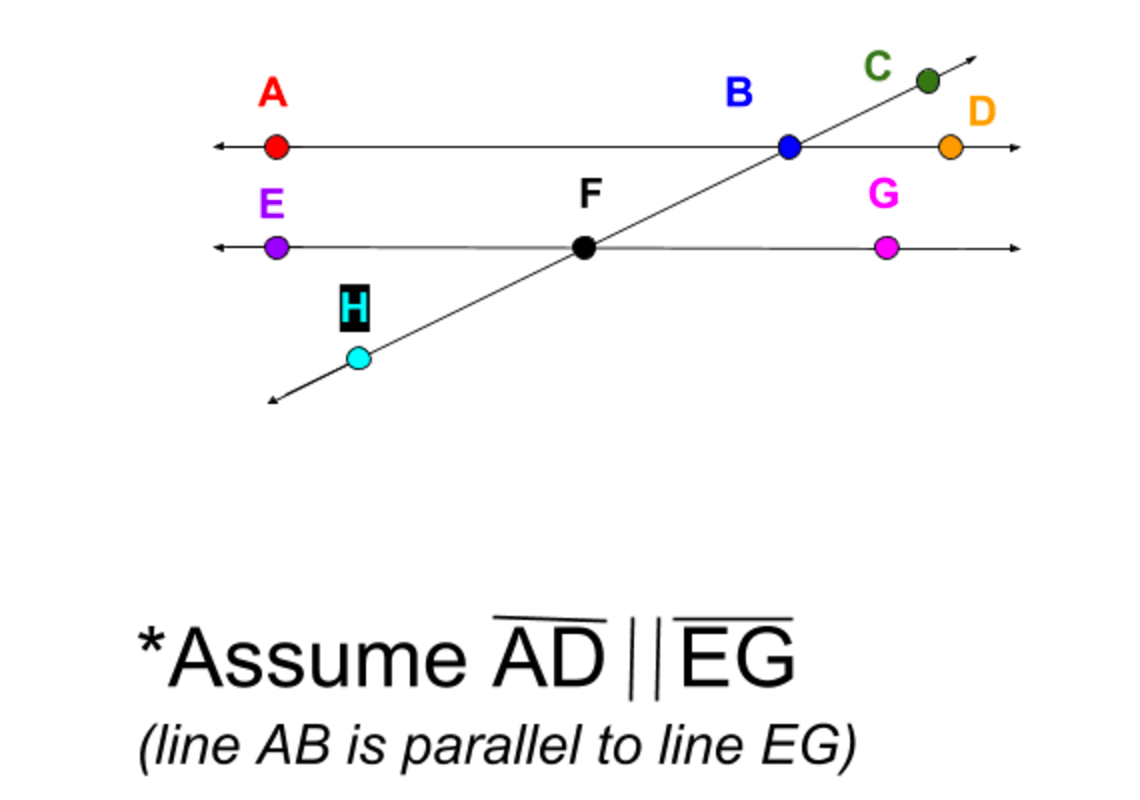
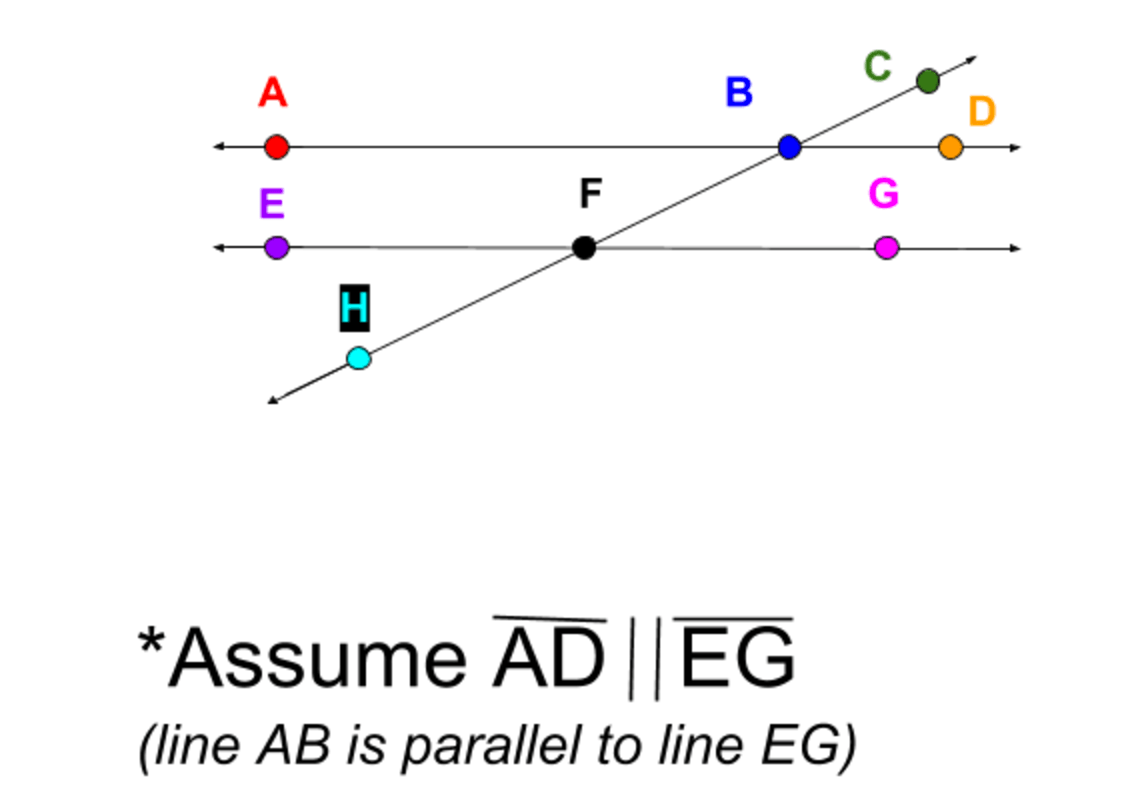
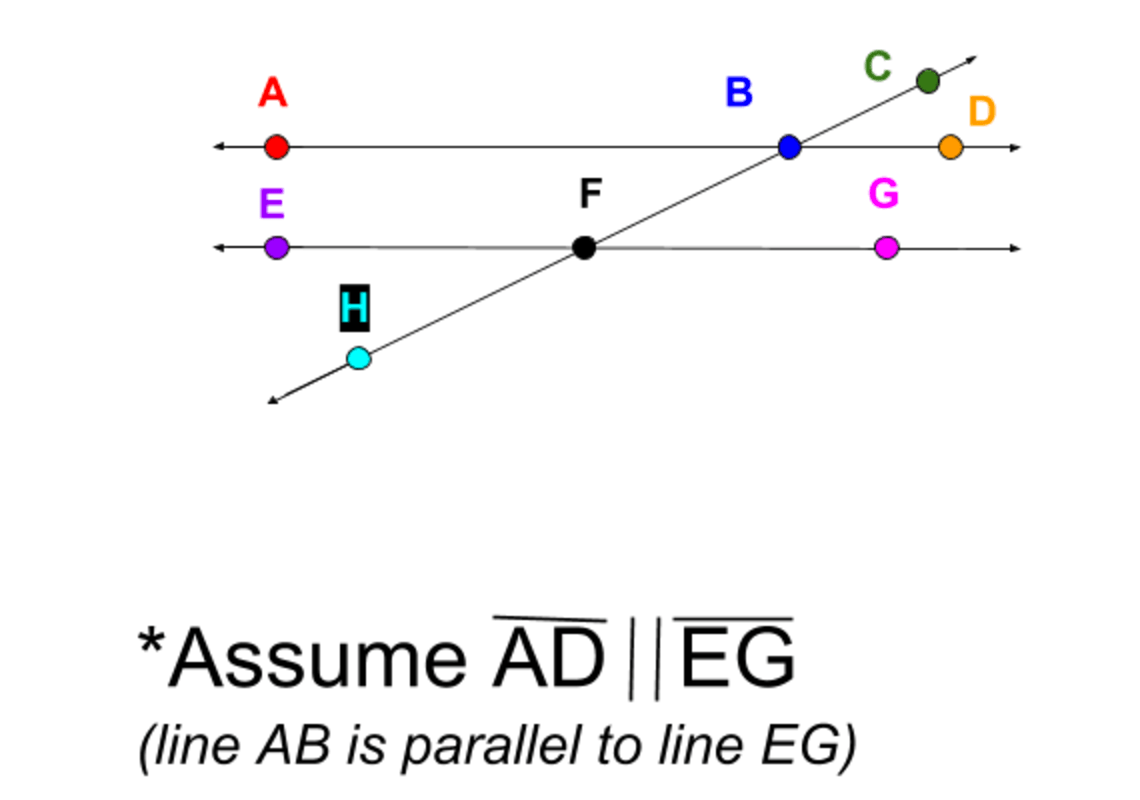
Based off the picture above, identify all of the pairs of vertical angles.

Choose one answer

Read · 1 min

Here is a worksheet to practice your skills. GLHF!

Type a concept, like “slope” or “photosynthesis”.

↑ ↓ to choose · Enter to openSearch explanations and problems