Genetic Mutations — Overview & Allele Frequency

Read · 1 min

How Do Mutations Influence Allele Frequency?

When DNA is being replicated, there is a chance that it can change. Just like it can be easy to make a typo when writing a long essay, when many millions of DNA bases are replicated, mutations can occur.

If a DNA sequence goes ACG TGC A\text{ACG TGC A}

But when replicated it becomes CCG TGC A\text{CCG TGC A}, then the DNA sequence has mutated.

What Are the Types of Mutation?

A silent mutation happens when the change in the DNA does not cause any change in expression.

  • For example, if the DNA sequences AAT, AAA, and AAG all result in brown fur, then a DNA sequence mutating from AAT to AAG will not cause any changes.

A missense mutation happens when the change in the DNA does cause a change in expression.

  • For example, if the DNA sequences CCC and CCG create brown fur while CCA and CCT create red fur, then a mutation from CCC to CCA will cause red fur to grow instead of brown.

A nonsense mutation happens when a DNA sequence stops making a complete protein product because of a mutation.

  • When a ribosome translates RNA into a protein, signals in the RNA tell the ribosome to start and stop. If a mutation accidentally creates a stop codon, then the ribosome won't translate the entire protein.

How Do Mutations Impact Natural Selection?

Overall, silent mutations will not affect natural selection because they have no effect on allele expression, so there is no effect on fitness.

Missense mutations will affect natural selection because they can change the fitness of the organism. These mutations can increase or decrease allele frequency depending on if they help or hurt the organism.

Nonsense mutations are almost always harmful to the organism and will decrease fitness. Mutant alleles caused by nonsense mutations are rare.

Illustrated · 1 min

How Do Mutations Impact Allele Frequencies?

Mutations add new alleles into a gene pool. This causes a change in the frequency of certain allele combinations in the population, which will cause the population to evolve over time. They are a major evolutionary force that creates new gene variations.

A blue merle corgi

Image source: By Muu-karhu CC BY-SA 3.0, via Wikimedia Commons

If the mutation is helpful, such as a camouflage coat, then the individuals with that mutation are more likely to survive. However, if the mutation is harmful, the mutated individuals are significantly less likely to survive.

Let's say a corgi puppy undergoes a mutation while in the womb that causes him to have a blue merle coloring. Now the genes for this coloring are a part of the gene pool, so if the corgi mates with another dog, it will pass down these genes.

Over time, the genotype frequency for merle coloring might become higher in the corgi population. The mutation added genetic diversity.

Vocabulary Review:\color{#8925AE}{\text{Vocabulary Review:}}

Mutation\color{#8925AE}{\text{Mutation}} : Can add new alleles into a gene pool, changing the allele frequency in the population

Illustrated · 2 min

Mutations and Allele Frequency

Mutations are changes in an organism's genes that impact the natural selection of that organism. Mutations can either positively or negatively change the genetic makeup of an animal, which then influences how the animal evolves. Mutations are extremely important since they impact what alleles exist in a species. The different alleles are what make up genetic diversity, something that is necessary for evolution and a species' survival.

If a mutation is beneficial to a species, natural selection will favor the organism with this mutation, making it more fit for survival. Remember that fitness doesn't only impact an animal's ability to survive but also its reproductive favorability. An animal that is more fit is likely to find more mates and pass those mutations on to its offspring.

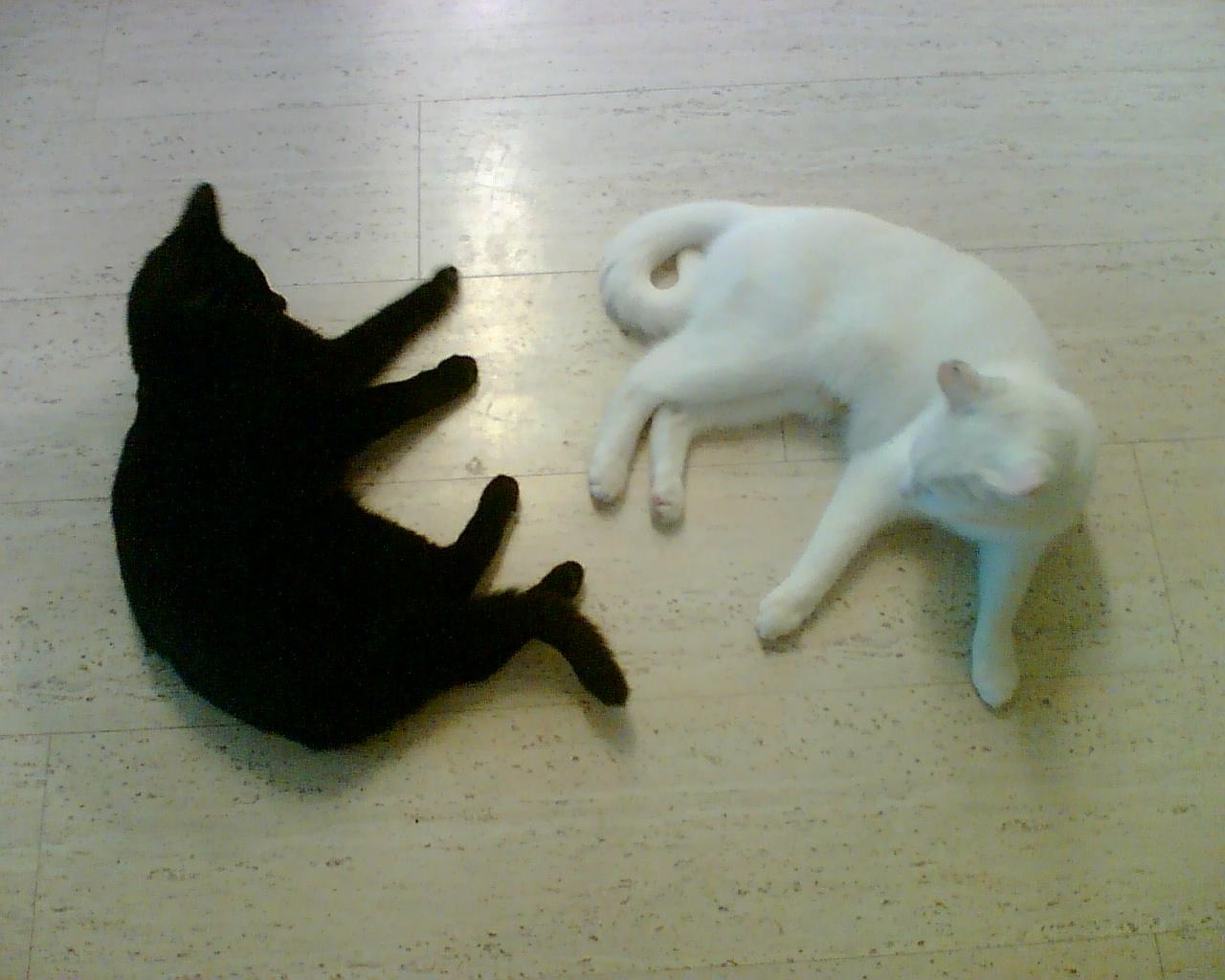
A black cat and a white cat lying side by side.

Image source: By Pusleogpixi CC BY-SA 3.0, via Wikimedia Commons

Mutations and Fitness

When mutations are not beneficial to an organism, its fitness decreases and it has a greater chance of death or other long term consequences.

Imagine there was a mutation in a certain species of mouse that resulted in black fur instead of the "wild type" white fur. If this species of mice lived on a white sand beach, the individuals with the mutation would be significantly easier for predators to pick out. This means the mutated mice have a greater chance of dying before getting a chance to reproduce, which in turn helps prevent the unfavorable mutation from spreading.

How Is This Different from Genetic Drift?

Mutations may seem a lot like genetic drift, which is the random change in populations over time. However, there are three big differences between these two ideas.

  1. Mutations change DNA in cells, whereas genetic drift describes random changes and events that affect population genetics.

  2. Mutations either increase or decrease your fitness, whereas genetic drift doesn't care about how great your genes are. It's all about just being lucky.

  3. Mutations increase variation, whereas genetic drift reduces variation.

Illustrated · 1 min

How do mutations alter allele frequency. At the start of the human race, brown was the only eye color people could have. The allele frequency for the allele that caused brown eyes was 1.0 or 100%. A mutation in the main gene for eye color created a new phenotype: blue eyes. Slowly, the allele frequency shifted. Since, then many variations of eye color have emerged, though brown eyes remain the most common.

Image source: By Gabi Slizewska

Video

(Video) What Causes Antibiotic Resistance?

by Kevin Wu on TED-Ed

Mutations are the overall source of genetic variation among species. In this video by TED-Ed, the battle between bacteria and antibiotics, and the role mutations play, is discussed.

Type a concept, like “slope” or “photosynthesis”.

↑ ↓ to choose · Enter to openSearch explanations and problems