
Illustrated · 1 min

+4 contributors




Genetic Recombination
Genetic shuffling, or genetic recombination, is the creation of new combinations of traits in offspring that are different from those in the parents. In eukaryotes, this happens as a result of sexual reproduction.
The two main processes that contribute to shuffling are meiosis and crossing-over. Genetic shuffling can also happen between prokaryotes, like bacteria, but it works differently since they reproduce asexually.
An Example of Genetic Shuffling:
For this blobby species, red body color (RR) is dominant to white body color (rr), and long arms (LL) are dominant to short arms (ll).
A red individual with short arms (genotype Rrll) mates with a white individual with long arms (genotype rrLl). They produce a child with a red body and long arms (genotype RrLl).

Image source: By Sylvia Freeman
Now, suppose red body color and long arms are considered attractive traits. In this case, genetic shuffling resulted in an advantageous combination of genes.

Thanks to genetic shuffling, this young blob has won the genetic lottery. Image source: By Sylvia Freeman
However, shuffling of genes can also break up favorable combinations of traits.
For example, these two blobby individuals in the pedigree below, each have a favorable combination of traits—red body color and long arms, so it makes sense that they would be likely to mate with each other.
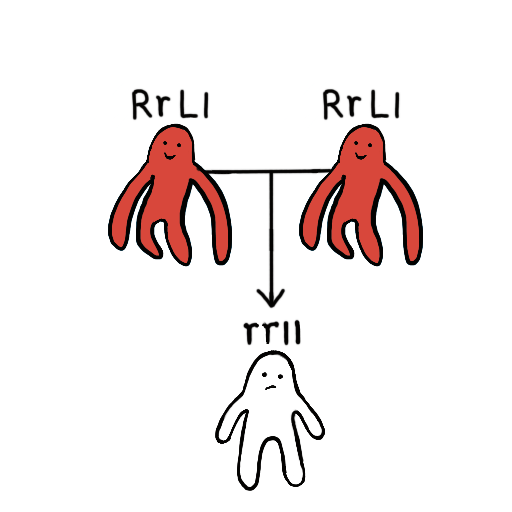
Image source: By Sylvia Freeman
But there's also a chance that they could produce homozygous recessive offspring.
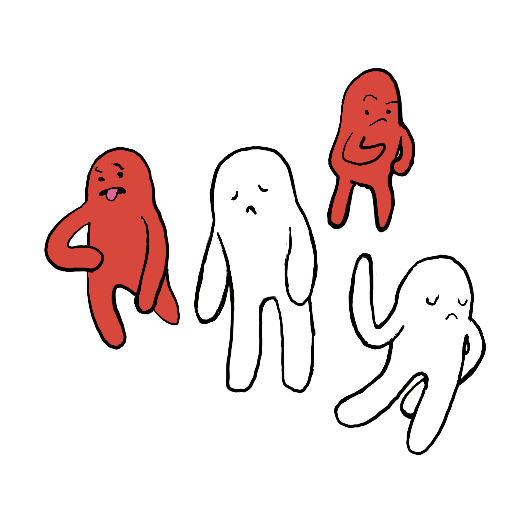
This poor blobby is at an evolutionary disadvantage. Genetic shuffling strikes again. Image source: By Sylvia Freeman
The takeaway message is that genetic shuffling is not necessarily a "good" or "bad" process but is simply something that happens during sexual reproduction.


