Illustrated · 3 min

+3 contributors


What Is Meiosis I?
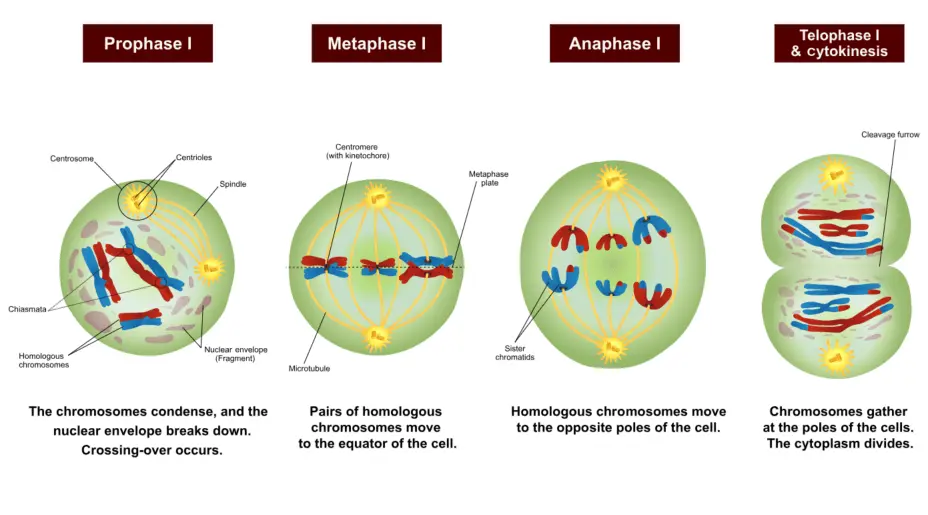
Meiosis 1 is a type of cell division crucial to sexual reproduction. The process consists of two rounds of division called meiosis I and II. The goal is for a single cell to split into four daughter cells.
Normally, we have two sets of chromosomes in our cells. Meiosis I creates daughter cells that only have one set (23 chromosomes). This is important because meiosis only happens in sex cells. These will be used by an organism to reproduce and make offspring. Each parent can only contribute one set of chromosomes, and meiosis I ensures this.
Before the whole process can start, the parent cell replicates its DNA during interphase. This means that right before the cell undergoes that first round of divison, it has two sets of chromosomes, and each chromosome has two chromatids.
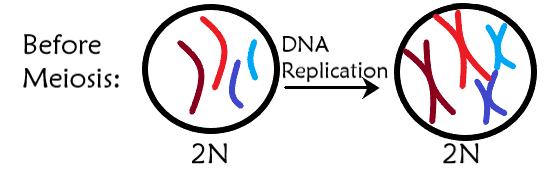
Image source: By Gabi Slizewska
Phases of Meiosis
Now we can start meiosis I.
It consists of the following four phases, followed by cytokinesis.
Prophase I:
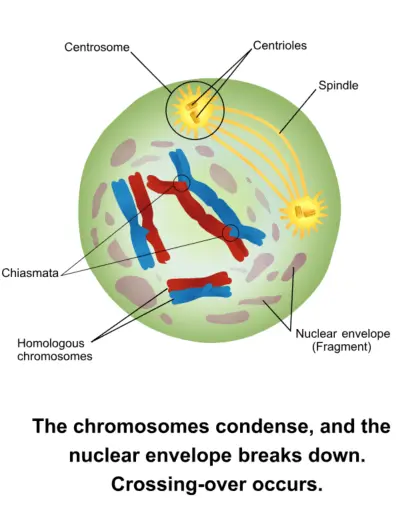
At the start of prophase I, DNA in the nucleus condenses to form chromosomes. This is when we can actually see chromosomes under a microscope. The nuclear envelope, or nuclear membrane, then breaks down, which lets chromosomes to move freely around the cell.
During a period called synapsis, the homologous chromosomes pair up and form structures called tetrads. A tetrad consists of two chromosomes and total of four chromatids.
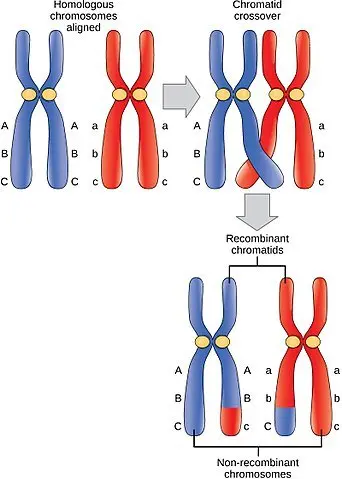
Once in this formation, the homologous chromosomes can undergo a process called crossing-over, which allows non-sister chromatids to exchange sections of DNA. Homologous chromosomes have the same genes but different alleles. Crossing-over creates chromosomes with new combinations of alleles.
Crossing-over is a vital mechanism for increasing genetic diversity. It is unique to meiosis, so it does not happen in mitosis. Sometimes the process is also called recombination.
Lastly, during prophase I, a structure called the meiotic spindle begins to form. This will be crucial in the next phases.
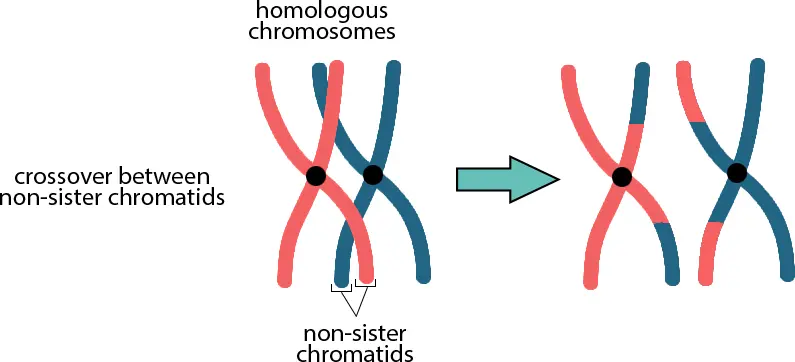
Image source: By Gabi Slizewska
Metaphase I:
This phase is different from metaphase of mitosis in one significant way.
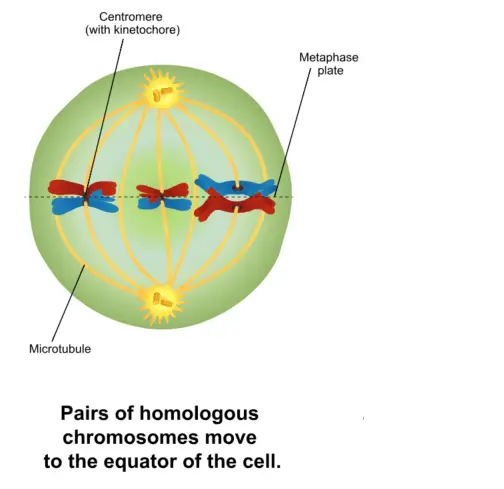
If you remember, during metaphase of mitosis, chromosomes line up along the center of the cell. The spindle fibers attach at the centromere of each chromosome.
Metaphase I is similar, but the chromosome pairs line up along the center of the cell. Spindle fibers attach to each chromosome.
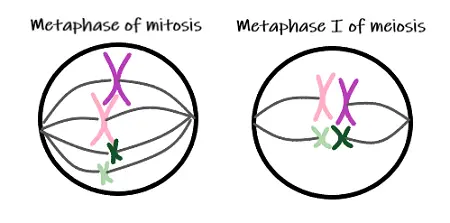
Image source: By Gabi Slizewska
Remember, just like in mitosis, we have an M checkpoint during metaphase I. At this checkpoint, the cell has to make sure that each chromosome is attached to spindle fibers before continuing to the next phase.
Anaphase I:
Anaphase I is also different from anaphase of mitosis.
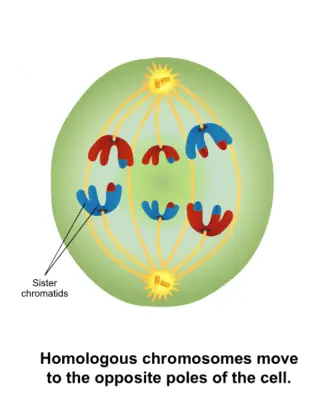
Instead of separating the individual chromatids of each chromosome, the spindle fibers pull apart the homologous chromosomes.
This means that once the first round of cell division is complete, the daughter cells will only have one copy or one variation of each chromosome, but each chromosome will still have two chromatids.
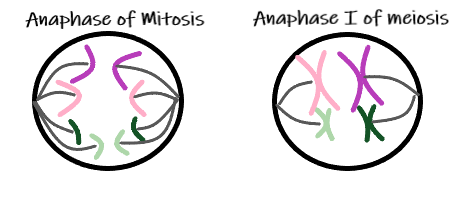
Image source: By Gabi Slizewska
Telophase I:
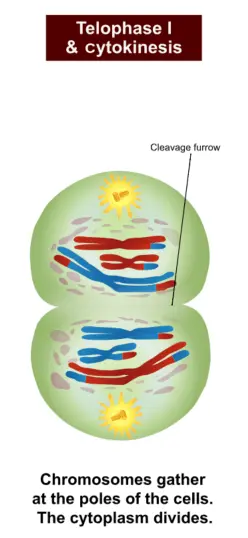
Now that the chromosomes have been segregated to each side of the cell, a nuclear envelope forms around each set. This forms two nuclei. This phase occurs simultaneously with a process called cytokinesis. Cytokinesis is responsible for splitting the cell membrane and cytoplasm to form two new cells.
At the end of meiosis I, there are two daughter cells. Although each chromosome has two chromatids, each cell only has one of the original homologous chromosomes. This is why they are considered haploid.
But we're not done yet. The daughter cells need to undergo a second round of division.
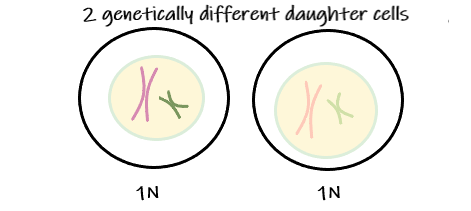
Image source: By Gabi Slizewska