Illustrated · 1 min

+1 contributors


Image source: By Gabi Slizewska
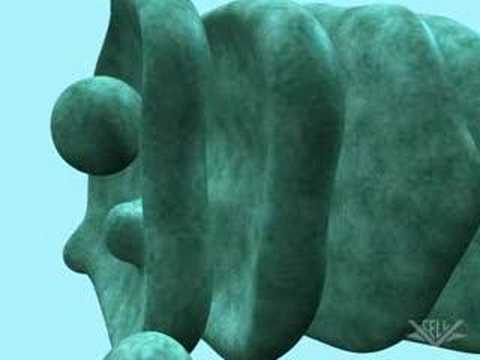
Let's be honest, the only organelle that ever gets any recognition is the mitochondrion. I mean it's pretty great, but it's really not nearly as cool as the Golgi apparatus or the endoplasmic reticulum. Seriously… just look at those names.
Anyway. Everything about us, the way we look and act, is a product of our genes. And in order for our genes to have any effect, they need to be translated into proteins. Both the endoplasmic reticulum and the Golgi apparatus have very important roles in this process.

Image source: By Gabi Slizewska
Endoplasmic Reticulum
The endoplasmic reticulum (ER) is divided into two parts: the rough ER and the smooth ER. Only the rough ER really plays a part in protein synthesis.
If you've already learned some basics about the ER, then you know that the rough part contains ribosomes which are responsible for translating pieces of mRNA into proteins. Once the protein is made, it can make its way into the lumen (inside) of the rough ER.
In the lumen, the protein is folded into a specific 3D structure which is necessary for it to work correctly. This is also where additional chemical groups like carbohydrates can be added to the protein structure. Then, the proteins can be transported to the cell membrane, or they can move to the Golgi apparatus for more processing.
Golgi Apparatus
You probably already know some things about the Golgi apparatus as well. In the Golgi, proteins are sorted and packaged based on function and final destination. The Golgi apparatus labels the protein so the cell knows where it's needed. Then, it uses its own membrane to form a vesicle around the protein which will transport it to that location. Without the Golgi apparatus, the cell would not know what to do with new proteins.