Interactive · 1 question

+4 contributors



Biological Polymers
You're probably familiar with polymers such as plastics and Styrofoam, but a lot of organic molecules are polymers too.

Image source: By K.R Roshith CC BY-SA 4.0, via Wikimedia Commons
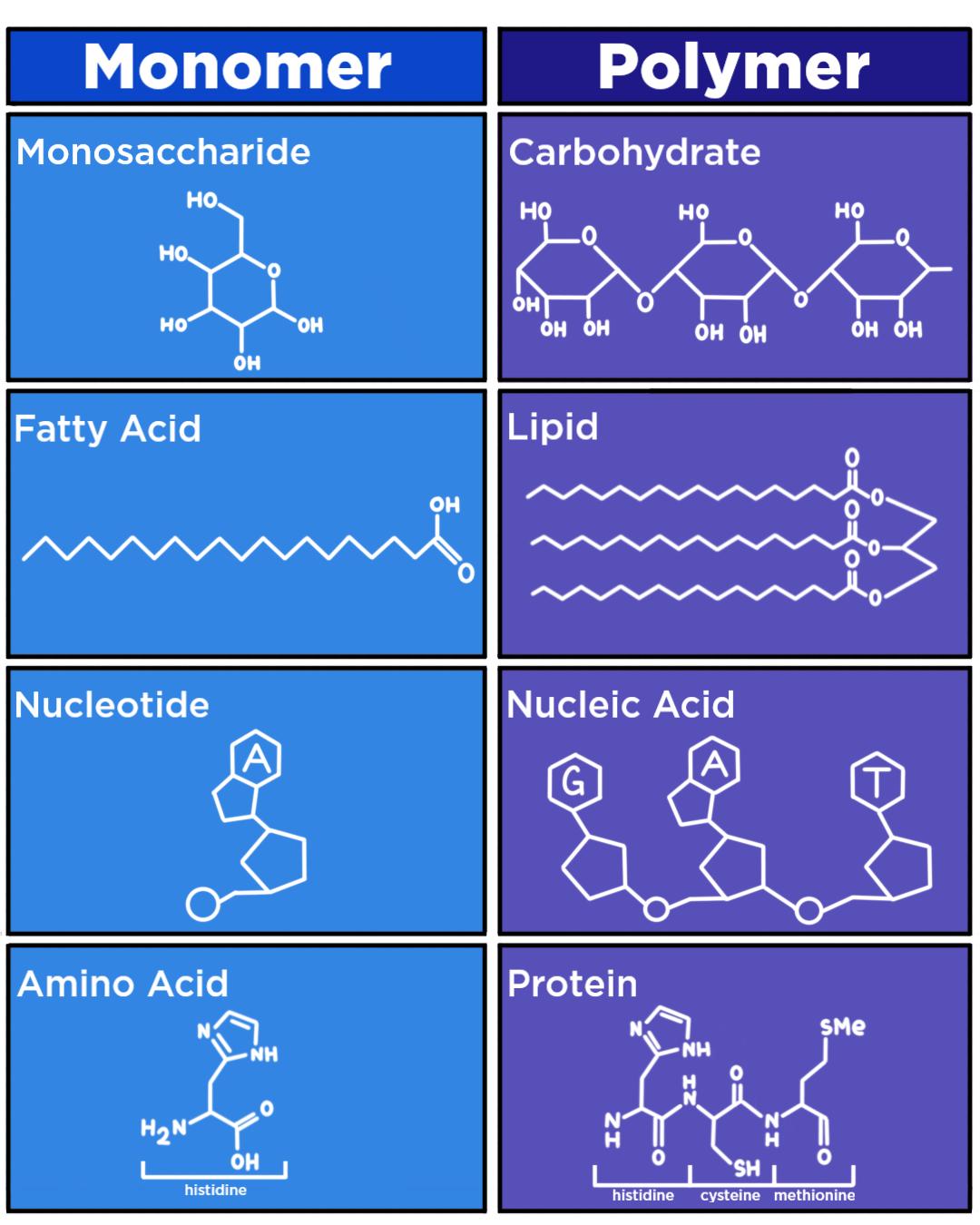
Macromolecules are large, complex, biological molecules and most of them are polymers. Monomers link up in a specific order during a process called polymerization. This allows them to create biological polymers like starches and complex sugars.
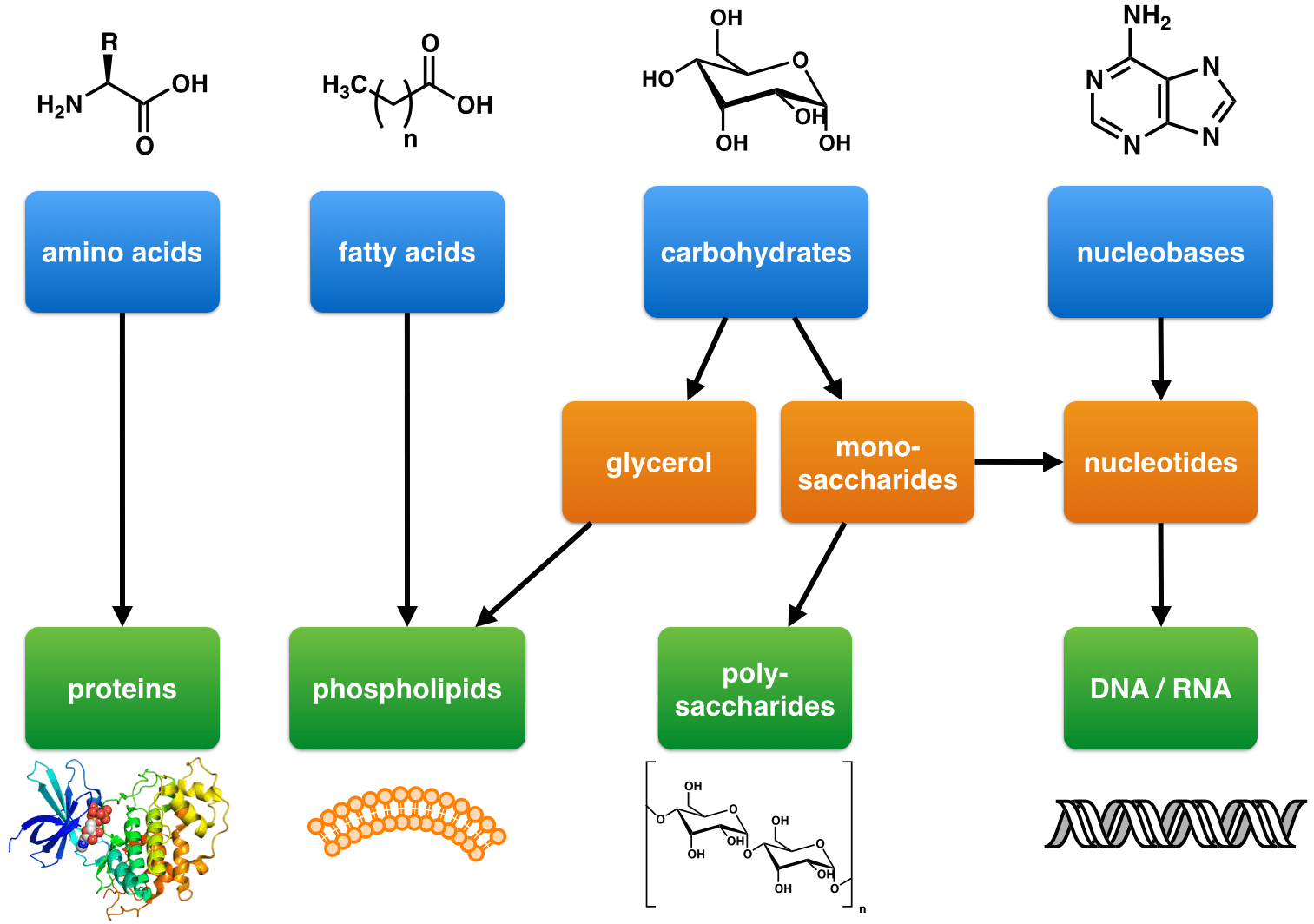
Image source: By Boghog CC BY-SA 4.0, via Wikimedia Commons
There are four major classes of biological macromolecules:
-
Carbohydrates are formed through dehydration synthesis.
-
Proteins are formed through translation.
-
Nucleic acids are formed through dehydration synthesis.
It's important to note that polymerization is normally performed by enzymes (which are actually proteins) in the body. How weird is that? A polymer that makes other polymers.
Back to the main idea though. Monomers are perfectly happy to be by themselves. It costs a bit too much energy to polymerize by themselves, so they never really try to. However, enzymes make it more efficient for polymers to form. They basically stick the pieces of the polymer together manually.
Which of the following options is not a monomer of a macromolecule?
: Any molecule that can react with other molecules of the same or different makeup to form a chain, or polymer
: A chain of monomers made of a specific type of compound
: A polymer that has a large (macro) molecular mass. There are four main types in organisms: carbohydrates, proteins, lipids, and nucleic acids
: Enzymes link up monomers in a specific order, creating a polymer