
Illustrated · 1 min

+2 contributors


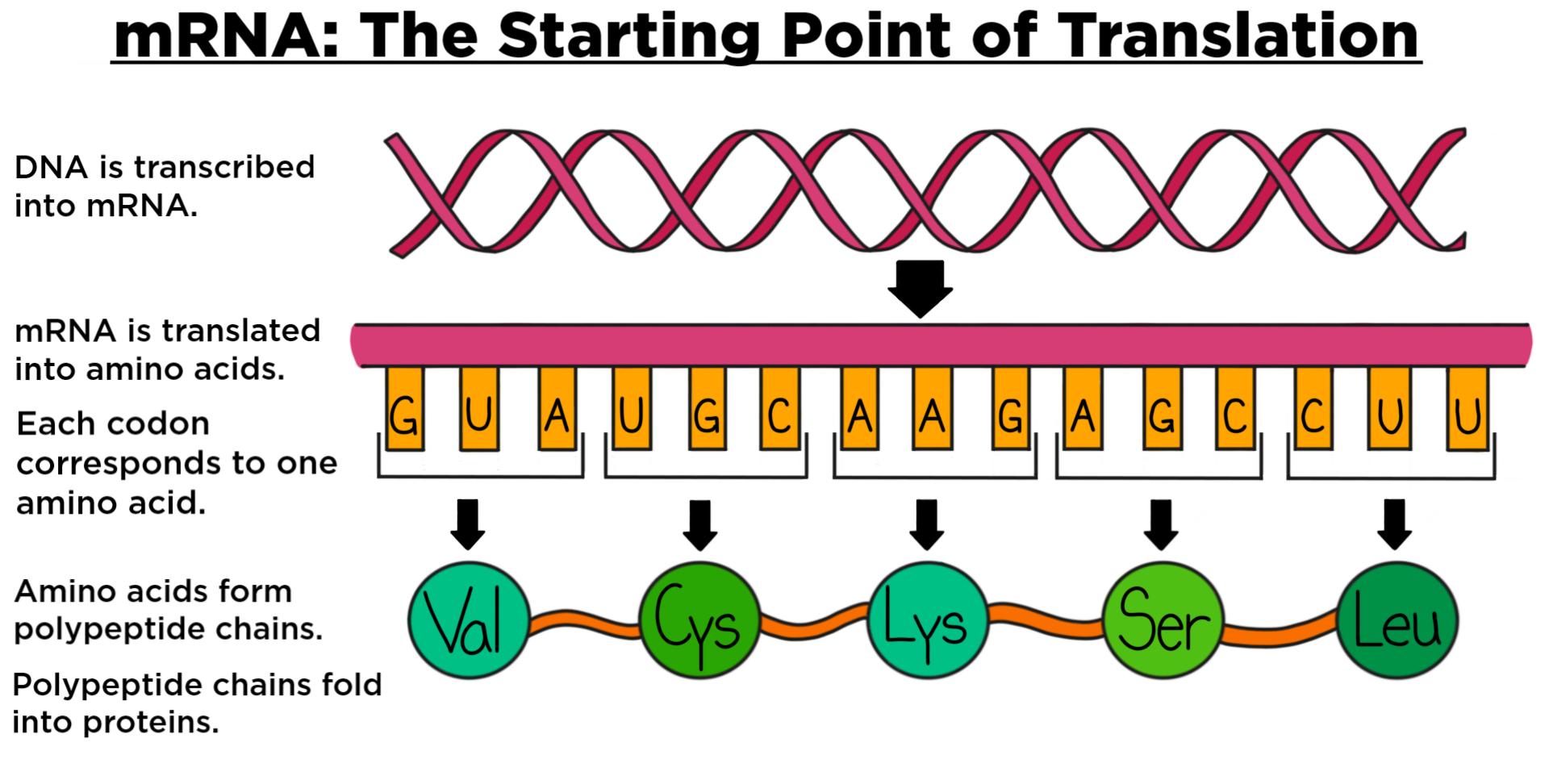
Image source: By Gabi Slizewska
From Genes to mRNA to Protein: Transcription and Translation
Genes encode protein structure. When the cell needs to make a specific protein, the gene for that protein needs to be transcribed. During transcription, the molecule called RNA polymerase reads the DNA sequence of the gene and creates a complementary mRNA molecule. This molecule consists of just one strand and serves as a temporary copy of the gene.
Immediately after transcription, what we get is pre-mRNA. This molecule contains two parts: exons and introns. This molecule needs to be edited to cut out the introns, which do not contribute to the final protein. The final mRNA strand contains only the coding regions, the exons.
Once this is done, the mRNA can be used to make a protein. First, it needs to move out of the nucleus and into the cytoplasm of the cell. Here, it can be translated. In this process, an organelle called the ribosome reads the sequence of the messenger RNA strand, three bases at a time. As this happens, another type of RNA, tRNA, brings in amino acids that correspond to the sequence. Each codon, a group of three bases, on the mRNA strand corresponds to one amino acid.
As the process goes on, the amino acids are bonded together into long chains. After translation is complete, the chains are modified and folded until they make a fully functional protein.





