Multiplying Complex Numbers

Before this, knowIntro to Complex Numbers

Interactive · 1 question

**Multiplying Complex Numbers**\text{**Multiplying Complex Numbers**}

Before we start, as a reminder, ii is an imaginary number!

When you multiply two complex numbers in rectangular form, you can use the FOIL method to get your final answer. In other words, for two complex numbers z1=a1+ib1z_1=a_1+ib_1 and z2=a2+ib2,z_2=a_2+ib_2, z1z2=(a1+ib1)(a2+ib2)=a1a2+a1ib2+ib1a2+i2b1b2=(a1a2−b1b2)+i(a1b2+b1a2)\begin{align} z_1z_2 &= (a_1+ib_1)(a_2+ib_2)\\ &= a_1a_2+a_1ib_2+ib_1a_2+i^2b_1b_2\\ &=(a_1a_2-b_1b_2)+i(a_1b_2+b_1a_2) \end{align}

Remember, it's important to simplify the powers of i.i. ii makes up the imaginary parts!

Let's do a simple example to practice!

Let z1=1+iz_1=1+i and z2=3+2i.z_2=3+2i. What is z1z2?z_1z_2?

Choose one answer

Illustrated · 1 min

In a moment we're going to be talking about ii, but before that let's start off with a very easy question.

What happens when you multiply a number by −1-1?

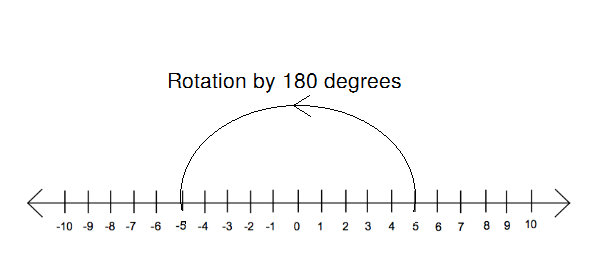
When you take a number like 55 and multiply it by −1-1, you get −5-5. Let's think about what change happens when you do that.

A picture might clear things up. Take a look.

a number line with rotation by 180 degrees

Image source: by Mursalin Habib

So multiplying something by −1-1 rotates that number by 180∘180^\circ on the number line.

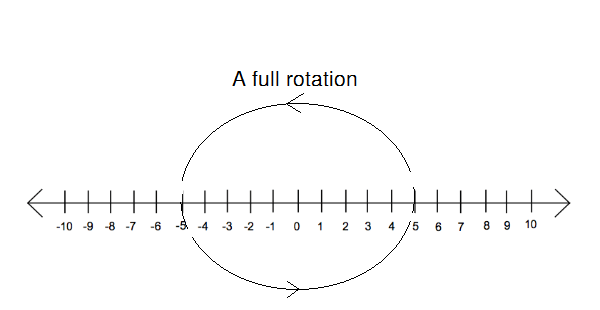
Now you can imagine what happens when you multiply that number by −1-1 again.

A number line with a full rotation

Image source: by Mursalin Habib

It gets rotated by 180∘180^\circ again doing a full rotation and going back to where it started from!

So this is a great way to visualize why −(−x)=x-(-x)=x.

But let's not get off-topic. We're supposed to talk about ii here.

Well, let's get to it!

Now think of a number kk such that when you multiply any number by it, it gets rotated by 90∘90^\circ. You should have no trouble with this I hope. After all we just saw a number that rotates everything by 180∘180^\circ. So a 90∘90^\circ -rotator number shouldn't be that hard.

Now what happens when you multiply a number (say 55) by kk twice?

Well, doing it once rotates the number by 90∘90^\circ. So doing it twice should rotate the number by 90∘+90∘=180∘90^\circ+90^\circ=180^\circ. And a rotation by 180∘180^\circ is equivalent to a multiplication by −1-1.

In other words,

5×k2=5×(−1)5\times k^2=5\times(-1)

So, k2=−1k^2=-1.

This number kk is what everyone calls ii. This is the so-called imaginary unit. Surely it's not a real number. But it's no more imaginary than −1-1.

Simplifying expressions with ii involves using patterns in powers of imaginary numbers.

That's all for now! I hope you had fun learning this.

Until next time!

Interactive · 1 question

On the complex, multiplication of complex numbers extremely similar to binomial expansion (FOIL). Just treat ii as a variable at first. (3+4i)(2+5i)(3+4i)(2+5i) 3(2+5i)+4i(2+5i)3(2+5i) + 4i(2+5i) 6+15i+8i+20i26+15i+8i+20i^2 However, the last crucial step occurs with the property that i2=−1i^2=-1: we replace every i2i^2 with -1. 6+23i−206+23i-20 −14+23i-14+23i

Multiplication of more complex numbers can be done by multiplying the product of the first two with the third, and so on.

What is the real part of (1+i)(2+2i)(3+3i)(1+i)(2+2i)(3+3i)?

Choose one answer

Video

(Video) Multiplying Complex Numbers

by mathman1024

Here's a video by mathman1024 where he shows you how to multiply two complex numbers together.

The first example he does is: (2+9i)(3−5i)(2+9i)(3-5i). To multiply these we need to use the FOIL method. (2+9i)(3−5i)=6−10i+27i−45i2=6−10i+27i−45(−1)=6−10i+27i+45=51+17i\begin{align} &(2+9i)(3-5i)\\ =&6-10i+27i-45i^2\\ =&6-10i+27i-45\color{#8925AE}{(-1)}\\ =&6-10i+27i\color{#8925AE}{+}45\\ =&51+17i \end{align}

Try the next one on your own and see if you get the same answer.

  1. (5−3i)(6−4i)(5-3i)(6-4i)

Test Yourself: (4+2i)(8−i)(4+2i)(8-i)

Choose one answer

Illustrated · 1 min

Multiplying Complex Numbers

A complex number is written in the form: a+bia + bi

, where aa is the real part and bb is the imaginary part.

Multiplying Complex Numbers
Use FOIL:
(6+3i)(2+5i)
= 12+30i+6i+16i^2
Remember, i^2 = -1
=12+36i+(15*-1)
=12+36i-15
=-3+36i

Image source: by Trisha

To multiply complex numbers, you use the same method as multiplying binomials, which is the distributive property. That's FOIL! The most important rule to remember is:

i2=−1i^2=-1

Let's look at an example:

(2+3i)(4+5i)(2+3i)(4+5i)

First, multiply each part:

2⋅4=82 \cdot 4 = 8 2⋅5i=10i2 \cdot 5i = 10i 3i⋅4=12i3i \cdot 4 = 12i 3i⋅5i=15i23i \cdot 5i = 15i^2

Now combine everything:

8+10i+12i+15i28+ 10i + 12i + 15i^2

Combine like terms:

8+22i+15i28 + 22i + 15i^2

We know that i2=−1i^2 = -1, so we can rewrite:

15i2=15(−1)=−1515i^2 = 15(-1) = -15

Now simplify:

8−15+22i=−7+22i8-15+22i = -7 + 22i

So the final answer is:

−7+22i-7+22i

Multiplying complex numbers is just like regular multiplication, but don't forget to simplify using i2=−1i^2=-1!

In future lessons, you will also learn how to dividing complex numbers. You can also extend this topic to multiplying complex numbers in polar form!

Type a concept, like “slope” or “photosynthesis”.

↑ ↓ to choose · Enter to openSearch explanations and problems