
Video
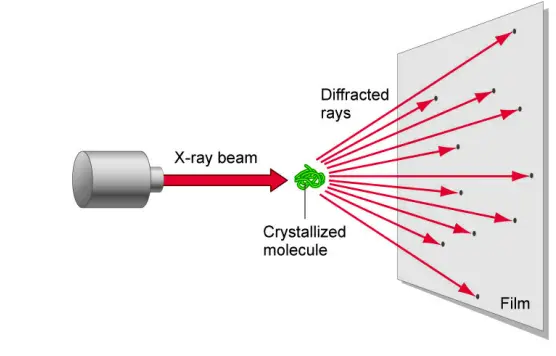
X-rays have a much smaller wavelength than light, thus allowing us to analyze tiny crystals of atoms. Crystals diffract the x-ray according to its lattice structure and the resulting diffraction pattern can then be used to determine protein structure.

References: