Illustrated · 1 min
Arrhenius Acids and Bases
What are Arrhenius Acids and Bases?
-
Arrhenius acids and bases are defined by what is formed when the acid or base is dissociated in water
-
Arrhenius acids must contain a hydrogen (such as HCl)
-
Arrhenius bases must contain a hydroxyl group (OH) (such as NaOH)
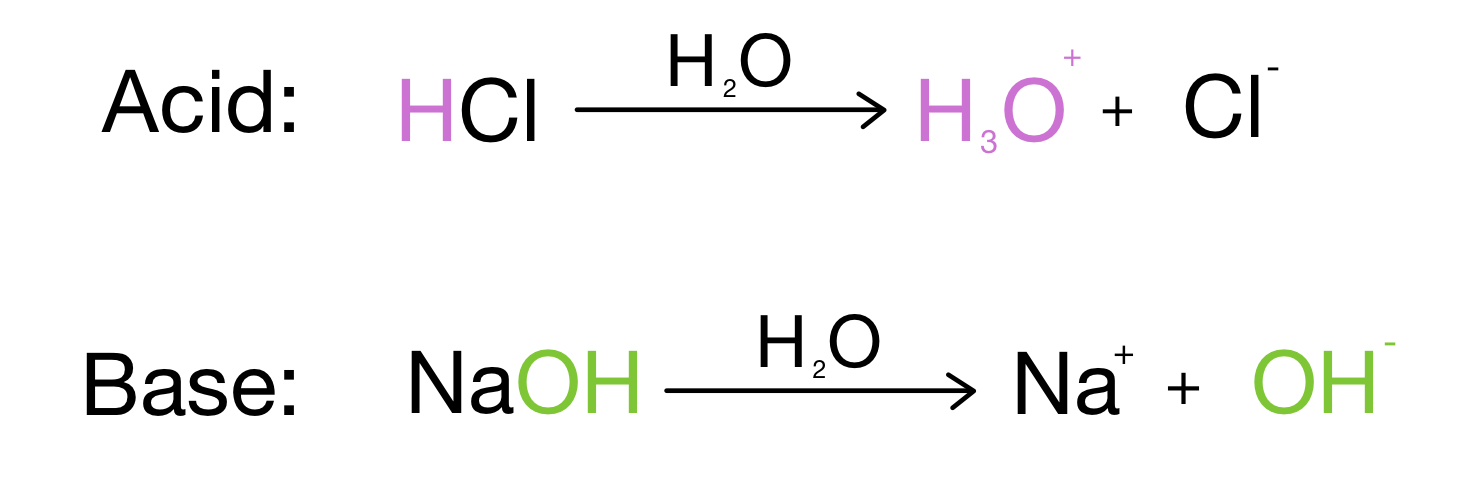
Image source: By Caroline Monahan
What Happens When Arrhenius Acids and Bases Dissociate in Water?
-
Arrhenius acids produce hydronium ions (+) when dissociated in water. This is because when hydrogen from the acids is in solution with water, it attaches to the water molecules, producing hydronium ions (instead of just hydrogen ions!)
-
Arrhenius bases produce hydroxide ion (OH-) when dissociated in water. The hydroxide ion does not attach to water molecules like hydrogen ions, so in solution, the OH- is left in solution!
Ionization Reaction
- Overall, Arrhenius acid-base reactions are ionization reactions! Due to the fact that ions were formed when they did not exist before the reaction.
Ex: + → Ca + -
Note: As you can see in the example above, there were no ions in the reactants. Through the reaction, ions were formed