Illustrated · 2 min
Oxidation State and Metals
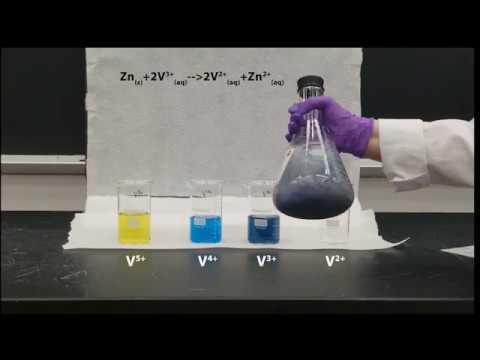
Different elements are able to access different oxidation states. The oxidation state describes the number of electrons an atom has. When an atom loses electrons the oxidation state increases. When an atom gains electrons the oxidation state decreases. This change in the number of electrons is very common in transition metals.
Transition metals are found in the middle of the periodic table. When they form compounds with other atoms or molecules these are called metal complexes. The atoms or molecules bound to the metal are called ligands. The oxidation state of the metal and identity of the ligands changes the properties of metal compounds. One such property is changes in color.
Light and Color
Light travels in waves and different wavelengths correspond to visible colors. Light can interact with colored substances. When metal compounds are in solution, they can create colored solutions. Some of this light is absorbed and other light is transmitted.

The energy of the light absorbed will be transmitted at the opposite wavelength. If a compound absorbs light at 420 nm, the compound will appear yellow based on the light transmitted.
Image source: By Cassie Gates
Some chemical compounds absorb light which gives rise to varieties of colored chemical compounds. Metal complexes are chemical compounds that are well known to display a variety of vibrant and different colors.
Metals and Color
The light absorbed by a metal complex can excite electrons. Electron excitation occurs from the added energy of absorbed light. This gives rise to the colors shown by metal complexes. The amount of energy an electron is excited by corresponds to a wavelength of light. The color the compound appears is related to the light absorbed, usually the opposite color on the color wheel.

The electron absorbs light with the wavelength in the orange region. The wavelength of light corresponds to the energy to move the electron into an excited state. The compound will appear blue if orange light is absorbed.
Image source: By Cassie Gates
Metal Oxidation State and Color
When electrons that reside in the d-orbitals of metals are excited they can under-go d-d transitions. The d-d transitions occur when an electron is in a ground state in a d-orbital and is excited to another d-orbital. The energy between d-orbitals often corresponds to wavelengths of light seen in the visible spectrum. This is what gives rise to the wonderful colors of metal complexes. If a metal has no d-electrons or has full d-orbitals, d-d transitions cannot take place. If d-d transitions do not take place, the metal compound is usually colorless. Other than or metals being colorless, the color of metals cannot be predicted on the number of electrons or oxidation states. Factors such as the metal, ligands, solvation, and more affect the color metal compound appear.

All of these metal complexes have the same oxidation state, but different colors. The differences in color comes from the number of d electrons, the type of ligands, and oxidation state combined.
Image source: by Cassie Gates