Збереження маси в хімічних реакціях

Illustrated · 1 min

The Law of Conservation of Mass, discovered by a French chemist named Antoine Lavoisier in 1789, states that in a chemical reaction, matter is NOT created nor destroyed. In a chemical reaction, the mass of the products and the mass of the reactants are equal.

Consider oxygen and hydrogen molecules combining to form water. Notice how there are no new atoms. They have just re-positioned. Thus, in a chemical reaction, new atoms are not formed, but the original atoms simply rearrange to make different molecules.

The mass of one mole of hydrogen atoms is 1.008 g, and the mass of one mole of oxygen atoms is 15.999 g. Once calculated, the total mass on both sides of the equation is 36.030 g. Try to calculate it yourself!


Illustrated · 1 min

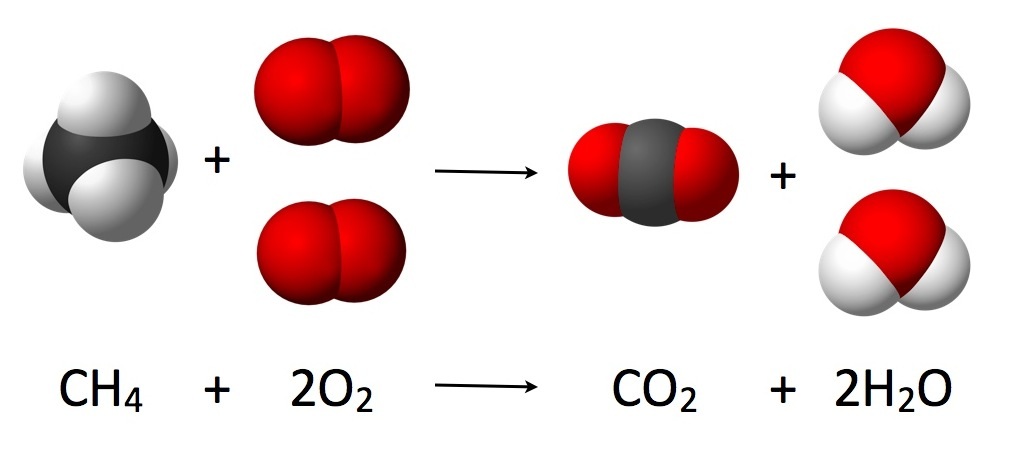
Diagram of a combustion reaction with formula $CH_{4} + 2O_{2} \rightarrow CO_{2} + 2H_{2}O$

By JyntoRobert A. RohdeJacek FHJynto - Methane-3D-space-filling.svgOxygen Molecule VdW.pngCarbon-dioxide-3D-vdW.svgWater molecule 3D.svg, CC BY-SA 3.0, Wikimedia Commons

In chemical reactions, bonds between atoms are broken and reformed, but the actual atoms present stay the same. Atoms contain the mass in all matter, so the masses on each side of the reaction are always the same.

This is called the Conservation of Mass in chemical reactions, and was discovered by Antoine Lavoisier in 1785.

Video

(Video) GCSE Chemistry - Conservation of Mass #23

by Cognito

This video will explain why mass remains constant throughout a chemical reaction. This is also why we need to balance equations when we write them. You will also learn why some reactions seem like they're losing or gaining mass depending on what the reactants and products are.

Type a concept, like “slope” or “photosynthesis”.

↑ ↓ to choose · Enter to openSearch explanations and problems