Interactive · 1 question
+6 contributors





What is a Natural Number?
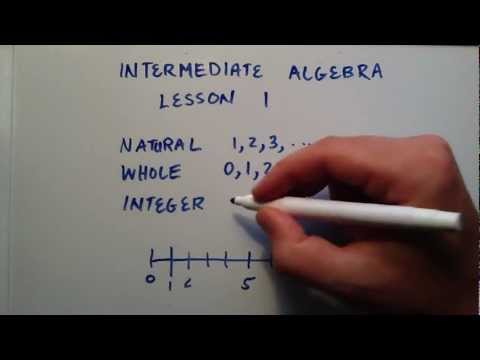
Natural numbers are the numbers used to count physical things. They start at and go continuing upward infinitely. We use the symbol to denote them. Furthermore, they are a subset of the real numbers. So, every natural number is a real number. Despite this, the natural numbers are still an infinite set. In other words, if we try to count all the natural numbers, it would take forever!
The natural numbers are positive and contain no fractional numbers. There is a debate on whether the number 0 is or isn't a natural number. We will not consider zero a natural number here. However, it is still a whole number. This is what distinguishes natural and whole numbers.
Example 1
We have a list of numbers.
Which numbers are not natural and why?
The first number, , is a natural number. The second number, , isn't because it is a fraction. The third, , isn't because it's negative. Lastly, isn't a natural number because it isn't positive. It's the only whole number that is NOT a natural number.
Example 2
You're at the bay and spot a seagull. Curious, you decide to count all the seagulls you can see in the area. When you finish counting, will the number be natural?
The answer is yes! Already, you've seen seagull (a natural number), so counting anymore will keep it natural. Since you can't count negative seagulls or fractional seagulls, the total will never not be natural. It doesn't even matter if you don't see any more. In that case your total is seagull.

Image source: By Stevebidmead CC0, via pixabay.com
Practice
Select all the numbers that are natural.
Solution
- is a natural number since it's positive with no fractional part.
- is not natural because it is not positive.
- is not natural because it is not positive.
- is not natural because it is a decimal, which contains a fractional part. Precisely, that fractional part is .
- is a natural number since it's positive with no fractional part. And quite a big one at that.