Illustrated · 1 min
Solution Saturation
Solutions are made by dissolving one substance in another. Often solutions are made by combining a solid into a liquid it dissolves in. The solid is called a solute and the liquid the solvent.

When the solute is added to the solvent, it dissolves creating a solution.
Image source: By Cassie Gates
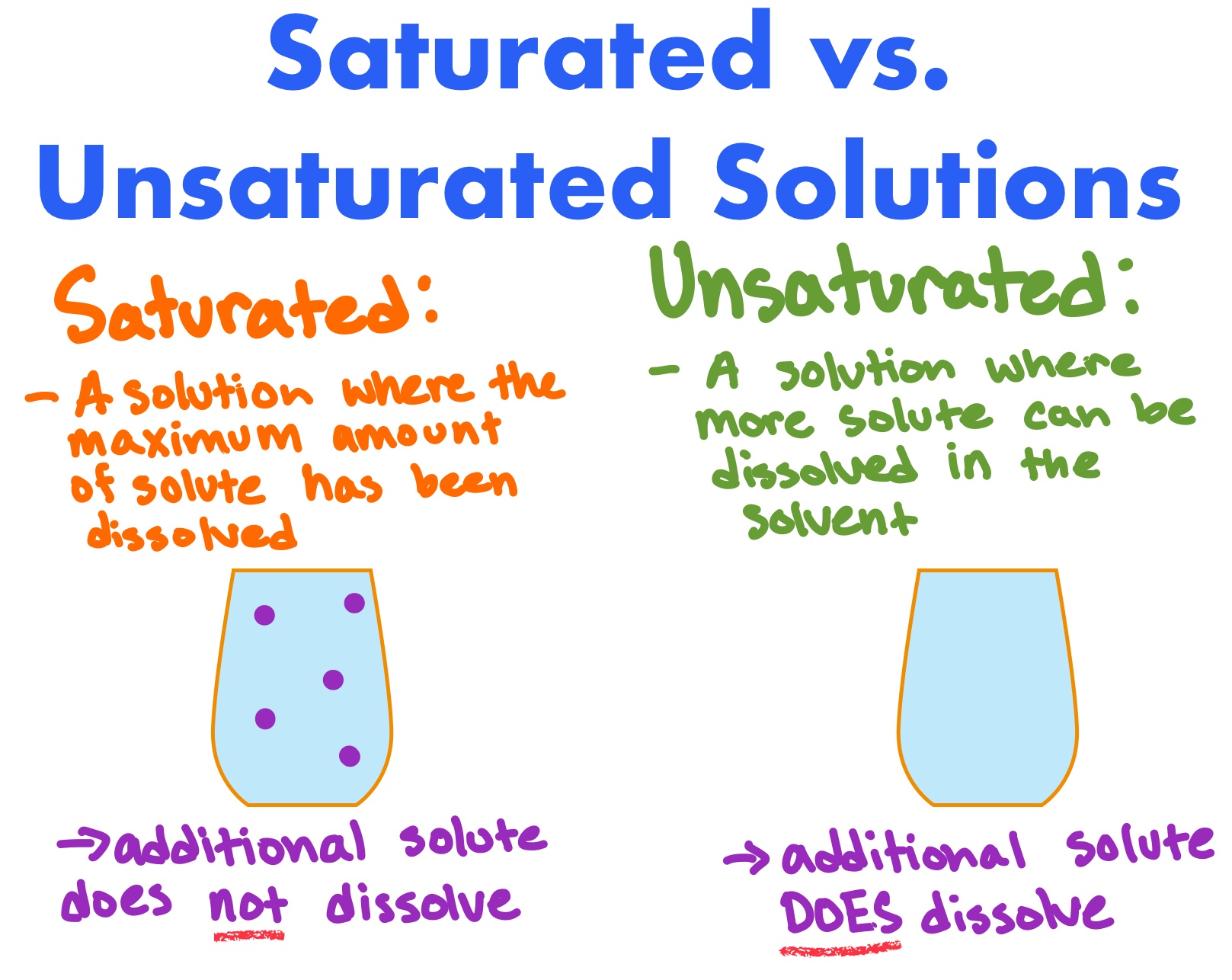
In some solutions, such as a salt in water, solvation happens quickly without any additional changes. However, as more solid is added, the less readily it dissolves. Eventually, the solute/solvent reach equilibrium with the solution. This means that the solute is balanced between dissolving and remaining solid (crystallizing). This solution is called saturated. Before this point it is unsaturated. As the solution becomes too concentrated, some solute may crystallize and come out of solution.

In an unsaturated solution, the solvation is favored. Once the solvation and crystallization are at equilibrium, it is a saturated solution.
Image source: By Cassie Gates