
Video · + 3 min read
The Big Bang.
What do you first think of first? Maybe these guys?
Not bad, but not what I was thinking of. I was thinking more along these lines of this.

What is that? That is the beginning of our universe. Every particle, all the matter that would ever exist- the stuff of stars and the building blocks for you and me- came about in that explosion.
A Big Bang, indeed.
Singularities are Weird
What you may have noticed in that video is that the screen starts black, and out of nowhere, a blue light appears. That blue light, emerging from nothing, is the singularity.
A singularity is a point of infinitely-concentrated matter. It is super dense and unimaginably hot- essentially all the matter that now floats around in the universe existed in that infinitely small point.
While I would like to be able to tell you how, I unfortunately cannot. Science doesn't know how this possible, indeed even the existence of the singularity is just theory.
The reason science cannot definitvely speak to its existence is because at a singularity, all of physics breaks down. Realize ALLLLLLLL the matter in the universe has been squished into a tiny space. Electron-degeneracy pressure, neutron-degeneracy pressure, quark and preon degeneracy cease to exist. Things are too close to each other for physics to even matter (I'm really sorry about that physics joke). The temperature is infinity and and its size is the negation of that. Everything is just weird at a singularity.
Clearly there is no way things can exist like this indefinitley (or maybe they can, a singularity exists without any real realtionship to time, but that's a discussion for another day). Either way, we know at some point, the singularity exploded. This is the big bang.
And after that, it was just a free-for-all.
What Happened in the Moments After the Big Bang?
As you might imagine, the creation of existence is kind of a big deal, and there were some pretty important decisions to be made about the nature of our universe. These decisions were made almost instantaneously, in time lengths that we astronomers and physicists call Planck Time, or the distance it takes light to travel one Planck Length (or 1.6×10?35 m, this excludes standard error and note that the (-35) is the power to which the Planck Length is raised).
In the first Planck Time or so a very important battle was fought between matter and antimatter. When these two things touch, they annihilate one another, so if our early universe had equal parts matter and antimatter, there would be no universe at all. Matter won out- only having about one more particle per billion than antimatter.
Truly, the first few moments of the universe's existence were not pleasant. Physics was being established, however this is one of the few instances when entropy did not rule supreme, because from the creation of the universe to about 380,000 years after, the universe settled down- the opaqueness of the cosmic background dissipated giving way to the first stars and soon after, the first galaxies.
This is actually where we get this picture:
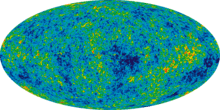
This is literally the univsere's baby picture. It is cosmic background radiation- the earliest proof of young galaxies and stars beginning to form.
From here, the universe only gets cooler.