Find Slope Using Points
Given two points, the formula for the slope of a line is
m=x2−x1y2−y1
To calculate the slope (or gradient), you will always use that equation.
The slope of a parallel line is the same as the slope of the line it is parallel to.
The slope of a perpendicular line is the negative reciprocal of the slope of the line it is perpendicular too.
For example, the two equations below are perpendicular lines.
yy=2x+2=−21x+2
The slope of the first equation is m=2 and the slope of the second equation is the negative reciprocal, m=−21.
Another thing to keep in mind is that horizontal lines have a zero slope, and vertical lines have an undefined slope.
Example
Let's look at this practice problem: A line passes through the points (0,3) and (10,−2). When solving for slope it is helpful to label our points for easy reference.
(0,3) (10,−2) x1 y1 x2 y2
Once we've done this we can plug our values into our slope formula.
mmmm=x2−x1y2−y1=(10)−(0)(−2)−(3)=10−5=−21
To solve this type of problem, you set up the slope equation by plugging in the points (1,5) and (2,a) and solve for a.
x2−x1y2−y12−1a−51a−5a−5a−5+5a=m=2=2=2=2+5=7
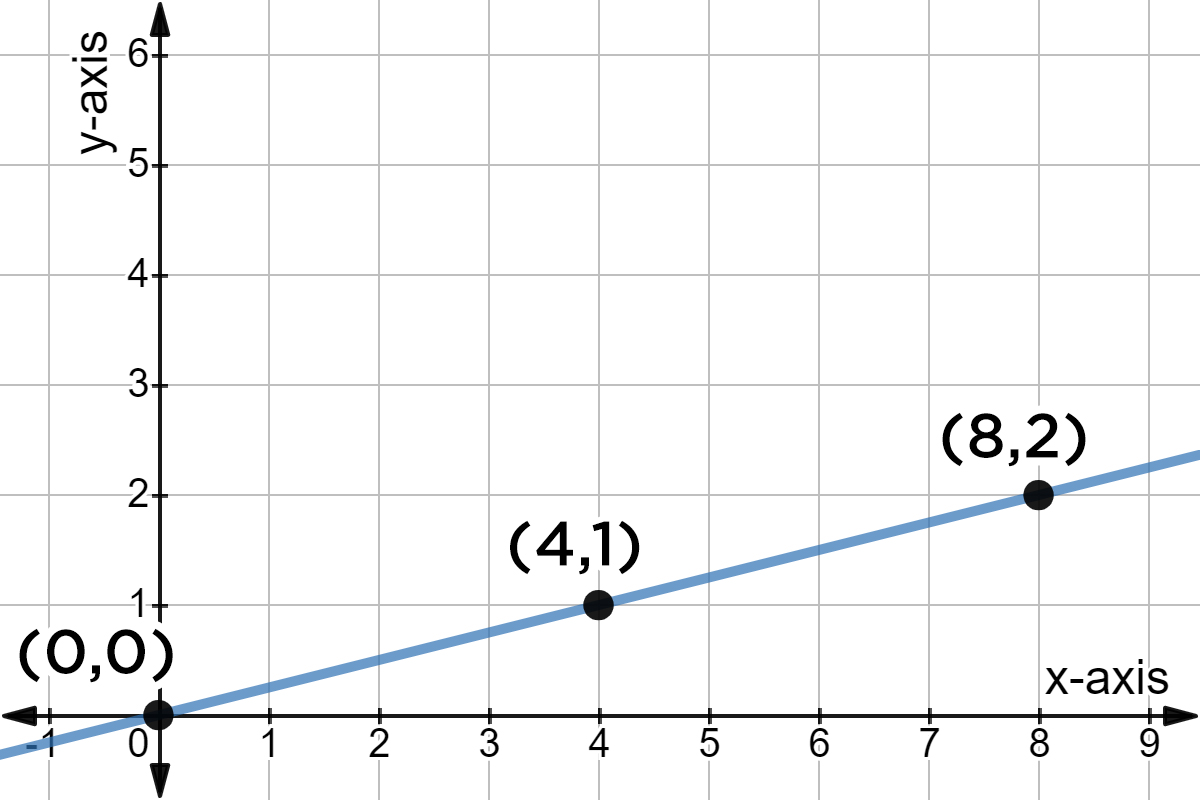
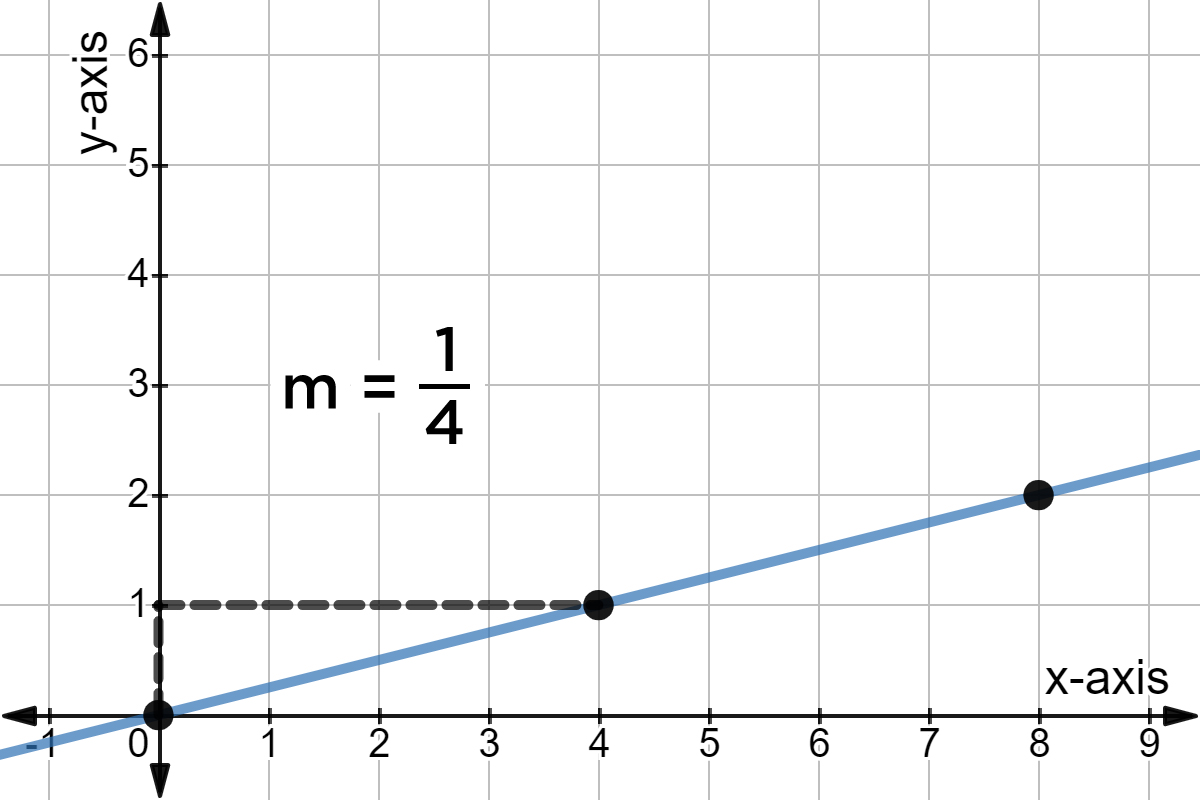
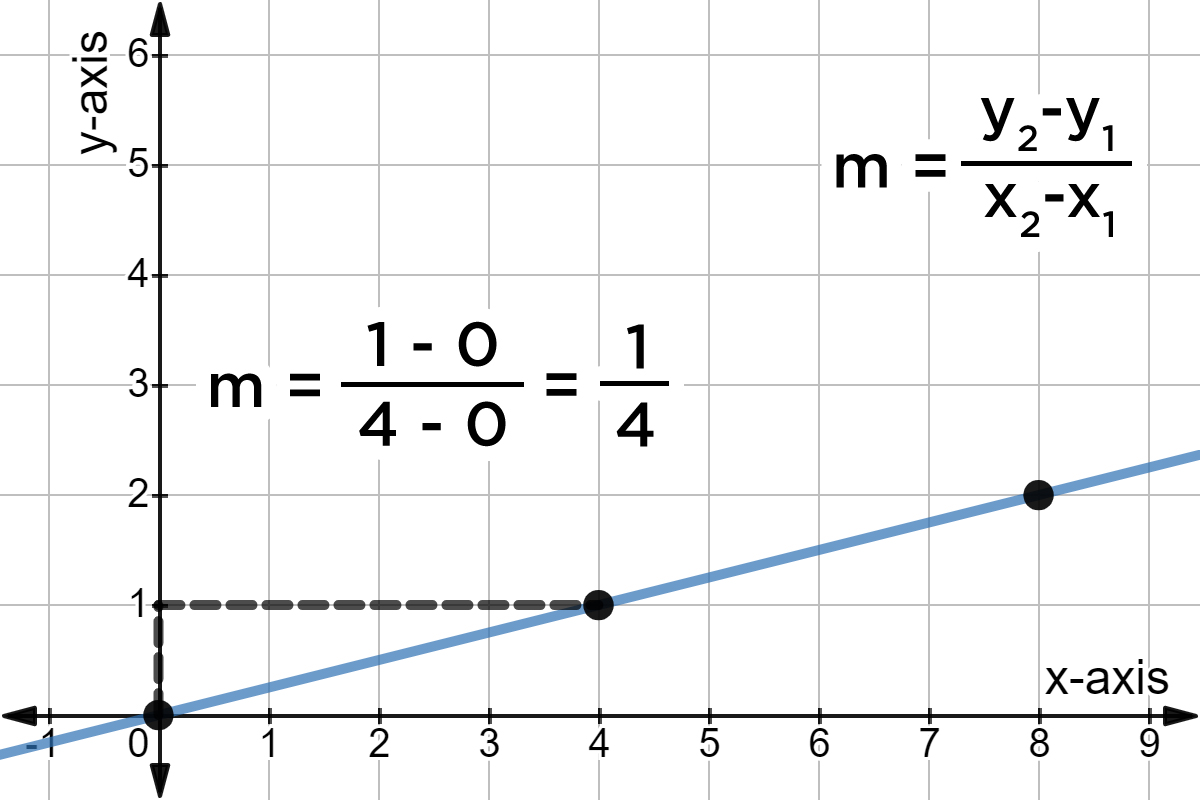
What is the slope of the graph above?
The graph shows how the equation x2−x1y2−y1=m We know that to find the slope, we find a point on the graph and count the units up from that point and over from that point. In this graph, we see the slope is 41 since we go up 1 unit and right 4 units. We could find that by using the formula too.
From this information, we can even find the equation of the line in slope intercept form, point slope form, or standard form!
In all of the above examples, you found the slope of a straight line. In the future, you may need to find the slope of a curved line, but let's not worry about that now!