Interactive · 2 questions

Univariate Data
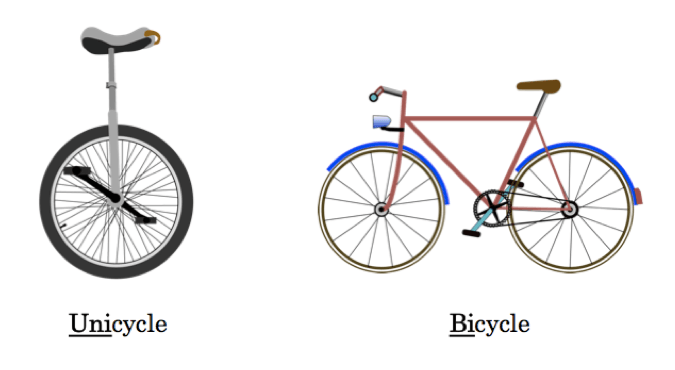
Univariate data has the prefix "uni-", meaning one. Therefore, univariate data has one variable being studied.
If I have a list of travel times from Pittsburgh to Philadelphia, what is my variable that I am studying?
Right! In the question above, I am studying the travel times to get from one place to the other. This is only one variable that I am looking for.
Bivariate Data
Bivariate data has the prefix "bi-" meaning two. Therefore, bivariate data has two variables being studied.
If I have a list of travel times it takes to get from Pittsburgh to Philadelphia in certain months, what are my variables going to be?
That's right! In the question above, we want to look at how the month in which you are travelling affects the travel time. Colder months tend to have more hazardous weather conditions, which plays a factor on travel.
When to use Univariate vs. Bivariate
You should use univariate data when looking at measures of central tendency such as mean, median, mode, range, and standard deviation. If you want to make a pie chart or histogram, or another similar chart, univariate data will be your best friend!
Now, with bivariate data, we want to compare two sets of data in order to find a relationship. This data is best to use with different kinds of plots like scatter plots, line of best fit, or correlation to see the relationship between and .