Interactive · 3 questions
+4 contributors



Rate
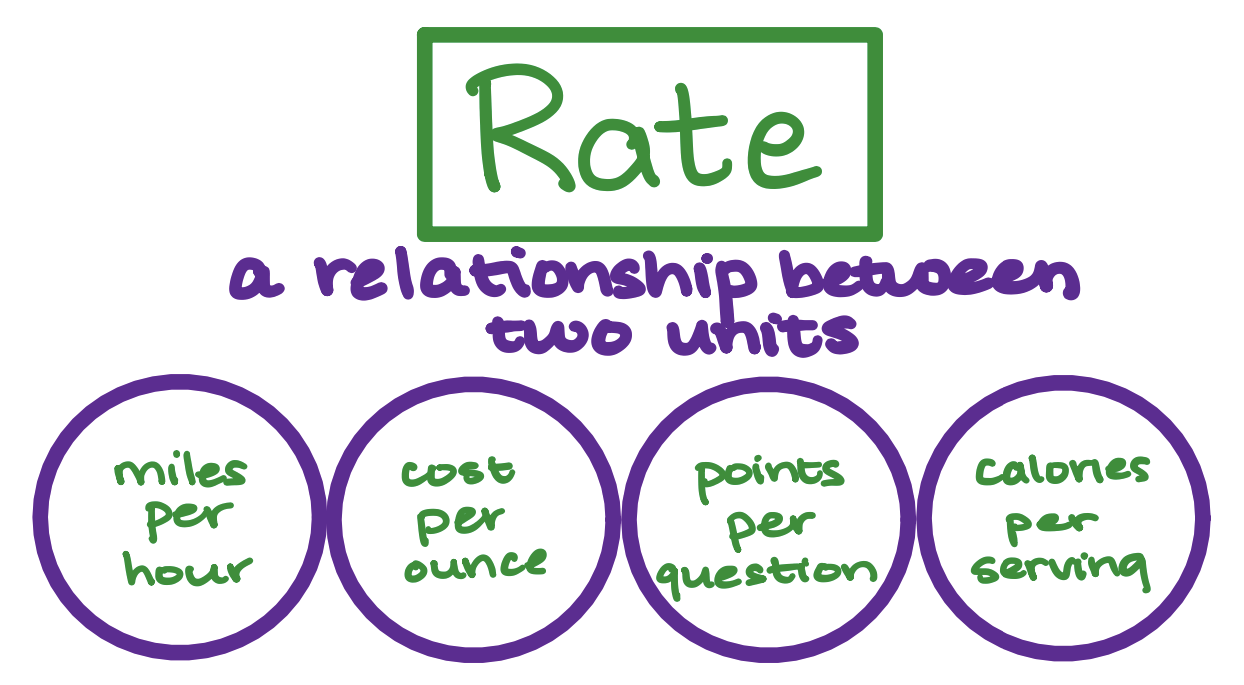
A rate is a ratio in which the two terms being compared have different units.
Instead of using the "to" form for ratios (for example, red marbles to blue marbles), rates often use the word per.
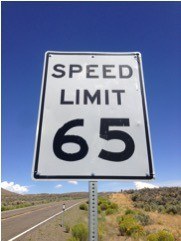
A rate that you see every day is on a speed limit sign. In the US, the speed limit might be miles per hour. This is actually a ratio of to . Because the speed and time have different units (miles vs. hours), this is an example of a rate.
Here are some examples of common rates: Speed limit, interest rate, crime rate, profit rate, birth rate, death rate, etc. Maybe there's a unit of time or if you're looking at heart rate (beats per minute). Rates are everywhere in our lives, which is why they are so important to understand.

Bpatel91 CC BY-SA 4.0
Here, we're looking at violent crime rate per 100,000 people. Say we zoom into Pennsylvania: we can see that the violent crime rate is (according to the key on the right-hand side), 243.28 to 364.92 violent crimes per 100,000 people. Because we used rates, we can compare different states using this handy map!

By LokiiT - Own work, CC BY 3.0, Wikimedia Commons
In the graph above, we can see Russian mortality rates at deaths per 10,000 people. Again, using rates allows us to compare the values over the years.
By Famartin - Own work, CC BY-SA 4.0, Wikimedia Commons
You probably see this sign everyday! The speed limit is 65 mph (miles per hour). This is also called unit rates. You can also learn about the relationship between distance-rate-time in this lesson.

By Alto13 - Own work, CC BY-SA 4.0, Wikimedia Commons

Image source: By Open Clip Art Library [Public domain] via publicdomainfiles.com
Can we write the relationship between dollars and hours as a rate?
How many dollars does Marcus earn per hour?
At this rate, how much money will Marcus earn if he works .
If Marcus' pay were to change, we would call that a change per unit. Maybe Marcus gained or lost pay - either way, his hourly rate, currently $, would change!