Read · 1 min
+2 contributors


The law of large numbers can be summed up with a quick example!
Let's say you have a single die that's numbered to Somebody asks you what the expected value of the dice is. Now you might not know what the law of large numbers is, but you probably know how to calculate the expected value of a dice! It's just:
Let's think about why that is. Well, the probability of rolling each of the numbers is technically equal. You might roll a dice and get s, or you might roll it again and get s and s. You're not always going to get each number from in rolls! That's just what the expected value predicts.
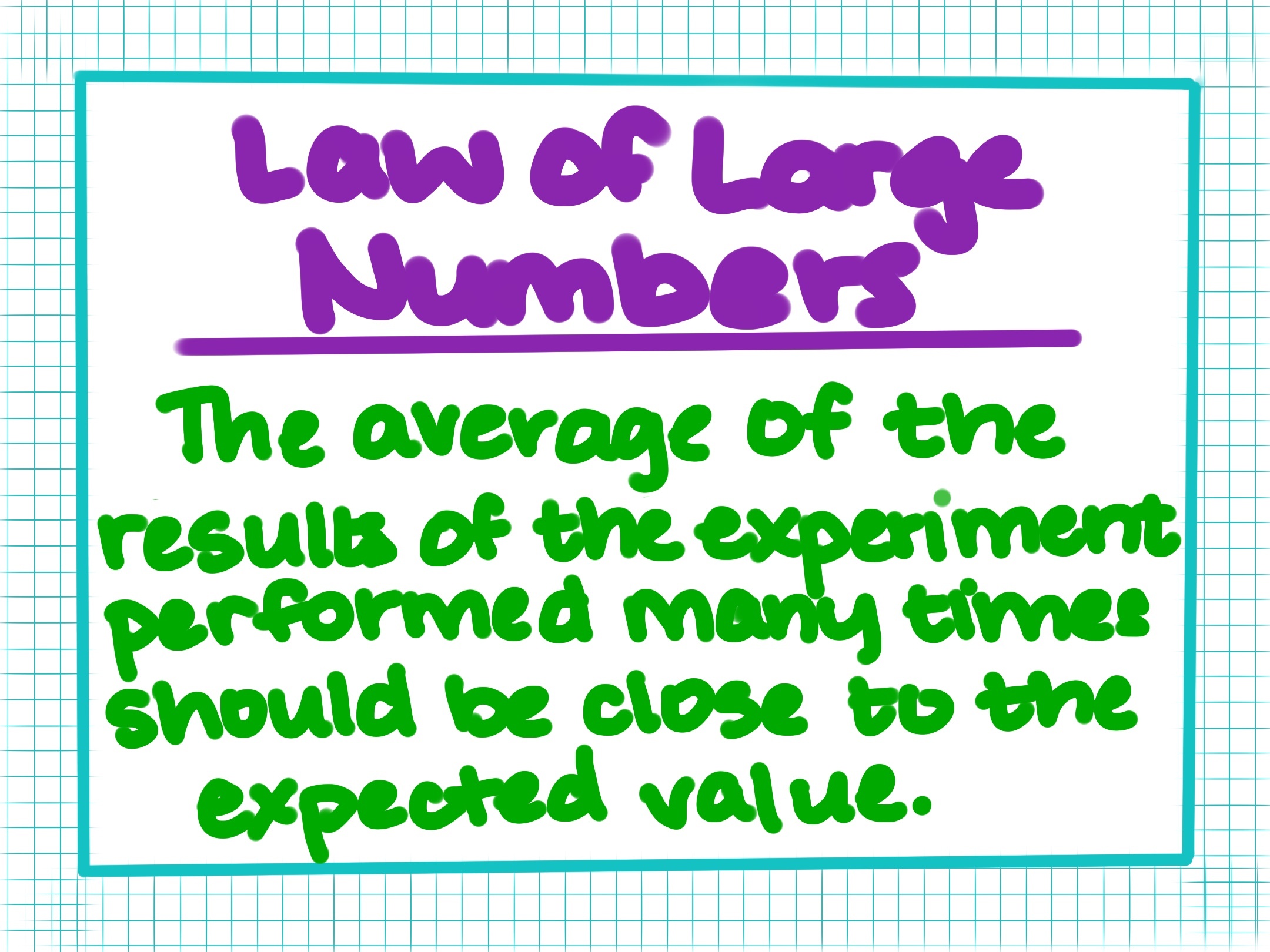
Basically, what the law of large numbers says is that the average of the results of the experiment performed a very large number of times should be close to the expected value. To translate this over to the dice problem: the 'experiment' is the rolling of the dice times and finding an average value for the rolls. If you do this experiment a million, a billion, or infinity times, the average of all of these average values should equal the expected value,