Synthetic Division for Polynomials
In this lesson, we are going to learn about synthetic division, a useful shortcut for polynomial division. It only works in certain cases, though, but it is much faster than polynomial long division.
We use synthetic division when we're dividing a polynomial by something like x–c, where c is a number. For example, let's say we want to divide 2x3+3x2–5x+6 by x–2.
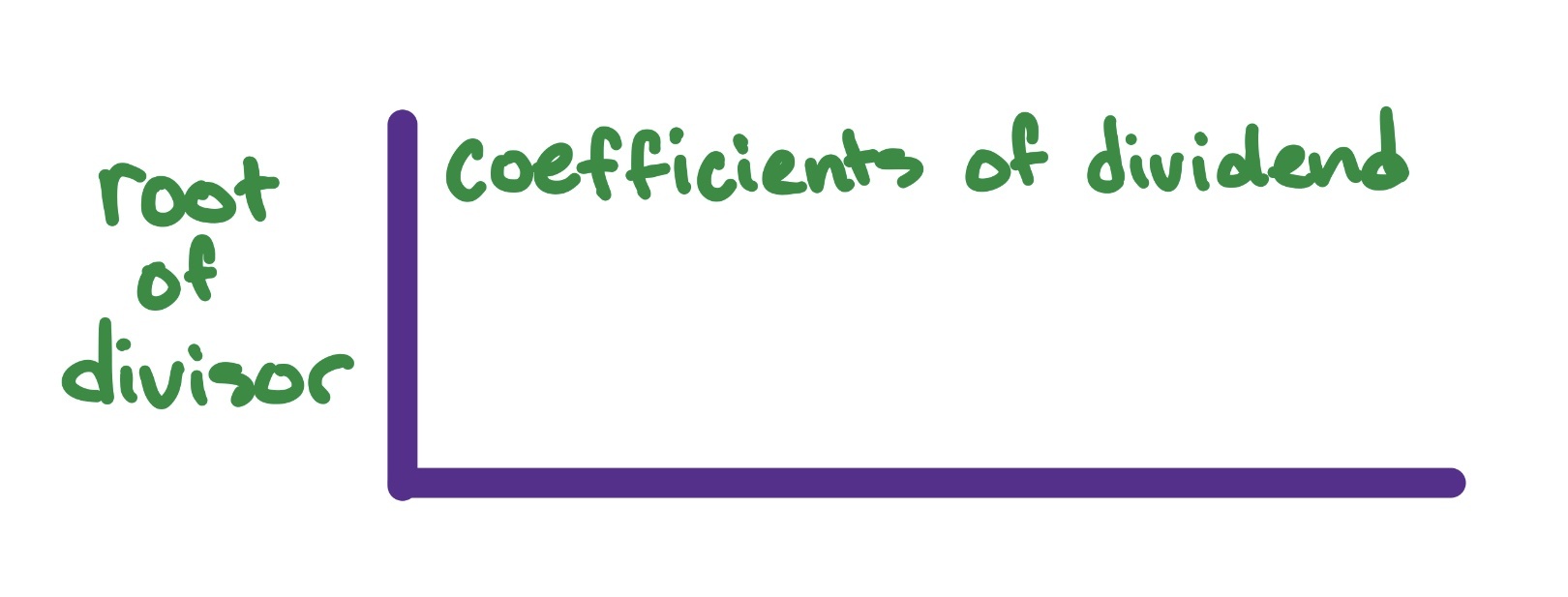
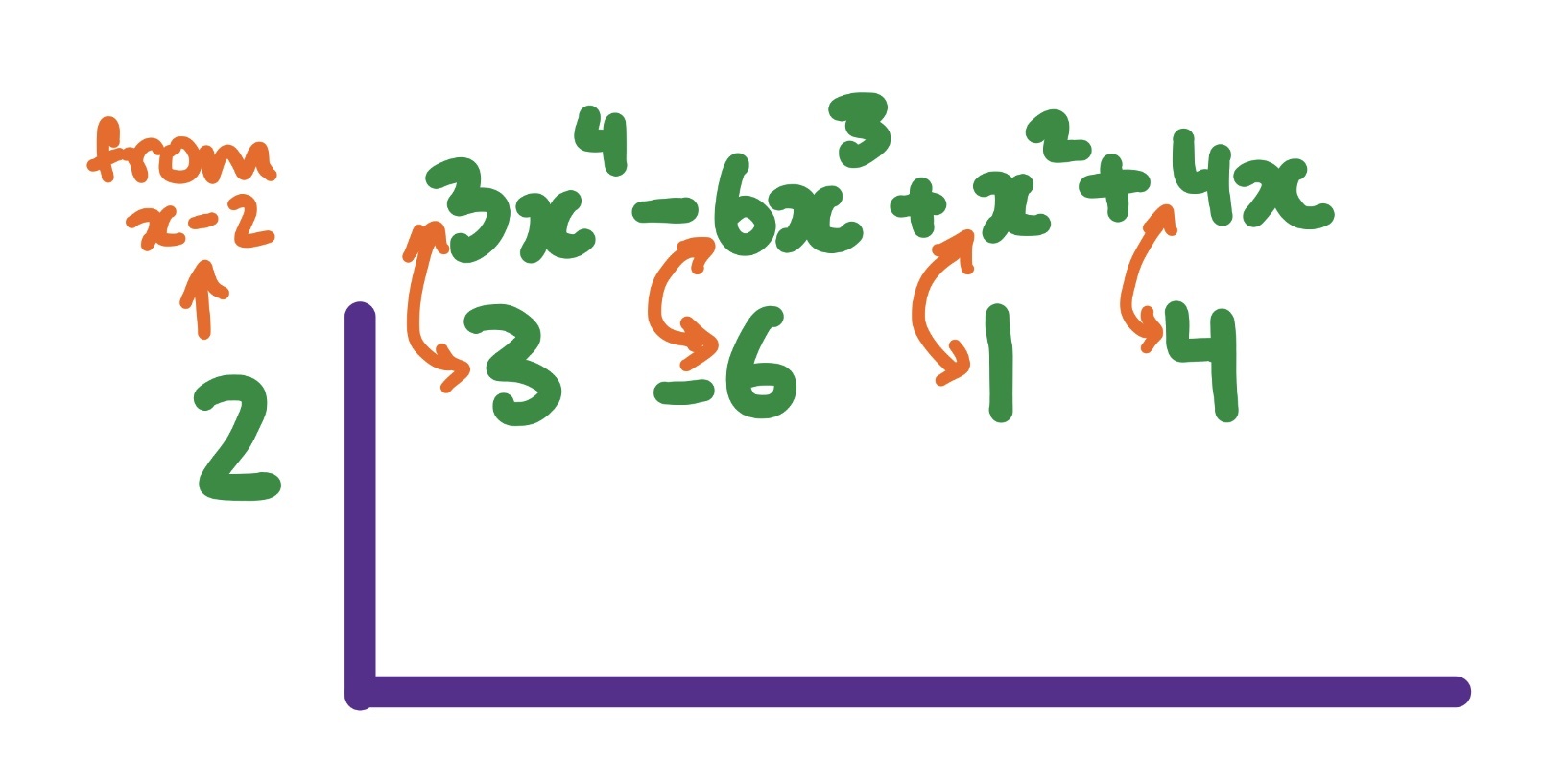
First, we write down the coefficients: 2,3,−5,6. Then, on the left, we write down 2, which is the opposite of −2. 2 will be the number we divide by.
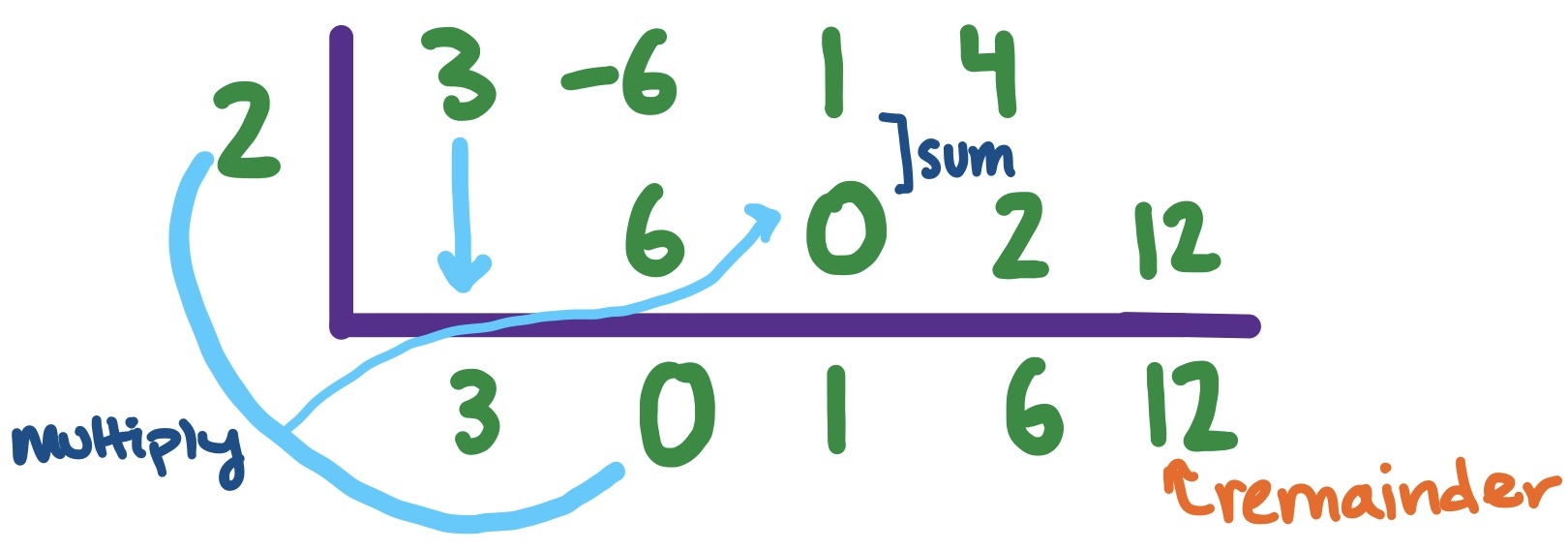
Next, you'll bring down the first number, 2. Multiply 2 by 2 and write the number under 3. Add the numbers in the second column, 3+4, and write the sum under the line.
Keep doing this until you reach the last number. The last sum is the remainder of the division. The other numbers are the coefficients of your answer.
Synthetic division seems confusing at first, but it gets easier the more and more that you do it. It's a great tool if you want to check if something is a factor of a polynomial.