
Interactive · 1 question

+3 contributors



Unit Rates
A unit rate is a special type of ratio (also called a single-unit rate). It will compare unit of some quantity to a different number of units of a different quantity. Unit rates are often used in real life situations, like when you need to convert between measurement systems. Any ratio that is not a unit rate can be turned into one. We'll discuss this a bit more later.

Image by Caroline Kulczycky
Examples
Let's look at some more examples:
Here are some special examples. They are all unit conversions for units of length. These include feet, inches, and meters.
The unit with the will always appear on the right-hand side. This is a matter of convention. Here's one final example you probably see all the time riding around in a car:

Image source: By PublicDomainPictures CC0, via pixabay.com
This rate, miles per hour, is sometimes abbreviated . It literally means the number of miles driven in a single hour.
Converting Ratios to Unit Rates
Sometimes, non-unit-rate ratios can be used to calculate unit rates! All you have to do is divide both sides of the ratio by the number on the right side. Consider the ratio:
Before we begin any conversions, let's talk for a moment about what this means. This ratio says that the total price of comics is dollars.
We convert by dividing both sides of the ratio by ! We start by taking the price, divide it by . We choose to divide by since that is the number to the right of the symbol.
There is always some special number we can multiply or divide by that'll give a unit rate. Of course, that number won't always be , but it's out there. Also, the actual units, dollars and comics, don't change in the problem. We can do this procedure no matter what units we start with, though.
When the unit on the left is dollars, it's called a unit price.
Now, try a problem for yourself.
Convert the following ratio to a unit rate:
We divide both sides by !
The Reverse Question
In the last problem, we were given a rate without a in it and asked to turn it into a unit rate. This time we'll do the reverse to see how long it will take to travel between two major cities.
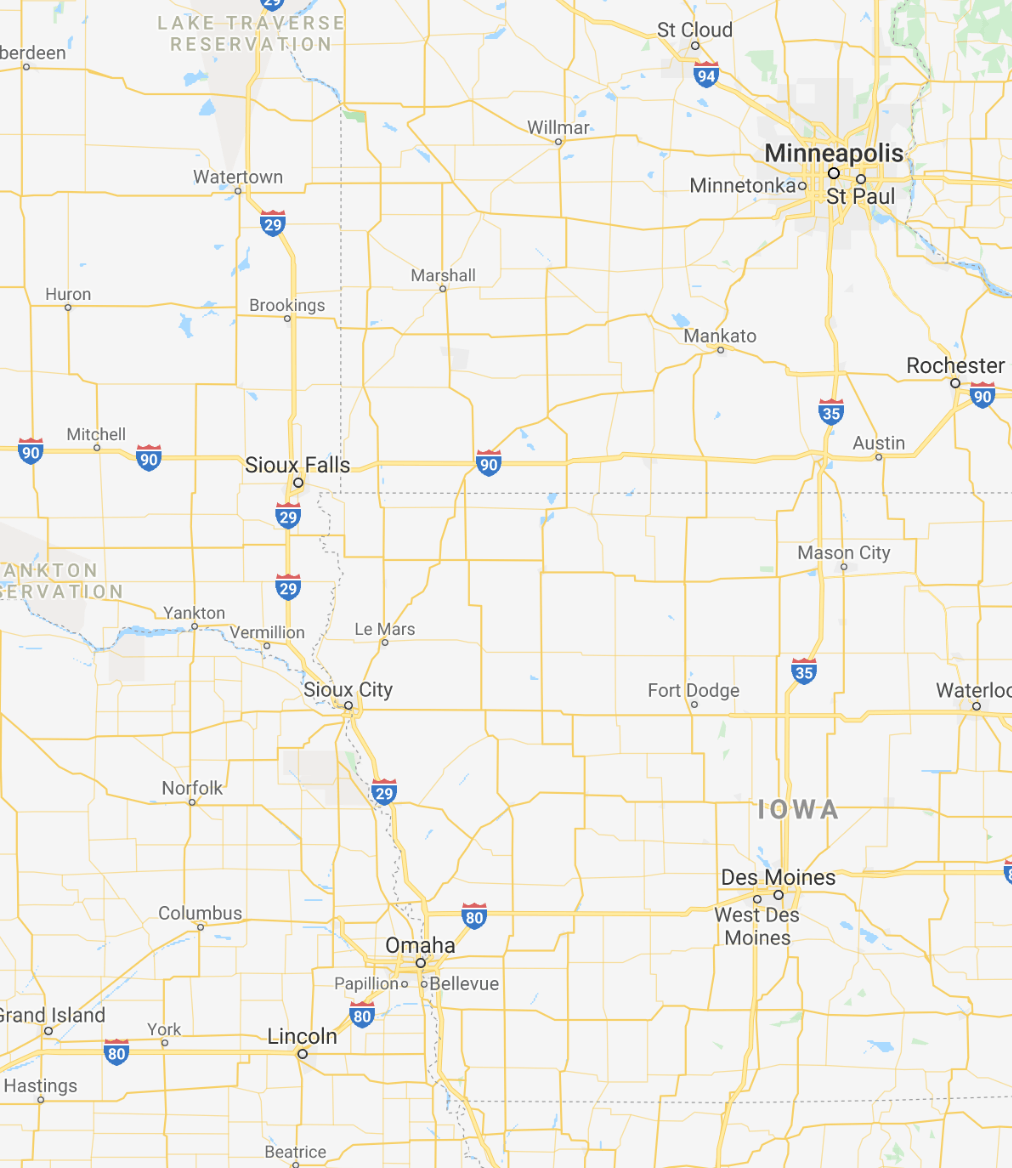
Image is a screenshot from Google Maps, taken by Joshua Siktar
Question: The distance driving from Minneapolis, Minnesota to Lincoln, Nebraska is miles. If you are driving miles per hour the entire trip and don't stop, how long will it take to make the entire trip?
Explanation: We are given the rate of miles per hour. This means you drive miles in a single hour. We want to know how long the trip will take if you continue at this rate (or speed). This is actually a proportion word problem in disguise, and so we'll have to solve an equation. Our variable is the total time for the whole trip. We'll call this variable . Then we want to turn our given rate into one where the distance is miles. The proportion is
In case you aren't familiar, the technique here is to cross-multiply. To do this it's easier to temporarily hide the units and just worry about numbers and variables.
That means we multiply both sides of the equation by something to get rid of the denominators. Let's multiply both sides by
This equation is much more familiar. We can solve in one step by dividing both sides by :
Remember that our time unit was hours. Thus it takes of driving at to make the entire trip.


