Gráfico: Translação vertical

Before this, knowGráfico de uma função

Interactive · 1 question

Vertical Translations

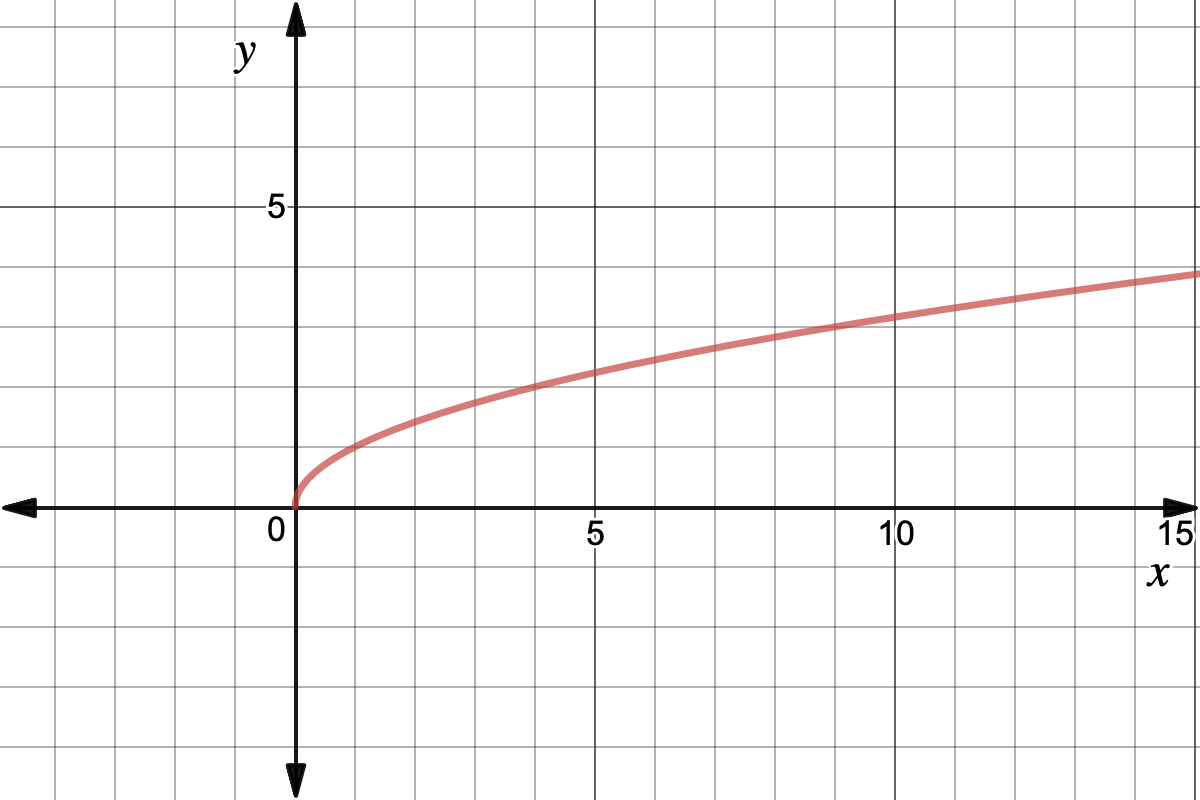
We've already learned about the base square root graph. y=xy=\sqrt{x}
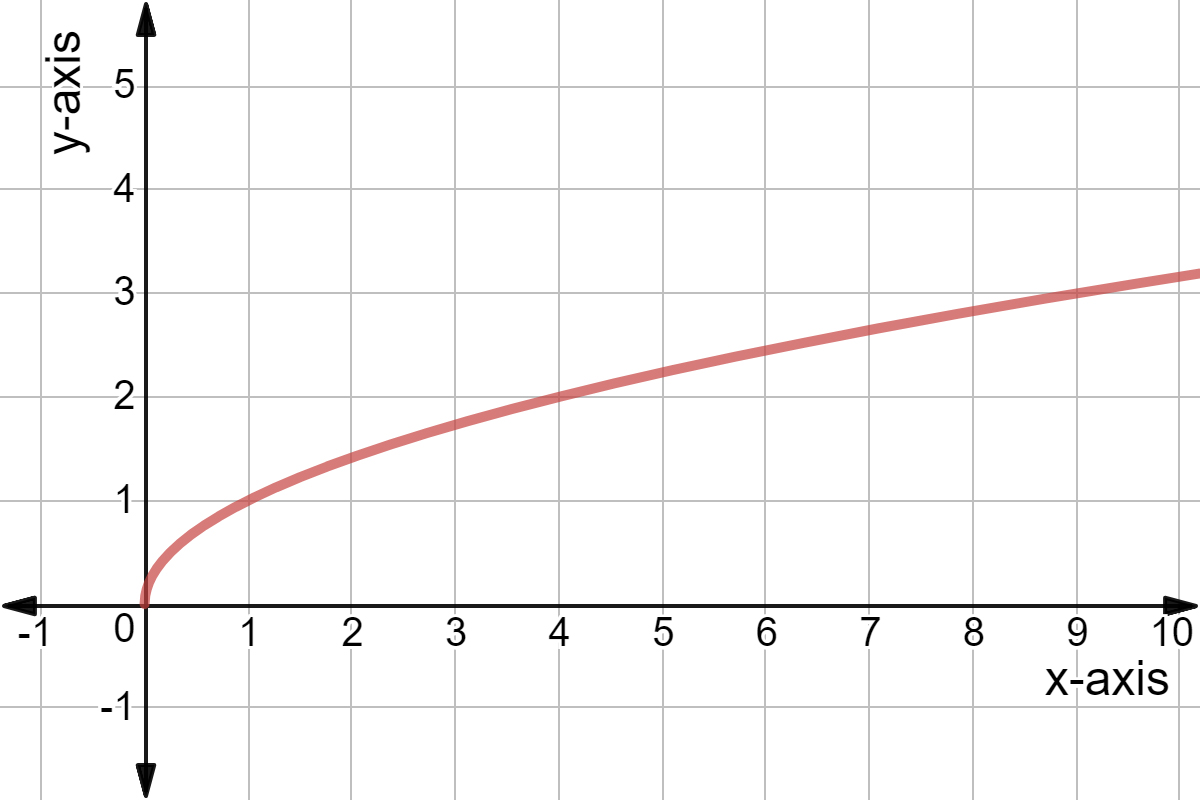
Radical graph y = sqrt(x).

Made using Desmos

Now, we're going to look at vertical translations. In other words, shifting the graph up and down. The generic formula is: y=x+c\boxed{y=\sqrt{x}+c} Here, cc is the vertical shift.

  • If cc is positive the graph moves upward along the yy-axis.
  • If cc is negative the graph moves downward along the yy-axis.
Radical graph y = sqrt(x) in red. y = sqrt(x) + c in blue. y = sqrt(x) - c in green

Made using Desmos

Let's look at some specific examples.

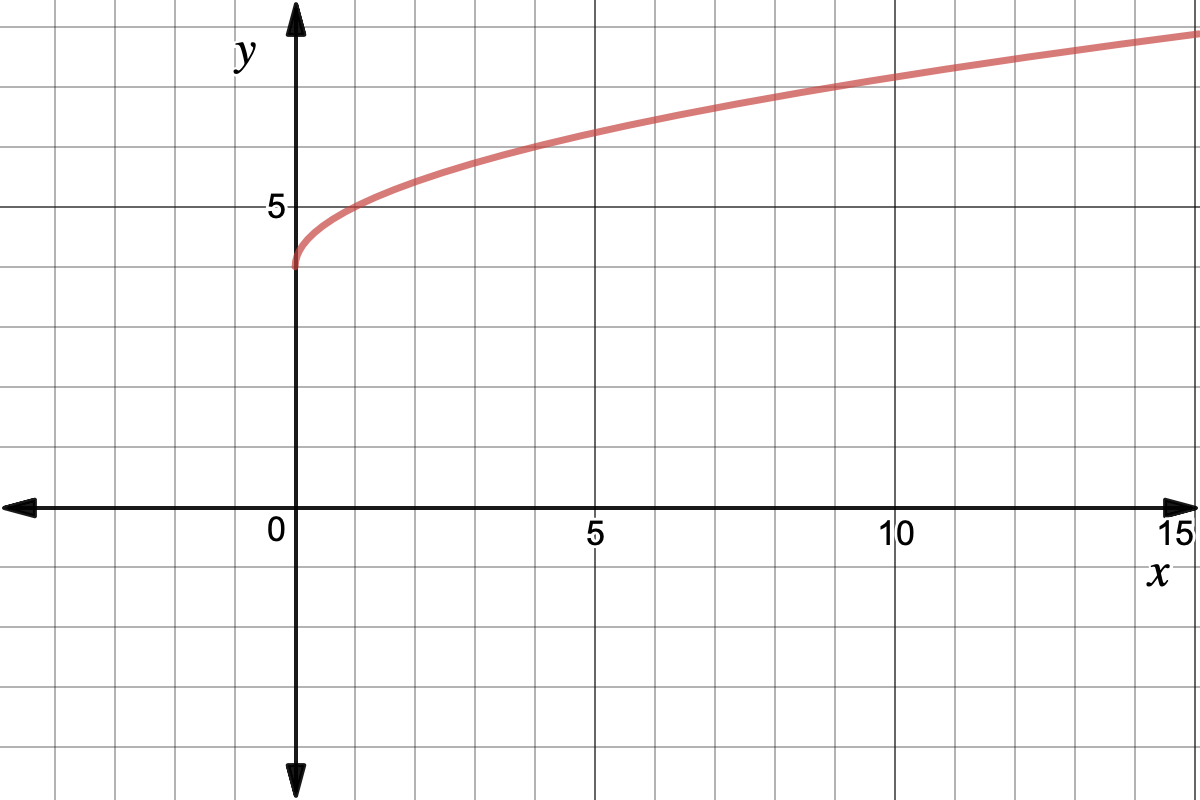
Say we wanted to graph the equation: y=x+3y=\sqrt x+3 We know this is a vertical shift because the constant is outside of the square root. The +3+3 tells us we shift the standard radical graph up 33 spaces along the yy-axis.

Graph of both y = sqrt(x) and y = sqrt(x) + 3.

Made using Desmos

What is the vertical shift of the following radical? y2+2=x\frac y2+2=\sqrt x

Choose one answer

Interactive · 2 questions

Applying a vertical translation to a graph drags it up or down along the yy-axis. The amount of this translation is a constant, cc, that we get to pick, and it can be positive or negative. We add or subtract a constant outside of a function to get another function that takes different values from the original one.

Let f(x)f(x) be a function. Which of the following are vertical translations of that function?

Choose all correct answers

Video

(Video) Vertical Translation of Square Root Graphs

by Eric Stanwood

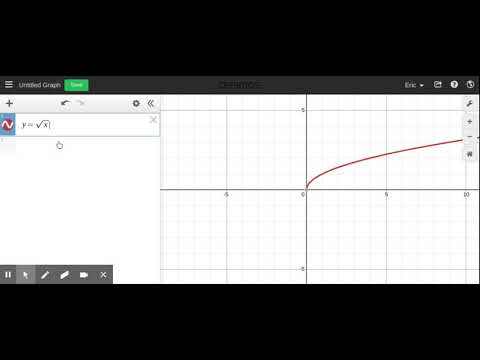
This video by Eric Stanwood demonstrates how to create a vertical translation of a square root function.

Summary

Here is the graph of a standard parent square root function, y=xy=\sqrt{x}:

This is the graph of a parent square root function, with the function starting at the origin, $(0,0)$ and going on until infinity.

Made using Desmos

If we want to shift the function up by one unit, we add 11 outside of the radical sign.

This is a graph of the function y=x+1y=\sqrt{x}+1:

The graph of the function $y=\sqrt{x}+1$.

Made using Desmos

Now, let's look at the parent function again, y=xy=\sqrt{x}:

Parent square root function, starting at the origin, $(0,0)$.

Made using Desmos

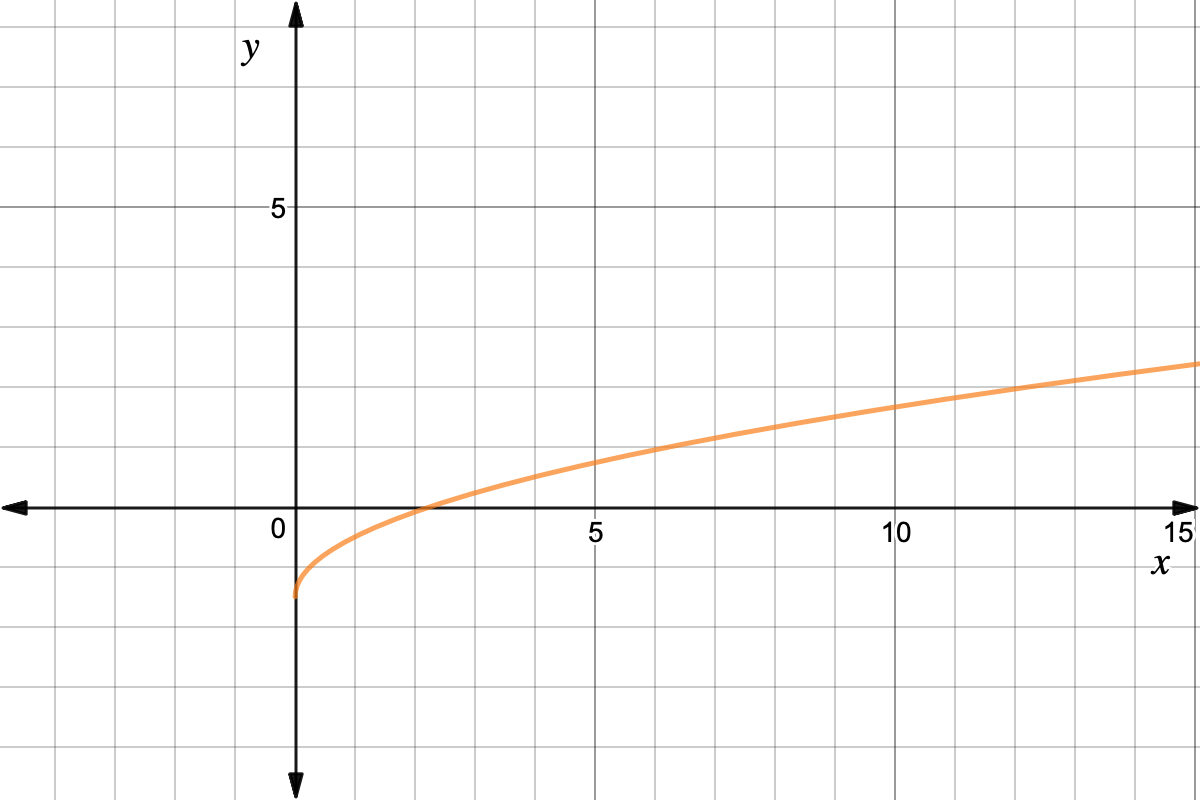
Let's shift this parent function down by one unit. We are subtracting one from outside of the radical sign.

This is a graph of that function, y=x−1y=\sqrt{x}-1:

The graph of the function, $y=\sqrt{x}-1$.

Made using Desmos

Type a concept, like “slope” or “photosynthesis”.

↑ ↓ to choose · Enter to openSearch explanations and problems