
Illustrated · 1 min
By Gabi Slizewska

+1 contributors
Contributors


Image source: By Gabi Slizewska
Illustrated · 1 min
Image source: By Gabi Slizewska
Illustrated · 3 min
Lipids are a diverse group of macromolecule that have a wide variety of functions in living cells. Examples include storing energy, signaling between cells, and forming the cell membrane. They are made from monomers (building blocks) called fatty acids. The functional group attached to each monomer determines the specific type of lipid it will be.
Lipids are insoluble in water, making them especially important in cell functions. Unlike water, they are non-polar. Because of this, they will not mix with water.
In fact, they are referred to as hydrophobic, which literally means "water-fearing". If you have ever tried to mix oil and water, you've probably noticed that they remain separate. This is because oil is a lipid and non-polar.

Image source: By Cottonseed Oil CC BY 2.0, via flickr.com
You've probably heard of saturated and unsaturated fats on TV ads, nutrition labels, and billboards. The difference between them, structurally, is actually really small. Let's take a look:

Image source: By OpenStax College CC BY 3.0, via WIkimedia Commons
Saturated fats have straight carbon chains because they only contain single carbon-carbon bonds. Saturated fats pack together closely and are solid at room temperature. Saturated fats are typically found in animal products. Butter is a good example.
Unsaturated fats have a kink in their chain caused by a double bond or even a triple bond between carbons. Because of these kinks, unsaturated fats can't pack together very closely, making them liquid at room temperature. They are typically found in plant products. Vegetable oil is a good example.
The hydrocarbon chains of both saturated and unsaturated fats are attached to a carboxylic acid functional group. This is what makes them fatty acids.
Lipids that store energy are called triglycerides. These molecules have three long chains of fatty acids attached to a glycerol backbone. In many organisms, extra carbohydrates are often stored as triglycerides in fat tissue.
Triglycerides are excellent long-term energy storage molecules because they will not mix with water and break down. We can also eat triglycerides (in delicious fried foods, often) and break them down to get energy.

Image source: By OpenStax College CC BY 3.0, via Wikimedia Commons Image source: By Rlawson at English Wikibooks CC BY-SA 3.0, via Wikimedia Commons
Phospholipids are a type of lipid that form cell membranes. They have two parts: the hydrophilic, polar head (attracted to water) and the hydrophobic, non-polar tails (repelled by water). The tails have one more important feature. One of the tails is an unsaturated fatty acid, while the other is saturated. This means that they have two different shapes, as seen in the picture below.

Image source: By OpenStax CC BY 4.0, via Wikimedia Commons
Two different layers of phospholipids form cell membranes. Because of this, cell membranes are also called phospholipid bilayers (bi means "two").

Image source: By LadyofHats [Public domain], via Wikimedia Commons
Steroids and waxes are the last group.
Steroids are often found in the cell membrane supporting its structure. The most common membrane steroid is cholesterol. Because the interior of the cell membrane is hydrophobic, things that go through it also have to be hydrophobic.
This is why extra cholesterol can be so dangerous; it doesn't dissolve in water, so if there is a buildup in the bloodstream it won't dissolve away. But don't forget that normal amounts of cholesterol are absolutely necessary to keep you alive and keep your cell membranes nice and fluid. It's all about having the right amount and type of cholesterol.
Steroids can also be used as signaling molecules. Hormones like estrogen and testosterone are released by some cells and received by others as signals to change and develop.
Finally, waxes are manufactured by organisms as a protective barrier against water and other contaminants.
Interactive · 3 questions
Lipids are used to store energy, similar to polysaccharides. Examples of lipids include fats, oils, waxes, hormones, and steroids. They are also polymers of fatty acids.
Lipids are non-polar molecules, so they are not soluble in polar solvents like water. If you've ever tried to combine oil and water, you've seen how poorly they mix. This feature of lipids allows our bodies to use them as waterproof barriers and as biological membranes.

Image source: By OpenStax College CC BY 3.0, via Wikimedia Commons
What are the monomers of lipids?
Fatty acids are either saturated or unsaturated.
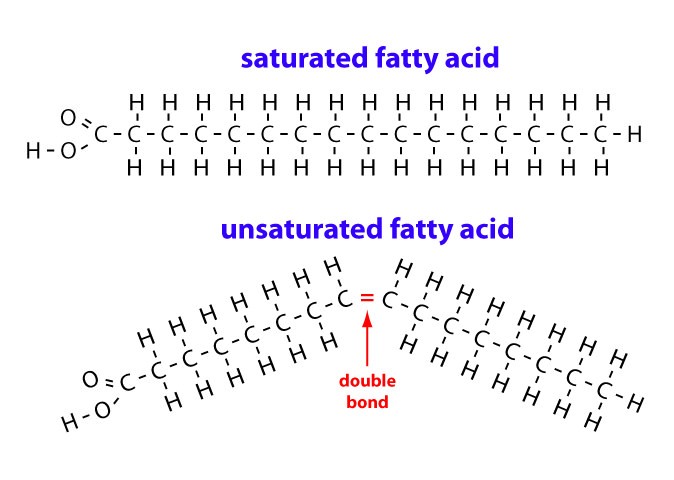
Image source: By Liangtai Lin CC BY 2.0, via flickr.com
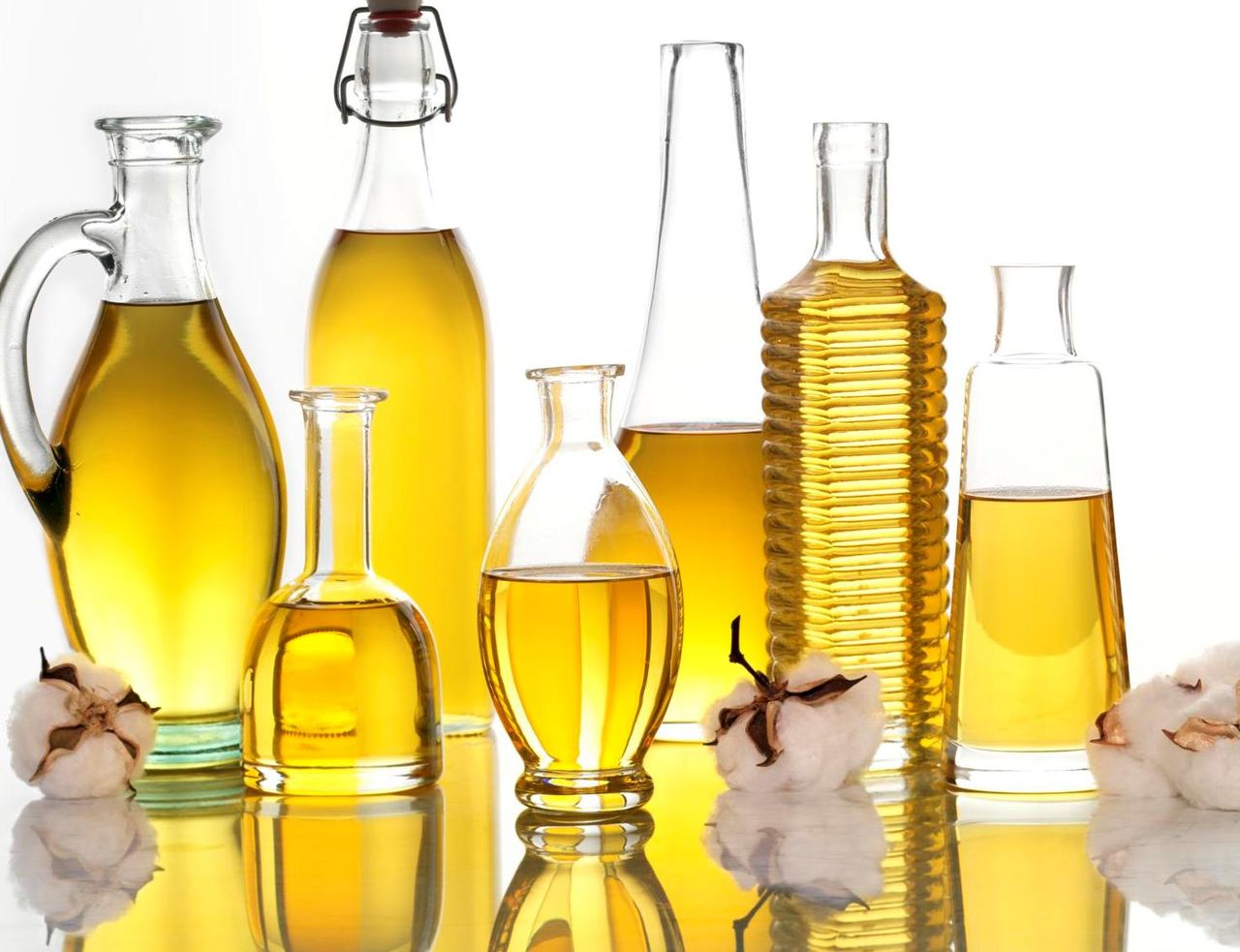
Image source: By Cottonseed Oil CC BY 2.0, via Wikimedia Commons
Unsaturated fatty acids have one carbon-to-carbon double bond. Polyunsaturated (poly- means many, so many unsaturated) fatty acids happen when the chain has more than one carbon-to-carbon double bond. These types of lipids are typically liquid at room temperature, like vegetable and olive oil.
Saturated fatty acids ____ .
Unsaturated fatty acids ___ .
Lipids are used to form structural parts of cell membranes and form signaling molecules within the body. They are most commonly used for energy storage because they have a high energy content and are metabolized to release calories.
: Any molecule that can react with other molecules of the same or different makeup to form a chain, or polymer
: A chain of monomers made of a specific type of compound
: A polymer that has a large (macro) molecular mass. There are four main types in organisms: carbohydrates, proteins, lipids, and nucleic acids
: Saturated fatty acids occur when each carbon atom in the chain is linked by a single bond
: Unsaturated fatty acids have one carbon-to-carbon double bond
: Fats and oils
Video
by RicochetScience
This video explains the structure of lipids, examples of them in what we eat, and examples of what they do in the body.
Video
by Amoeba Sisters

Lipids are one of the four major macromolecules. Watch this video for a quick explanation of their structures and functions.
Illustrated · 1 min
Lipids are the main macromolecule in our body that is used for energy storage, making hormones and steroids, and making up cell membranes. They are made up of their monomers glycerols, fatty acids, and steroids.
Examples of lipids include cholesterol, saturated and unsaturated fatty acids, triglycerides, and phospholipids.
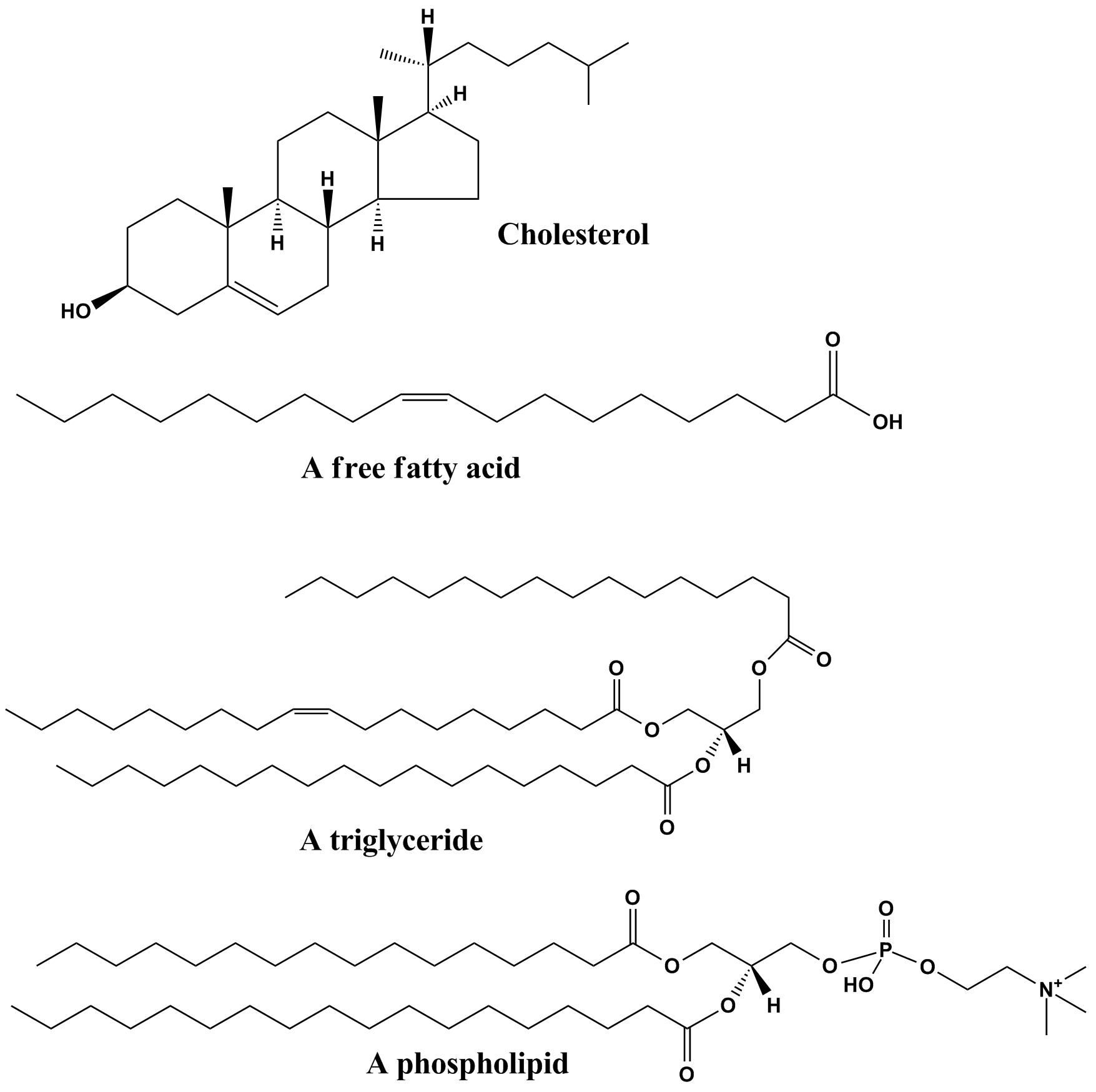
Image source: By Lmaps at the English Wikipedia CC BY-SA 3.0, via Wikimedia Commons
Lipids are abundant in our diets in the form of fats.
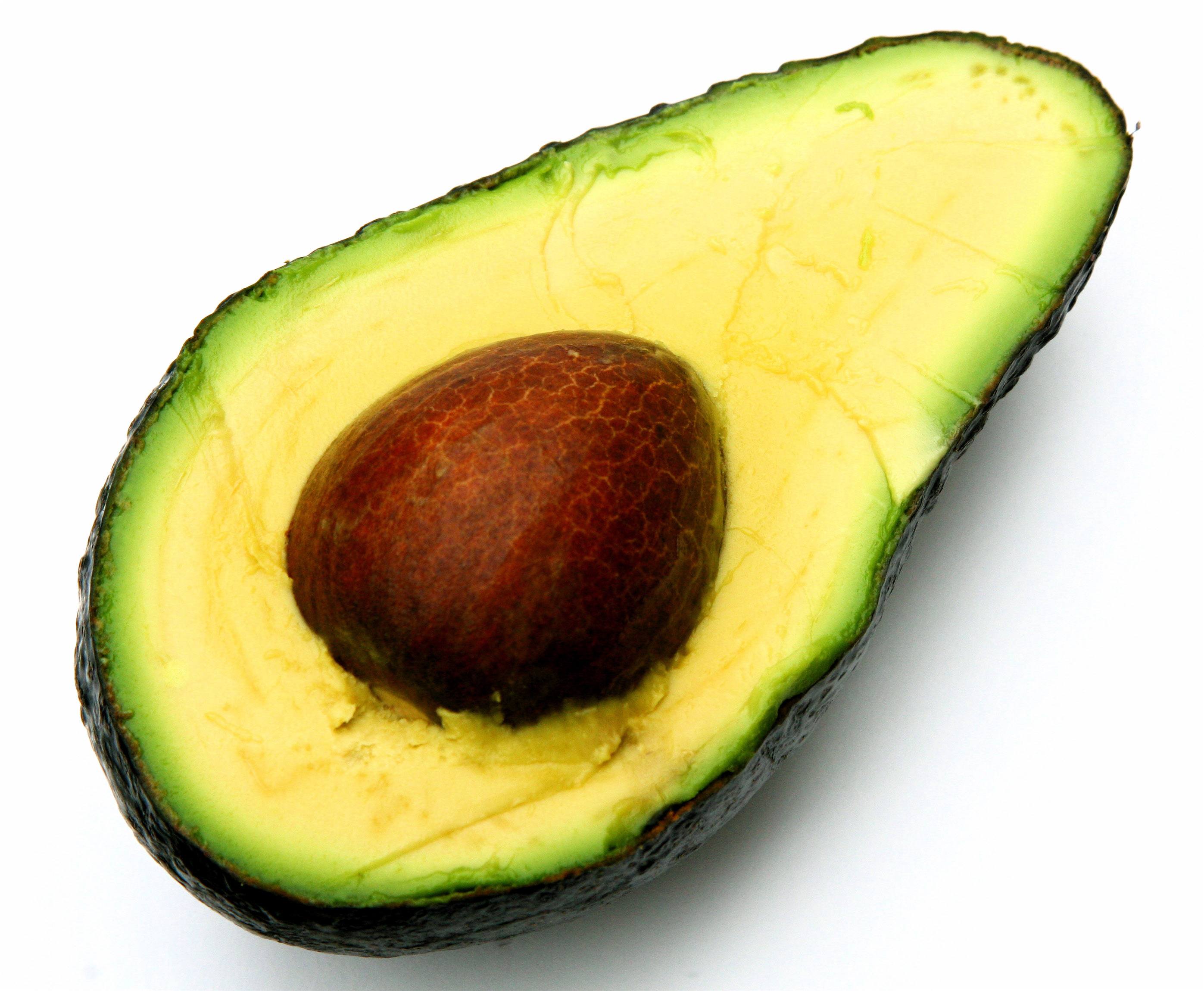
Image source: By Muffet/ liz west CC BY 2.0, via Wikimedia Commons



