Interactive · 1 question

Solving Quadratic Systems by Graphing
You may remember solving linear systems of equations by graphing from Algebra 1. Solving quadratic systems follows a very similar process! It would be a good idea to brush up on your graphing skills before diving in as well.
In short, a solution to a system of equations is a point, , where all of the functions in the system cross. Algebraically solving a system normally involves solving one of your equations to find value(s) for , then plugging that value into the other equation to find the value(s) for . Graphing an entire system gives you the solutions by visually showing you the crossing points of the various curves.
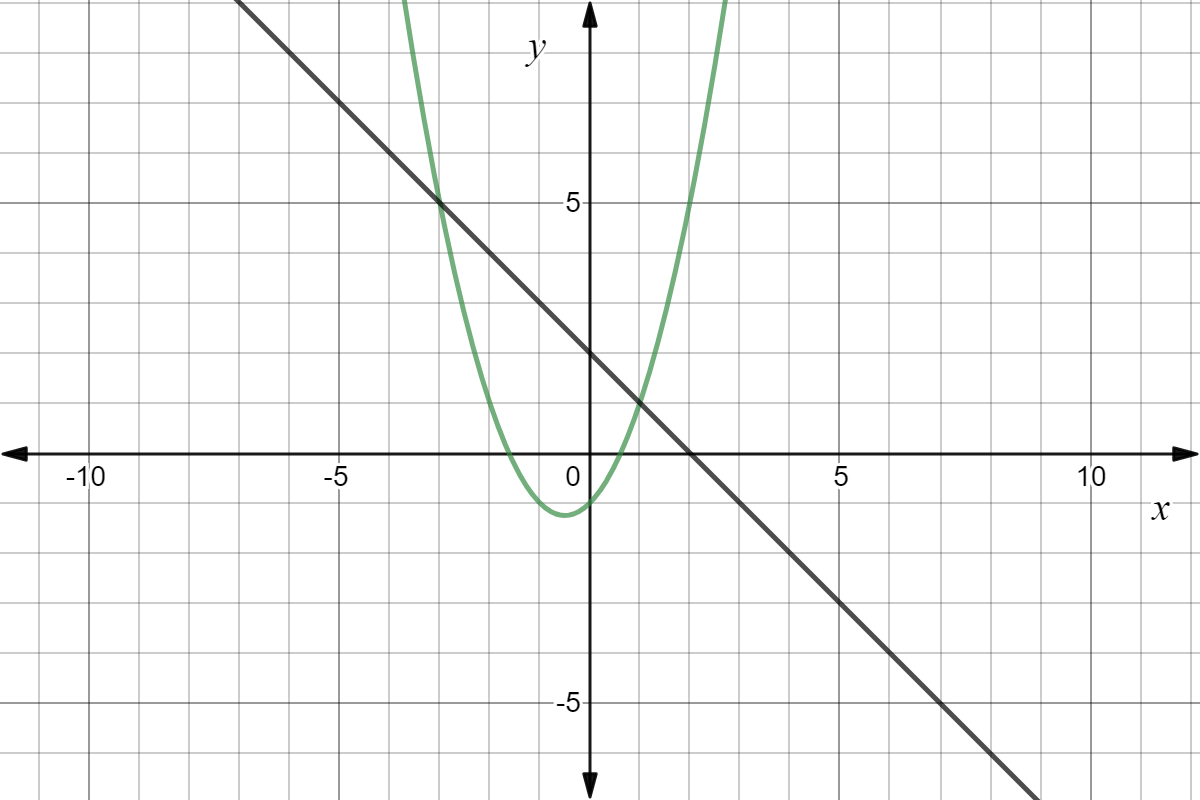
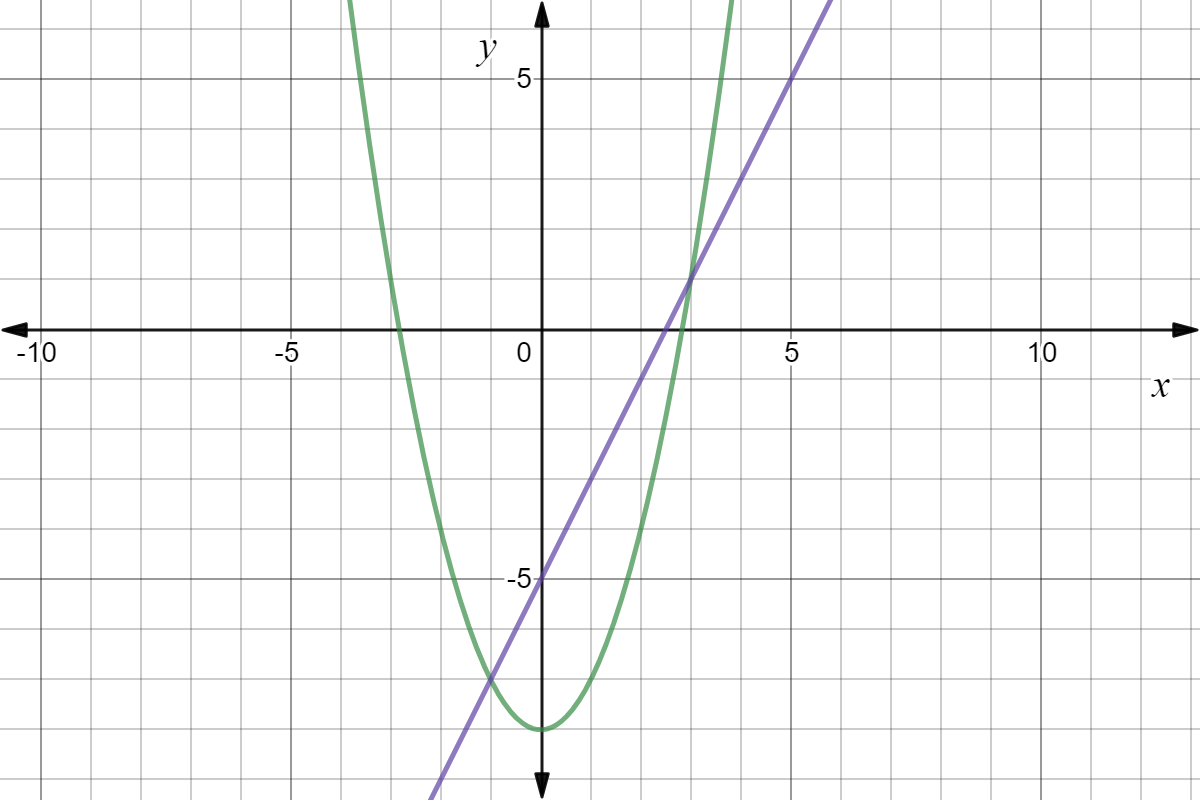
Which of the following graphs does not have any solutions?
All graphs made with Desmos.
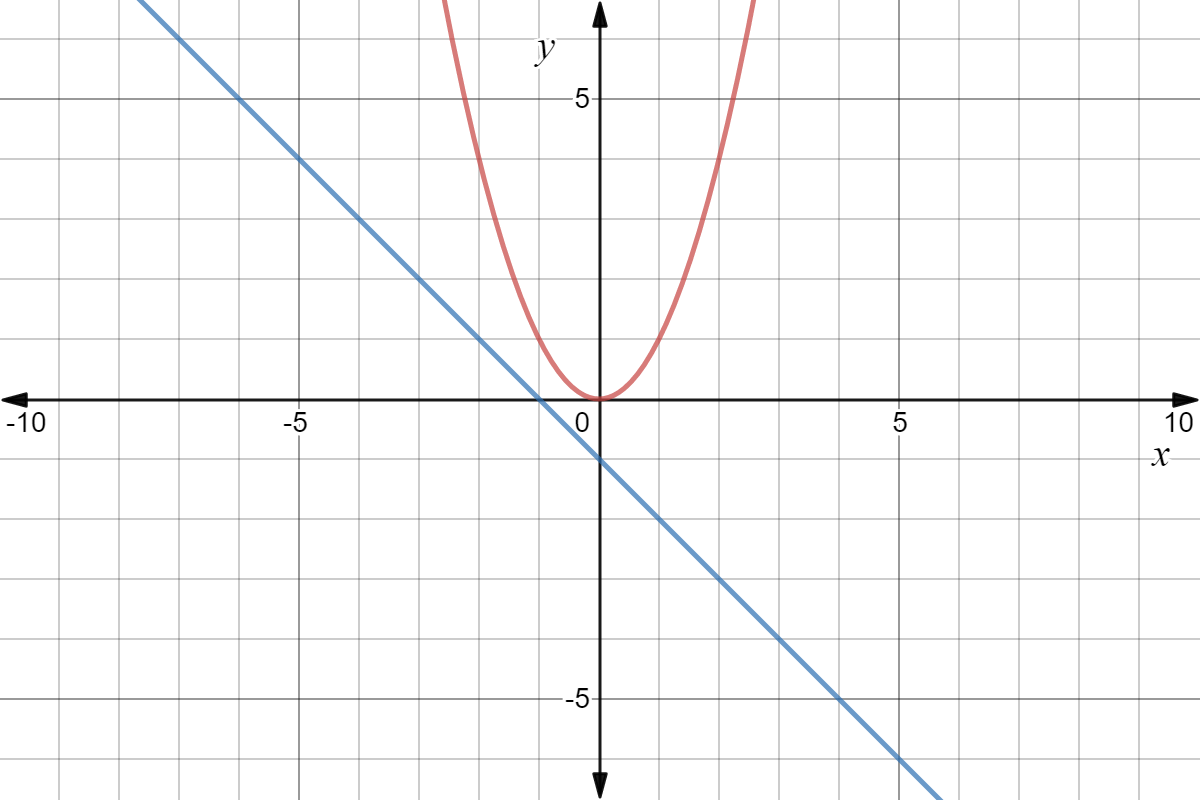
The fourth graph shows two functions that do not cross. This system of equations would not have any real solutions. Let's look at each possible case of solutions for different equations.
No Solutions
Made with Desmos
This may look familiar as it is the same system as the answer to the problem given above! This graph shows the following system of equations: The two functions do not cross so there is no solution.
One Solution
Made with Desmos
This depicts the following system of equations: They only touch at one point, . The values of and make the only solution to this system. We can check this by plugging in for and and seeing if the equations in the system are true. The point makes each equation a true statement.
Two Solutions
Made with Desmos
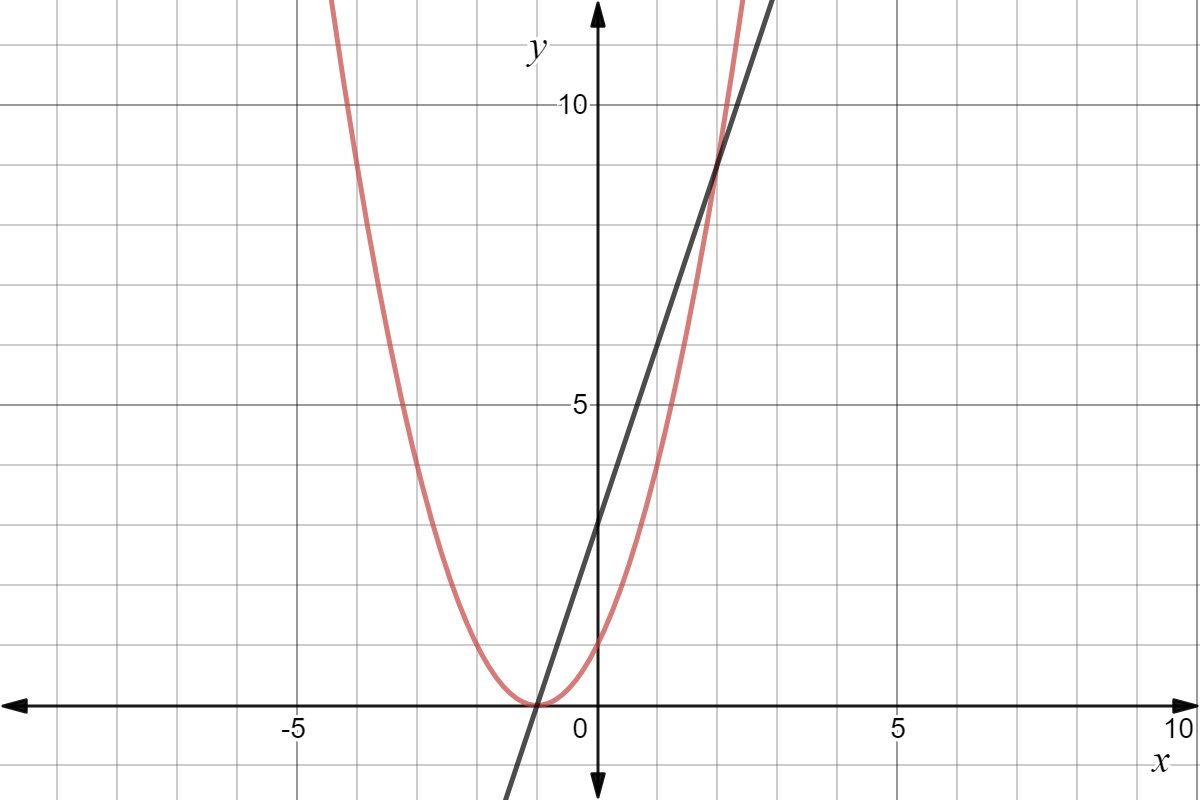
This graph shows the following system: These two functions have two crossing points: and . Let's check to see if these points each equation true All of the points make the equations true, confirming that this system has solutions.
Infinite Solutions
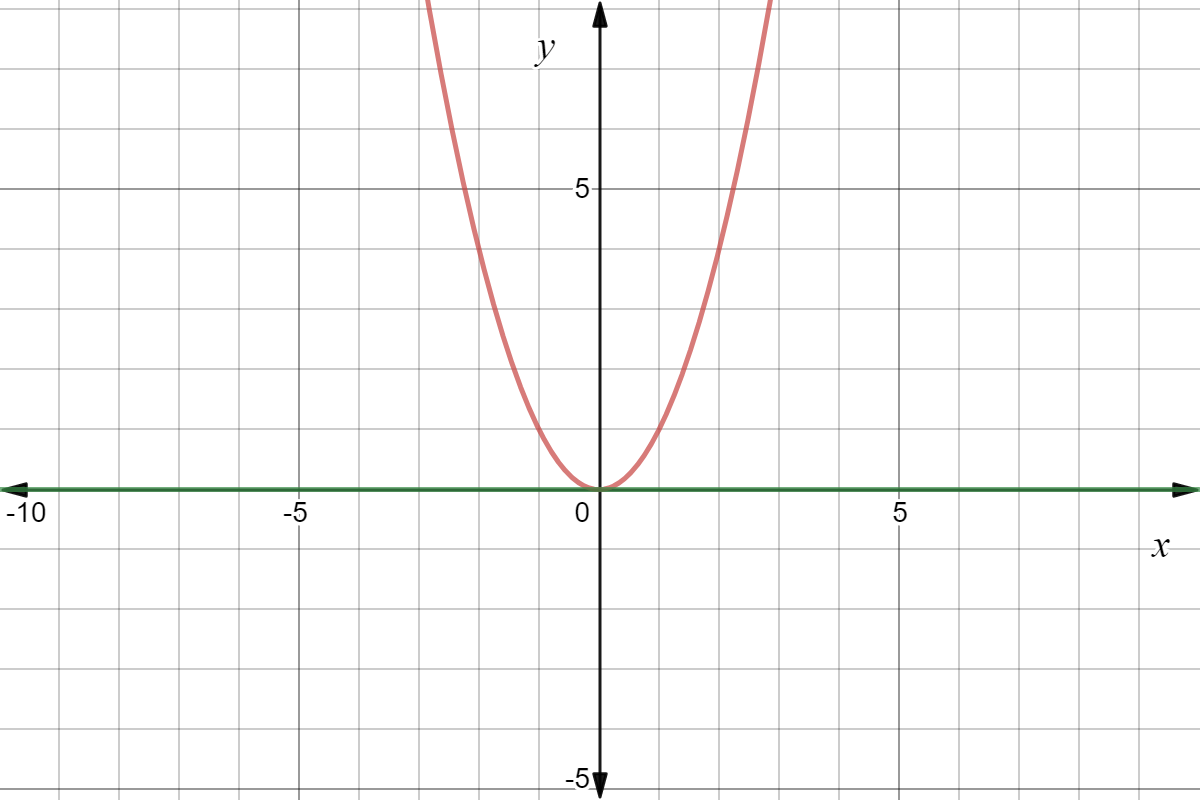
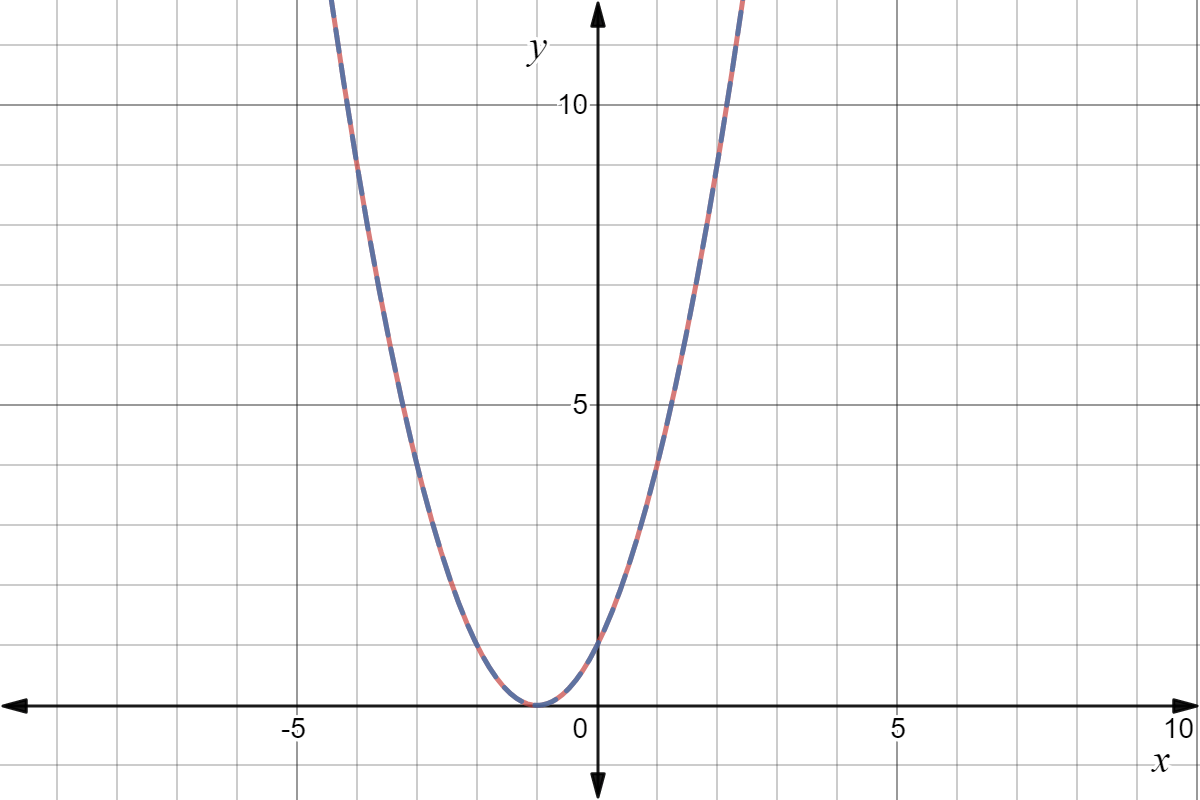
There can be infinite solutions if the two parabolas are equal to each other. Let's look at the following system:
Made with Desmos
These two graphs are overlapping at all points on the curve, so it has an infinite number of solutions.
In any of these cases there are steps to solving systems by graphing:
- Graph the functions
- Find the crossing points
- Check to see if the crossing points are valid