Illustrated · 3 min

+4 contributors




What Is the Law of Independent Assortment?
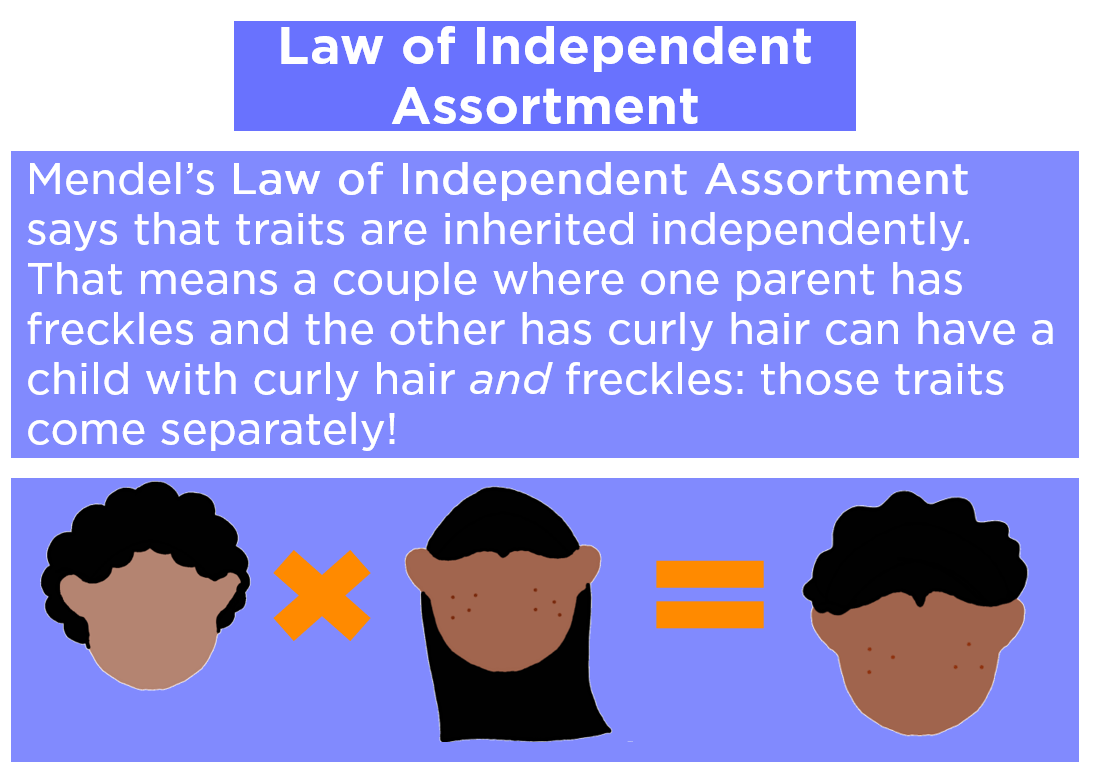
The Law of Independent Assortment is one of the Principles of Mendelian Inheritance. (This is alongside the Law of Dominance and the Law of Segregation.) It says that during gamete production, genes for different traits segregate independently of each other. This means that offspring can have combinations of traits that are different from either of their parents'. Independent assortment gives a chance for new trait combinations to show up that could be advantageous (more fit).
Gregor Mendel developed this law after doing dihybrid crosses. This is where the two parents being crossed have different combinations of two traits. He noticed that when F1 (first generation) offspring were back-crossed with each other, new combinations of traits emerged. A monohybrid cross wouldn't give this kind of information, since it looks at just one trait.
Here's a dihybrid cross as an example of how independent assortment works:
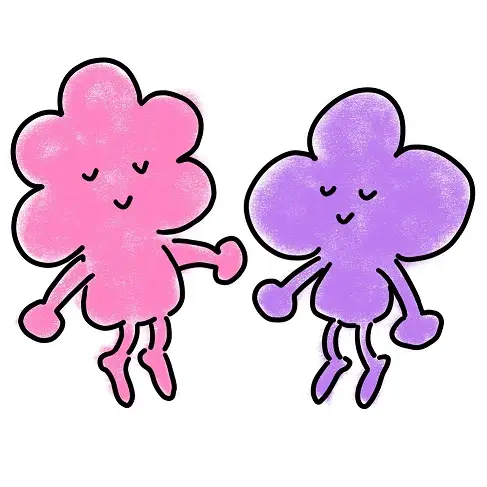
Image source: By Sylvia Freeman
Consider these two little broccoli people who are madly in love. In this species, purple () is a dominant trait, and pink () is a recessive trait. A more lumpy head is the result of a dominant allele (), and a less lumpy head is the result of recessive alleles (). They are both homozygotes: The pink one on the left would have genotype , and the purple one on the right would be .
Now the happy couple gets married, starts a family, and has a couple of kids.
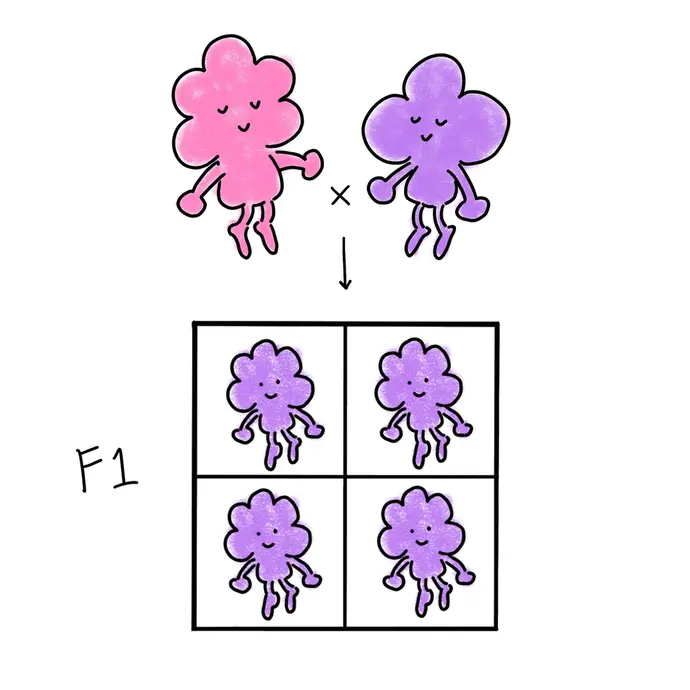
Image source: By Sylvia Freeman
See how all of their kids have a new, never-before-seen phenotype? They are all purple with five lumps, which is a new combination of traits not seen in either parent. This shows independent assortment.
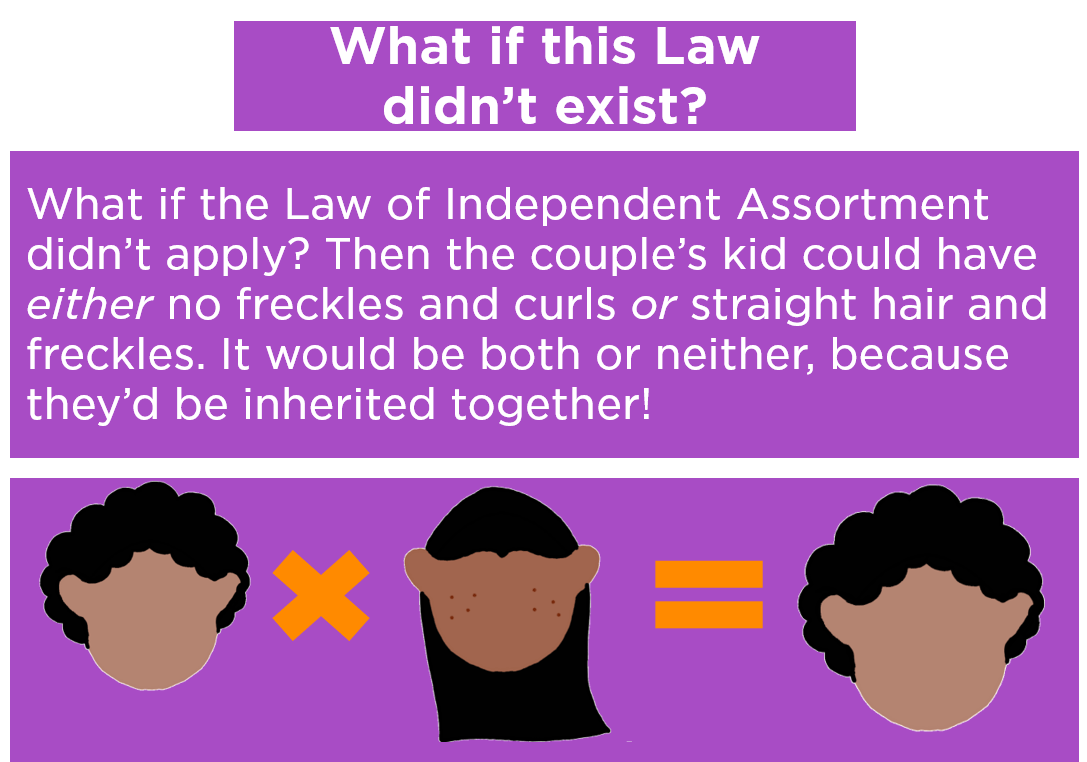
If the genes for color and head shape did not assort independently, then only combinations of traits already seen in the parents (so pink and more lumpy, or purple and less lumpy) would be possible. The Punnett square that we see here of the possible offspring would also look totally different.
Because the parents are homozygous for their respective traits (also called purebred or true breeding), we know that all the kids are heterozygotes with the genotype . None of them have the recessive phenotype for either trait.
The F1 generation kids now grow up and have kids with other individuals (this is called back-crossing):
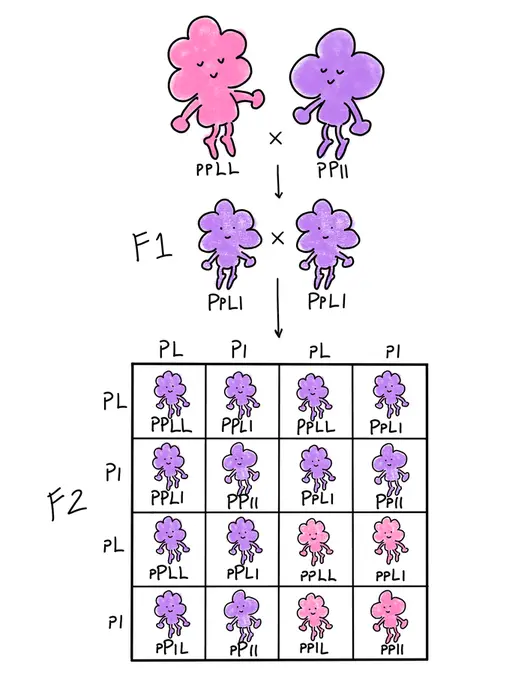
The offspring of the F2 generation show a phenotypic ratio.
Image source: By Sylvia Freeman
Why Does the Law of Independent Assortment Work?
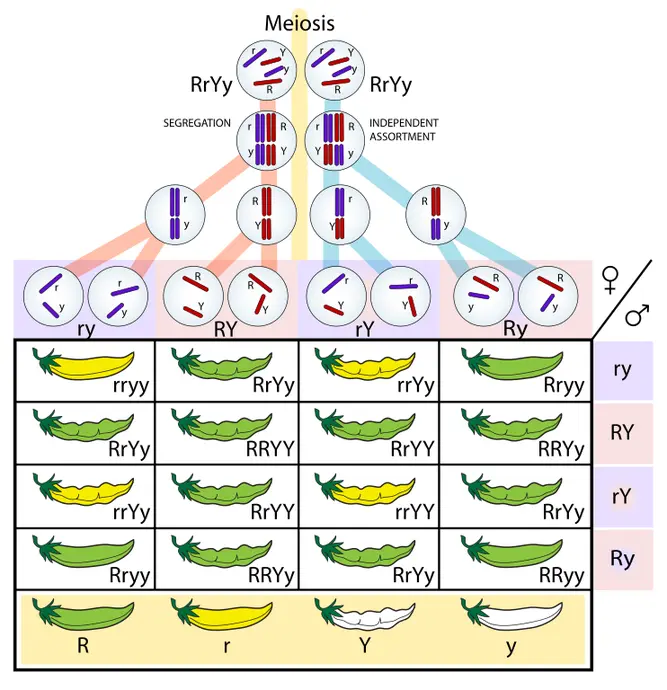
Although Mendel didn't know anything about DNA or chromosomes, his law is true because of how meiosis works at the molecular level. During meiosis when gametes (sex cells with half the normal amount of chromosomes) are forming, the homologous chromosomes randomly line up and are split off into different daughter cells.
Linked Genes: They Break the Law
However, the law doesn't work for traits that are encoded on the same chromosome. These traits are called linked genes because they are linked on the same chromosome. A common example of linked genes is sex-linked traits.
Genes and Math: Dihybrid Crosses and Offspring Ratios
In Mendel's dihybrid cross experiments, heterozygous parents always produced the same ratio of offspring phenotypes. That ratio is 9:3:3:1. That means nine dominant for both traits, three dominant for just one trait, three dominant for just the other trait, and one with the recessive phenotype for both traits. This happened because the traits Mendel looked at did sort independently.
But what about monohybrid crosses? And what about linked genes? Well, a monohybrid cross won't tell you anything about whether genes are linked or not. Monohybrid crosses look at the alleles of just one gene at a time. And if you're doing a dihybrid cross and two traits are linked, you won't see that 9:3:3:1 ratio. That's because linked genes behave differently. They move together like a pair of best friends.