An adult human body has about 30 to 40 trillion cells, and every minute 300 million of those cells die.
The cell cycle is a series of stages that a cell must go through as it grows and divides. It allows new cells to replace old or dying cells. It also allows an organism to grow and develop.
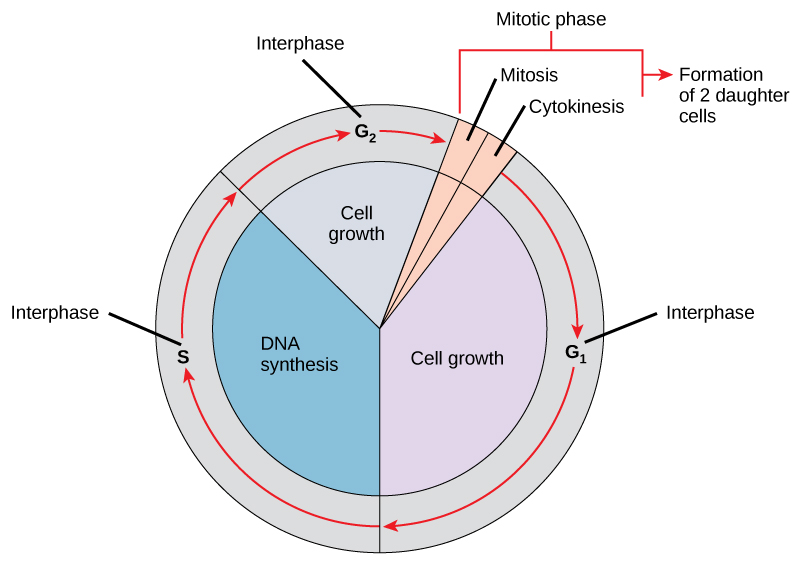
The stages of the cycle in eukaryotic cells can be divided into two main parts: interphase and cell division.
Interphase is the period between cell divisions. It is the longest part of the cycle and can be thought of as the parent cell preparing for division. Interphase can be further divided into three phases: G1, S, and G2.
G1 Phase: Cell growth
During this first stage of interphase, the cell grows and produces more organelles and proteins. The G in this phase stands for "gap". Before moving on, the cell has to pass the G1 checkpoint, which makes sure there are enough resources within the cell to divide. Without this restriction point, cells could grow wildly, which could lead to cancer.
S Phase: DNA replication
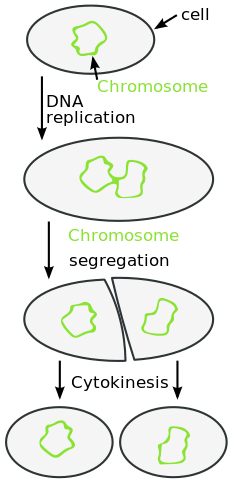
During S phase, chromosomes in the nucleus are replicated. The S stands for DNA synthesis.
Normally, our cells are diploid, or 2n, meaning that they contain two sets of chromosomes. This makes sense because you get a set from each of your parents. During this phase, the cell makes another copy of each chromosome. We still call the cell diploid because it doesn't contain any new genetic information, just identical copies of what it already had. If you're confused, don't worry. We will go over this stage in more detail later.
G2 Phase: Preparing for cell division
During the last stage of interphase, the cell produces the organelles it will need for cell division. It also passes through the G2 checkpoint, checking for translation errors. The G in this phase also stands for "gap".
Sometimes cells enter what is called G0 phase. These cells are no longer dividing, often because they are completely developed and specialized.
Cell division is called the M phase (or mitotic phase) and consists of mitosis and cytokinesis.
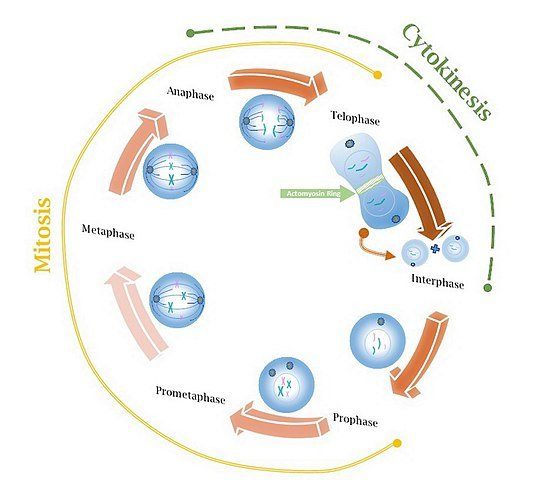
Mitosis is the process during which replicated genetic material is segregated into two new cells. It consists of prophase, metaphase, anaphase, and telophase. These phases are explained in more detail in further sections.
Cytokinesis is a stage following mitosis. This is where the cytoplasm of the cell is actually split into two new cells. The new cells are called daughter cells.
The cycle repeats for the new cells.