Illustrated · 1 min
Molecular Mass and Formula Mass
The molecular mass and the formula mass are basically the same, however:
-
The molecular mass is the mass calculated for covalent compounds.
-
The formula mass is the mass calculated for ionic compounds.
Calculating Molecular Mass and Formula Mass
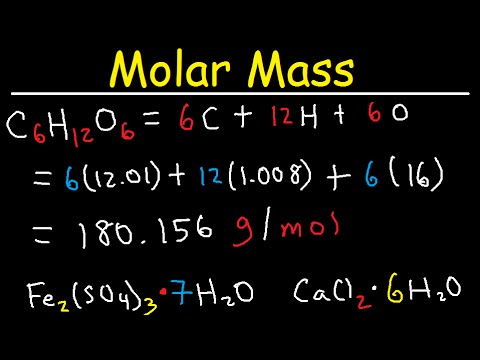
The calculations for molecular mass and formula mass are the same. It is the sum of the atomic masses of each atom in a molecule/compound. Remember, we use the periodic table to find an element's atomic mass.

Image source: By Caroline Monahan
Formula Mass Calculation:
What is the formula mass for sodium bromide (NaBr)?
Sodium: 22.990 amu
Bromine: 79.904 amu
for NaBr: 22.990 + 79.904 = 82.894 amu
Molecular Mass Calculation
What is the molecular mass for carbon dioxide ()?
Carbon: 12.011 amu
Oxygen: 2 X 15.999 = 31.998 amu
for = 12.011 + 31.998 = 44.009 amu
Note:
As you can see, they are calculated the same way! This is also the same calculation when determining the molar mass of a molecule. However, the molar mass has the unit grams per mole.
Using the Molecular/Formula Mass
At this point, you might wonder when we use the molecular/formula mass. Most often, we use it when we calculate the percent composition. That's the percentage of the total mass each element contributes. Analytical chemists can use the percent composition to compare an unknown to a standard. For example, a forensic chemist might experimentally determine the percent composition of an unknown white powder. They could then compare it to the percent composition of various drugs. The percent composition can also help us determine a compound's empirical formula.