Read · 6 min
What's the first thing you do each morning? Probably, you turn off your alarm and fall back asleep. But no one has alarm clocks these days. We all use our phones! What's powering our phones? A secondary battery! We're studying the applications of voltaic cells. Before, we looked at primary batteries. They are only one-time use. Once they're dead, you toss them. I was born in the early 1990s. So, growing up, everything used primary batteries. But, more and more, our devices are running on rechargeable batteries. Today, we'll look at the most common types of rechargeable batteries. Then we'll finally answer why you lose battery capacity over time.
Lead-Acid Batteries
We looked at lead-acid batteries when we studied wet and dry cells. They're an example of a wet cell. Remember, I told you that chemists are very creative at naming things. So, the lead-acid battery uses an aqueous sulfuric acid electrolyte and lead-based electrodes. Let's look at the half-reactions.
Cathode:
Anode:
Net Equation:
A lead-acid battery is rechargeable. So what happens if we apply an external voltage source? The reaction reverses!
Recharging Equation:
We primarily use lead-acid batteries in vehicles. That's because they provide a substantial current. A quick discharge runs the entire start-up system. But, starting your car discharges most of the battery. So, where does the external voltage come from to recharge it? We use the alternator. How does it work? The engine rotates the crankshaft. A pulley connects the crankshaft to the alternator. As the alternator spins, it produces a current. Most alternators generate a voltage between 13.5 and 14.5 volts. Remember, the voltage measures the difference in potential energies. The voltage produced by the alternator is much larger than the battery's cells. So, it has enough energy to reverse the reaction. What's the result? You recharged your car battery!
What are the disadvantages of lead-acid batteries? The main problem is the aqueous electrolyte. It's sulfuric acid! What happens if it spills? It will corrode anything it touches. If it comes in contact with your skin, it will burn you. Also, during recharging, some of the electrolyte solution evaporates. The battery casing has vents for the gas to escape. But sometimes, the gas exits between the connection terminals. The acid reacts with the metal. You'll see a brown, green, or blue build-up. Also, always keep lead-acid batteries right-side-up. If you tilt them, the sulfuric acid can come through the vents.
Nickel-Cadmium and Nickel-Metal-Hydride Batteries
By the 1990s and early 2000s, portable devices were becoming more popular. We started to develop commercially available laptops and cell phones. So, we needed to produce small, rechargeable batteries. Early on, the principal technology was the Nickel-Cadmium battery. Let's look at the half-reactions.
Cathode:
Anode:
So, we see that nickel oxyhydroxide got reduced. Meanwhile, cadmium metal got oxidized. But, there is a problem. Cadmium is a massive transition metal. It has a high density and atomic mass. So, it's classified as a heavy metal. Many heavy metals, including cadmium, are toxic. So, widespread use was an enormous hazard.
How did we overcome the hazard? We replaced cadmium with metal hydrides. The most common anode was a zinc-nickel alloy. It could absorb hydrogen atoms on its surface. It's the same idea as the standard hydrogen electrode. During the redox reaction, the hydrogen would lose electrons. The resulting hydrogen ions would react with the electrolyte's hydroxide ions. The result is water! When the battery gets recharged, the electrolysis of water regenerates the hydrogen gas.
We used Nickel-Metal-Hydride batteries in the original hybrid vehicles. We couldn't plug in the first hybrids. They still consumed gasoline. So, how were they different from regular cars? They used both an electric motor and a combustion engine. The combination of the two reduced the combustion engine's size. The smaller engines were more efficient. So, gas mileage increased. During long trips, the gas also helped charge the battery.
Lithium-Ion Batteries
What was the problem with nickel-metal-hydride batteries? They were heavy. So, chemists developed the lithium-ion battery. It can generate larger voltages with a smaller mass. So, it has a larger battery capacity.
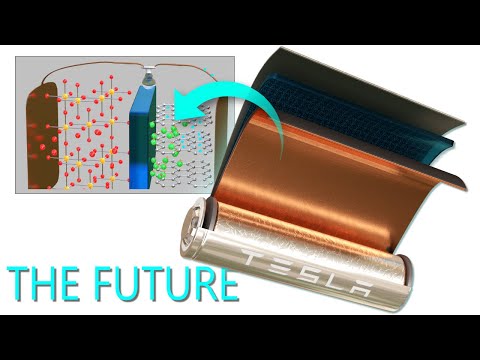
Lithium-ion batteries are a unique technology. They don't operate like the other electrochemical cells we've studied. On the cathode side, lithium metal incorporates into a metal-oxide lattice. Remember, lithium is an alkali metal. They only have one valence electron. It's easy to lose for a full octet. So, lithium is unbelievably reactive. The metal-oxide helps stabilize the lithium atoms. The electrolyte is a lithium-based salt in an organic solvent. The electrolyte only allows lithium ions to pass through it. The anode is a storage matrix for lithium ions. The most common material is graphite.
What happens when we charge the battery for the first time? When we connect the power source, lithium loses its electrons. The electrons travel through the circuit's wires. Meanwhile, the lithium ions diffuse from the metal oxide lattice. They travel through the electrolyte, to the anode. The graphite helps stabilize the electrons and lithium ions. How? Graphite is sheets of graphene. Graphene is hybridized. So, it has delocalized pi-bonding. The pi-bonding distributes the electron's charge and attracts the lithium ions. But, this is still an unstable state. What happens when we connect the battery to a circuit? The electrons flow back through the wire. The lithium ions travel through the electrolyte. Together, they reincorporate into the metal oxide lattice.
Why did we move to lithium-ion batteries? Because of their battery capacity. They provide better charge to our portable devices. In fact, they're the main feature of all-electric cars. Electric cars take advantage of induction motors. They are way more efficient than combustion engines. Why? Because combustion engines generate a lot of heat. But, the heat isn't used for work. It's just lost. What's the main drawback of electric cars? The range. If you can only drive twenty miles, it's basically useless. The lithium-ion battery provided a lightweight but powerful battery. The first successful implementation was the Tesla Roadster in 2008. It had a range of about 240 miles. And it was a sports car. So, its zero to sixty speed was a respectable 3.7 seconds. Today, Tesla remains the premier manufacturer of electric vehicles.
Why Do You Lose Battery Capacity Over Time?
We've all been there. You've had your phone for about a year. Suddenly, it's staying charged for only half the day. Why does the battery lose its capacity? All batteries have a certain number of charge-discharge cycles. As a device discharges and recharges, it loses capacity.
Most portable electronics use lithium-ion batteries. So, what's happening? Part of the problem is that the lithium atoms are more stable in the metal oxide lattice. What's happening when you run your battery to zero? You've moved a lot of lithium into the lattice. When you recharge it, some of the lithium stays. That lithium no longer participates in the redox reaction. You may have heard that it's best to let your battery die before recharging. That's not true! You should actually recharge it between 30 and 40 percent. You want to minimize the number of lithium ions stuck in the metal oxide.
Unfortunately, no matter what, your device will begin to lose capacity. Why? The lithium ions react with the electrolyte. It's a unique phenomenon called the solid-electrolyte interphase. Early on, it actually is protective. The electrons want to react with the electrolyte. But, the reaction between the lithium and the electrolyte forms a protective film. Unfortunately, over time, more and more lithium reacts with the electrolyte. That means less lithium is available for use.
Why Can't We Recharge Primary Batteries?
Are you wondering why we can't recharge primary batteries? You would think we could apply an external voltage. That's what we do with secondary batteries. So why can't we? The main problem is the design of primary batteries. During recharging, many batteries produce gases. A primary battery doesn't have any venting. So, the gas generates pressure. Eventually, the metal cylinder bursts. That's bad!