Illustrated · 1 min

+3 contributors



By Armtuk - Own work, CC BY-SA 3.0, Wikimedia Commons
In order to fully understand elements, you need to understand how their chemical properties relate to each other. The Periodic Table of Elements is nothing more than a guide to these elemental relationships.
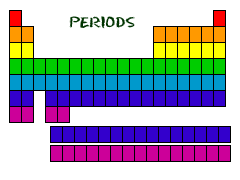
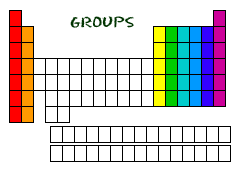
The table is organized in rows, called periods, and columns, called groups.
The reason why the periods are the size that they are is something called the octet rule, which we will cover later. Essentially, each period represents a new "outer shell" of electrons, starting from group 1, at the far left, which contains one outer shell electron, to group 8, which contains a "full" outer shell with 8 electrons.
The amount of outer shell electrons influences the ability of an atom to form bonds, directly influencing its chemical properties. The elements in each group have the same amount of outer shell electrons, and therefore tend to share properties.
There are chemical trends which help to organize the table. These trends were first discovered by Dmitri Mendeleev in 1863.