
Interactive · 1 question
+4 contributors




Compare the Numerators
Comparing two or more fractions essentially means figuring out which one is bigger. This can be simple if the fractions have the same denominator (the number on the bottom), but might be a little more complicated if they don't. If the denominators are the same, you can just compare the numerators (the top numbers)!
If numerators and denominators are different, convert each fraction. You'll want either the numerators or the denominators to be the same.
For now though we'll try an example with like denominators.
Which is bigger, or ?
is bigger! If we imagine the fractions as pictures, we can see the difference:
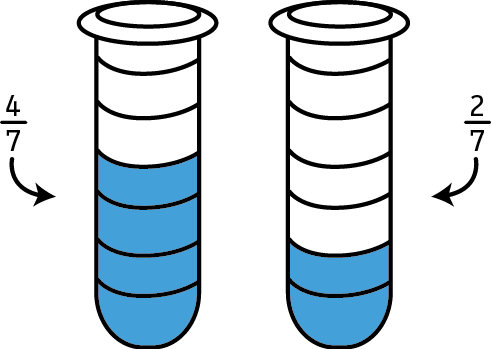
If the tube is full, there's more liquid in it than if it were full.
What if the denominators aren't the same?
If the denominators aren't the same, it can be harder to compare the fractions. For example, even though the numerator in is bigger, is actually a larger fraction.
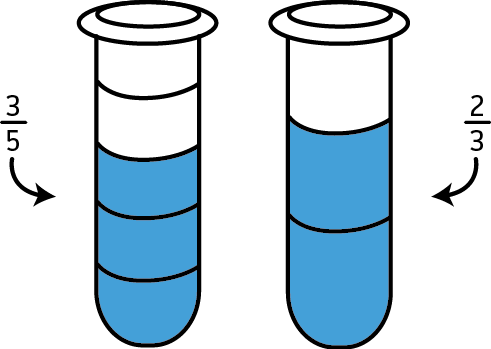
There's more liquid in the tube on the right, but the numerator is higher in the fraction on the left.
If you have to compare two fractions with different denominators, you have to make the denominators the same first. You can do that by just multiplying each fraction by the denominator of the other one.
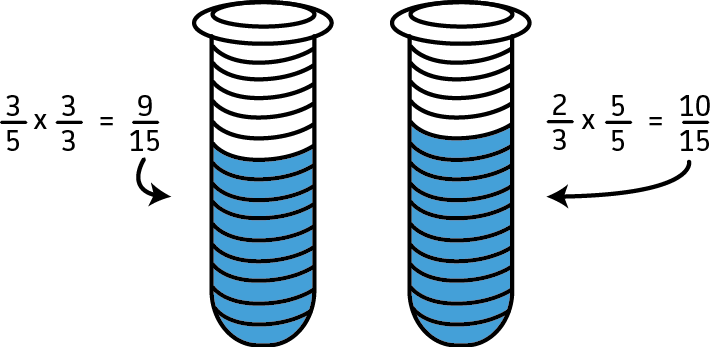
Now, the denominators are the same and the tube with more liquid in it also has a higher numerator.
As long as the denominators are the same, it's easy to compare fractions by just comparing their numerators. If the denominators aren't the same, multiply each fraction by the other's denominator and then compare the numerators.
