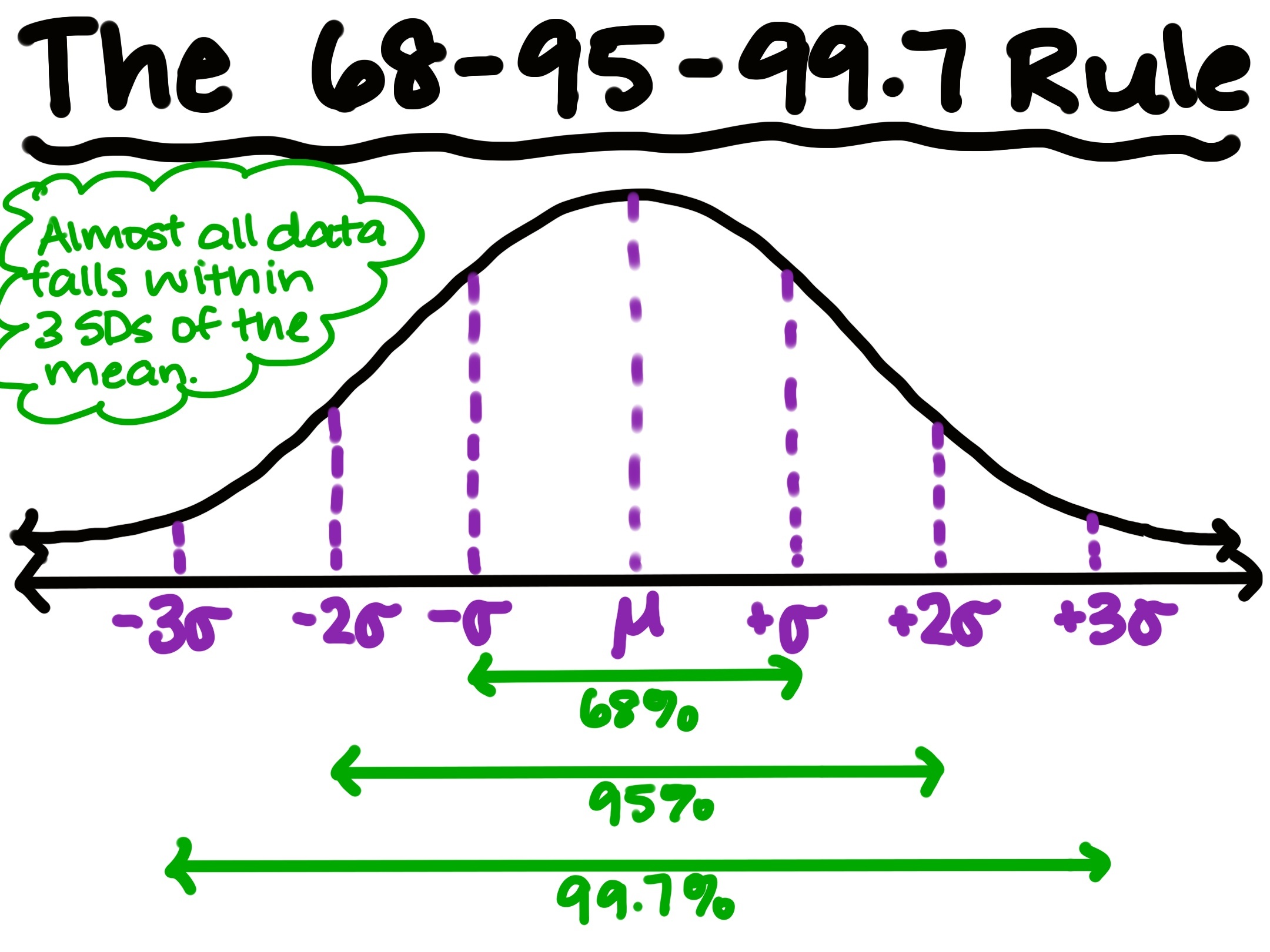
In this video by patrickJMT, you can learn about the normal distribution and the 68−95−99.7 rule.
Summary
This video walks you through the normal distribution and the 68−95−99.7 rule, which helps us to understand how data is spread around the mean.
In a normal distribution, 68 of the data falls within one standard deviation of the mean, 95 falls within two standard deviations, and 99.7 falls within three standard deviations. For example, when looking at IQs, there is a mean of 100 and a standard deviation of 15. You can use the 68−95−99.7 rule to find the values that are one, two, or three standard deviations from the mean.
We can extend this to finding the percentage of data above or below a certain value. For example, about 50 of IQ scores are above the mean, about 16 are below one standard deviation from the mean, and about 0.15 are above three standard deviations from the mean.
The 68−95−99.7 rule works with a bell-shaped, symmetric distribution and helps you estimate how much data falls within different numbers of standard deviations from the mean.