
Illustrated · 2 min
Physics Behind the Flute
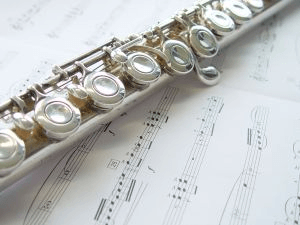
#flute #suchmusic #wow
Sound of Music

Sound is generated by vibrations of air particles. These vibrations are sent through the air aka "sound waves". The main difference between 'music' and 'noise' is that musical sounds are generated by regular waves (think smooth, elegant sinusoidal oscillations).
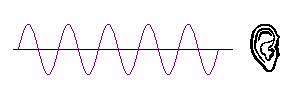
MUSIC
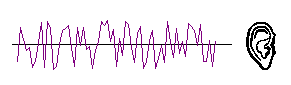
NOISE
Flute Sound
To generate sound from a flute, you blow air through the tube (body of the flute). As the air travels through the tube, it generates vibrations. Once the air reaches the end of the tube, behold, you have sound! The various notes or sounds a flute makes can be controlled by the keys.
Standing Waves
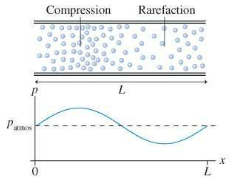
Here, points oscillate but they "stand in place". Sound waves make round trips in the flute tube, so they basically reflect when they reach the end of the tube. Superposition occurs when new waves are coming in (you blow air in) and old waves are reflecting back.
Frequency
The length of the flute (mouthpiece to end) determines the fundamental frequency. The shorter the length, the higher the frequency. Higher frequency yields higher pitch and lower frequency yields lower pitch. That's why when you tune a flute, you would adjust the headjoint, either lengthening or shortening the tube, and opening/closing keys effectively changes the notes that come out of the flute.
Harmonics
Harmonics are combinations of different but related frequencies. They consist of the fundamental frequency + other integer multiples (of the fundamental frequency).
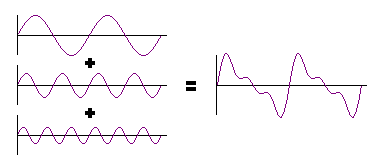
A visual of harmonics in superposition
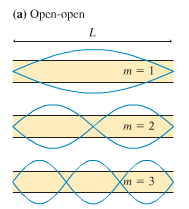
Integer multiple frequencies
Flute vs. Other Instruments
String Instruments including violin, viola, cello, bass, etc. rely on vibrations of the strings to generate sound. Usually this is done by plucking or bowing.
Pianos also rely on string vibrations, except this is done by pressing keys which are connected to small hammers that strike the strings.
Other woodwinds such as clarinets, oboes, bassoons, etc. use reeds in their mouthpieces to generate vibrations.