
Interactive · 2 questions
+1 contributors

Before identifying what alternate interior and alternate exterior angles are, we will first break down the term word by word.
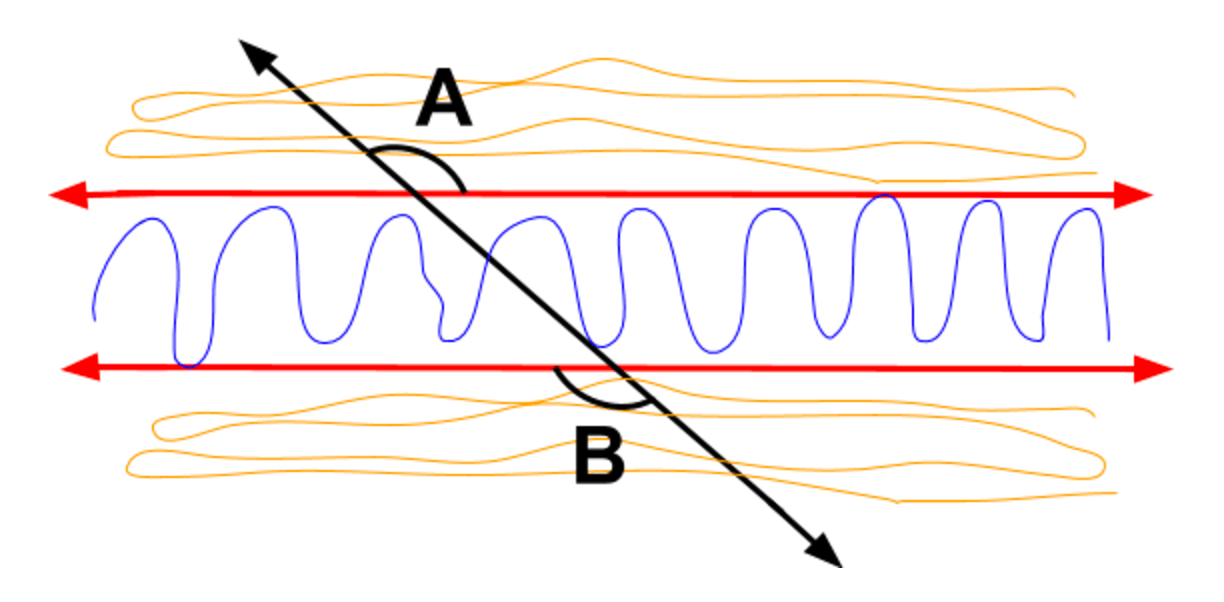
When angles are alternate, they lie on opposite sides of the transversal. Consider the word 'alternate': when you alternate something, you are doing a thing every other time. For instance, if you and your co-worker alternate days, you work one day and your co-worker works the next.
Similarly with lines when you have alternate angles they are positioned on alternate sides on the transversal (as opposed to being on the same side) .

In the figure above, the separates the figure into two alternating sides. The side and the side.
Angles and are alternating angles because they lie on alternating sides of the transversal.

Which of the pairs of angles are alternating?
Next, let's consider the difference between interior and exterior angles.
In contrast to alternate angles that deal with the transversal, interior and exterior angles deal with the two lines that are not the transversal. These lines must be parallel.
The terms interior and exterior will become self-explanatory as we will see in the figure below.
In the figure above, the two create interior and exterior angles.
The top and bottom regions represent the angles, while the region inside the two lines shows the angles.
Angles and are exterior angles because they are external to the two lines.
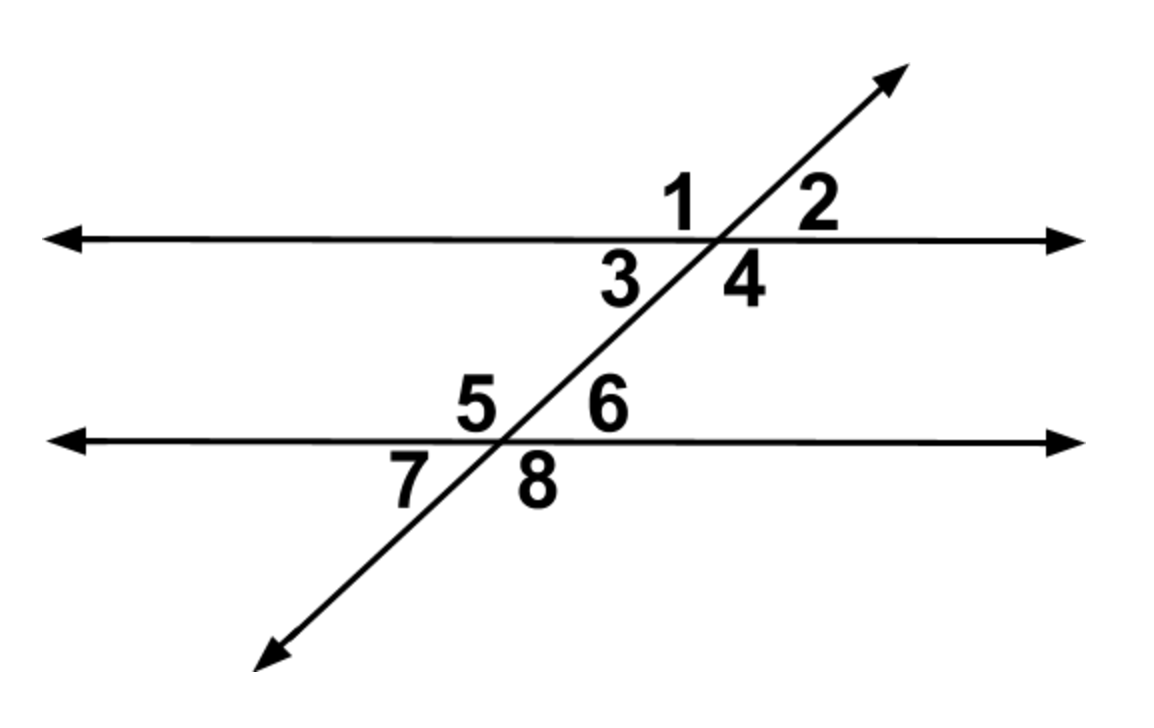
Which of the following are interior angles?
Now let's put the two terms together!
Let's start with alternate interior angles.
We know that alternate angles are positioned on opposite sides on the transversal. We also know that the angles inside the two parallel lines are interior angles.
To identify alternate interior angles, we simply find the angles that lie on opposite sides of the transversal and lie inside the two parallel lines.
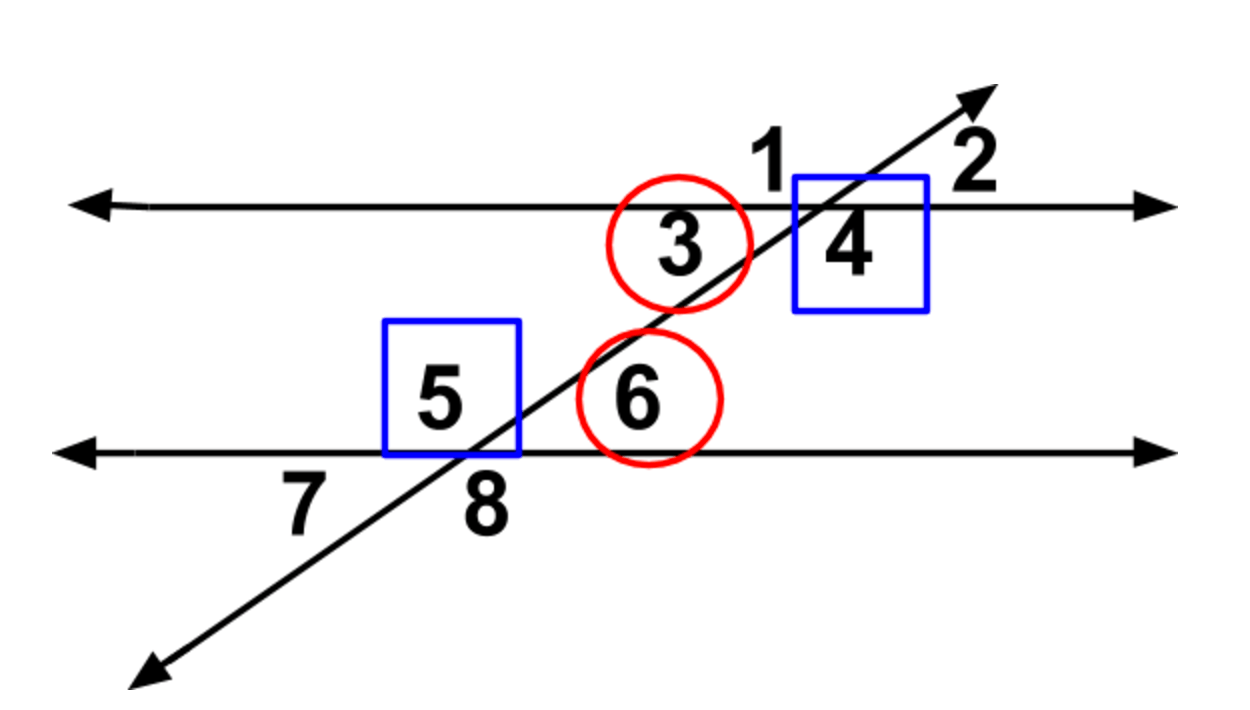
In the figure above, and are alternate interior angles. Additionally, and are alternate interior angles.
Both pairs of angles lie on opposite sides of the transversal and are interior to the two parallel lines.
Now let's consider alternate exterior angles.
We know that alternate angles they are positioned on opposite sides on the transversal. We also know that the angles outside the two parallel lines are exterior angles.
To identify alternate exterior angles, we simply find the angles that lie on opposite sides of the transversal and lie outside the two parallel lines.
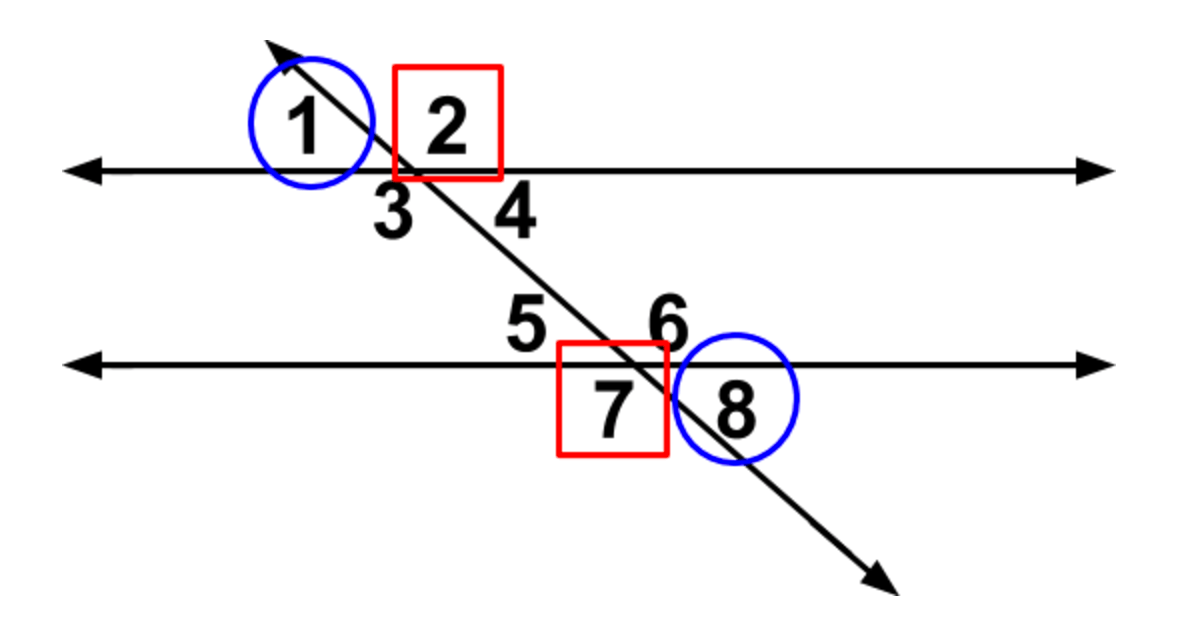
In the figure above, and are alternate exterior angles. Additionally, and are alternate interior angles.
Both pairs of angles lie on opposite sides of the transversal and are exterior to the two parallel lines.
To sum it all up:
Alternate exterior angles are congruent and alternate interior angles are congruent.
Alternate exterior angles are two exterior angles on opposite sides of a transversal which lie on different parallel lines.
Alternate interior angles are two interior angles which lie on different parallel lines and on opposite sides of a transversal.