
Illustrated · 1 min
By Gabi Slizewska

+1 contributors
Contributors

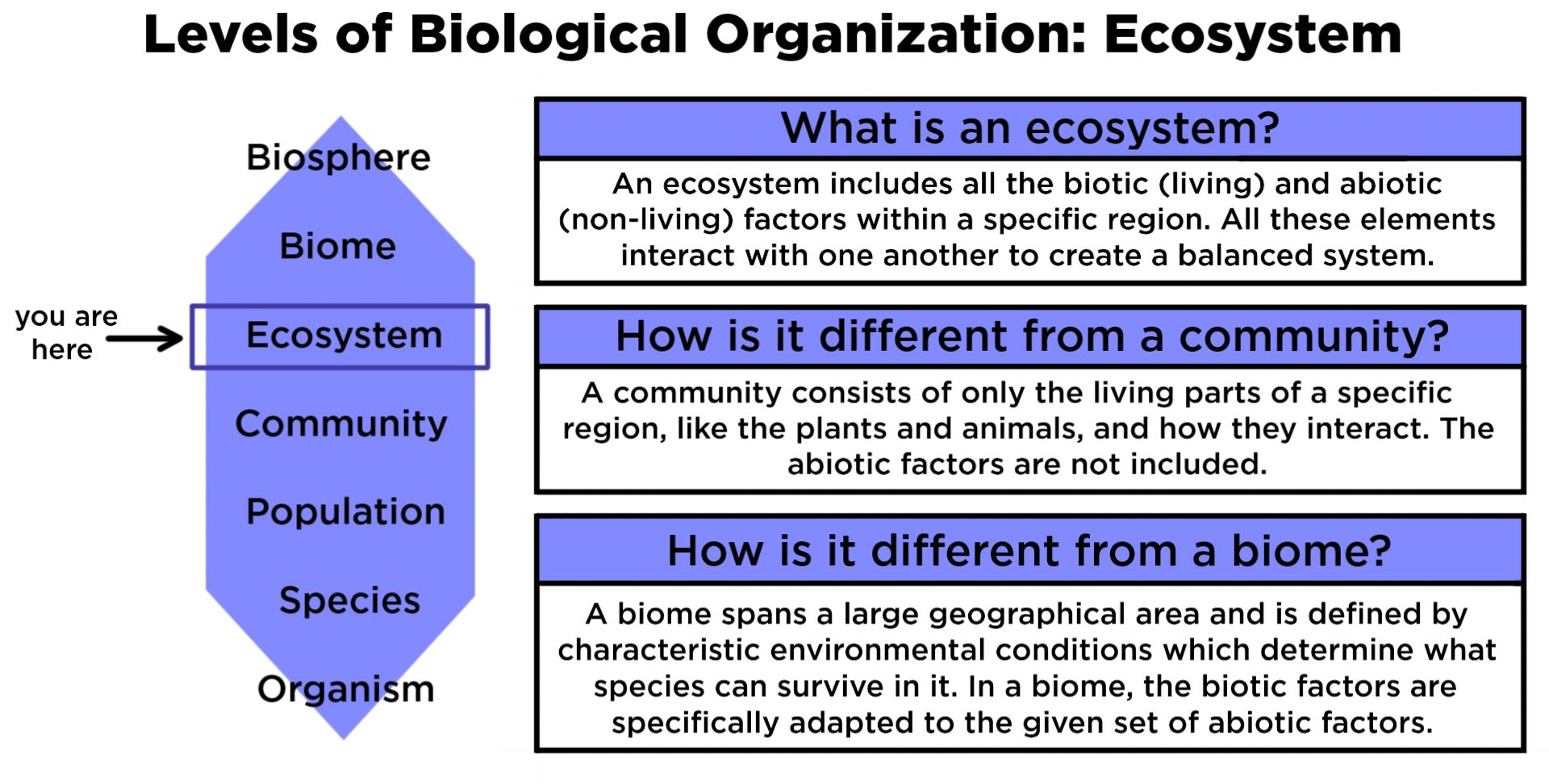
Image source: By Gabi Slizewska
Illustrated · 1 min
Image source: By Gabi Slizewska
Illustrated · 1 min
An ecosystem is a community of organisms and non-living components that interact as a system. The "system" part of the word ecosystem is what's most important. It means that everything interacts either directly or indirectly. Energy and nutrients are cycled throughout all the different components of the ecosystem. We can show the way energy flows using food chains or food webs.
The living components of an ecosystem (everything that's alive) are called biotic factors. The non-living components like heat and nutrients are called abiotic factors. Both biotic and abiotic factors contribute to an environment's health. Biotic factors include plant productivity and animal behavior. Abiotic factors include the climate and amount of sunlight.

Image source: By Valeri Natole using Image source: By truthseeker08 CC0, via pixabay.com
Like any other living thing, we influence our environment. So what do uniquely human activities like industry do to ecosystems? Historically, we haven't treated our biosphere so well. That's a big part of why climate change is happening so rapidly.
One example is that waste, like chemicals from factories or everyday garbage, used to be dumped into waterways. Organic matter and energy cycle through every trophic level in an ecosystem. So, changes caused by this dumping—like shifts in pH or available nutrients—affected a whole host of organisms. Ironically, this dumping also affected human health. Would you want to drink polluted water?
Today, scientists know a lot more about the balance of nature. That's why we have so many more resources now to help our environment. Some examples include sustainable food production and sustainable waste management. The benefits we receive back from the environment (such as food and drinking water) are known as ecosystem services.
Illustrated · 1 min
An ecosystem includes communities of animals, plants, and many non-living factors which all interact in some way. A lot of times, people think of ecosystems as part of a physical environment, like a pond or a tidal zone. Biomes can be called global ecosystems due to their massive size. All the living and nonliving parts of an ecosystem have diverse interactions and relationships.
This is an ecosystem which might be found within parts of the biome known as a savanna. The biotic factors here include lions, rhinos, and plants. The abiotic factors would include soil, rocks, and sunlight.

Image source: By Gabi Slizewska
All of these things are somehow connected. The soil and sunlight are important to plant life. The rhino feeds on the grasses and other plants. The lion often preys on young rhinos and other animals. There is a balance of competition as well as predator and prey populations.
The number of organisms that an ecosystem can support is called its carrying capacity.
One more example of a terrestrial ecosystem (on the land) is a forest ecosystem. Here, you might find trees, rocks, birds, and bears. Marine ecosystems (or aquatic ecosystems) may include things like coral reefs, fish, sediment, and the ocean floor.
: The study of organisms and their environment
: The biosphere is the global ecological system. It includes all life
: A large group of ecosystems that are characterized by soil and climate types
: The interactions between a biological community and its environment
: A group of interacting populations
: A group of individuals of the same species living in a particular geographical area
: A group of organisms that can breed and create fertile offspring
: A living individual
: A species' ecological role in its community
Video
by CrashCourse

Image source: By Valeri Natole
In this video, Hank Green describes what an ecosystem is and what it's made up of.


