Interactive · 1 question
+3 contributors



Say NO to Bias
In statistics and research, bias is a four-letter word.
(I mean, obviously it's four letters no matter what, but in statistics, it's something that you should stay as faaaaaar away from as possible).
One of the most common types of bias that pops up in studies is selection bias. In these cases, the samples in our study are NOT representative of the overall population because of the way we selected them.
Most of the time, bias is the result of poor study design.
Undercoverage
One common type of selection bias is under-representation (also called undercoverage). In these cases, certain groups in the target population are not adequately represented.
Imagine that I want to do a study of neighborhood opinions on healthcare options for children. I decide to go door-to-door during the day to ask residents survey questions.
But think about it...because of the way I designed it, my study won't include anyone who isn't at home during the day. This means that working parents won't be able to participate because they won't be home when I come knocking. The opinions of a significant portion of the target population won't be represented in my study.
This is undercoverage. The graphic below demonstrates this concept visually.
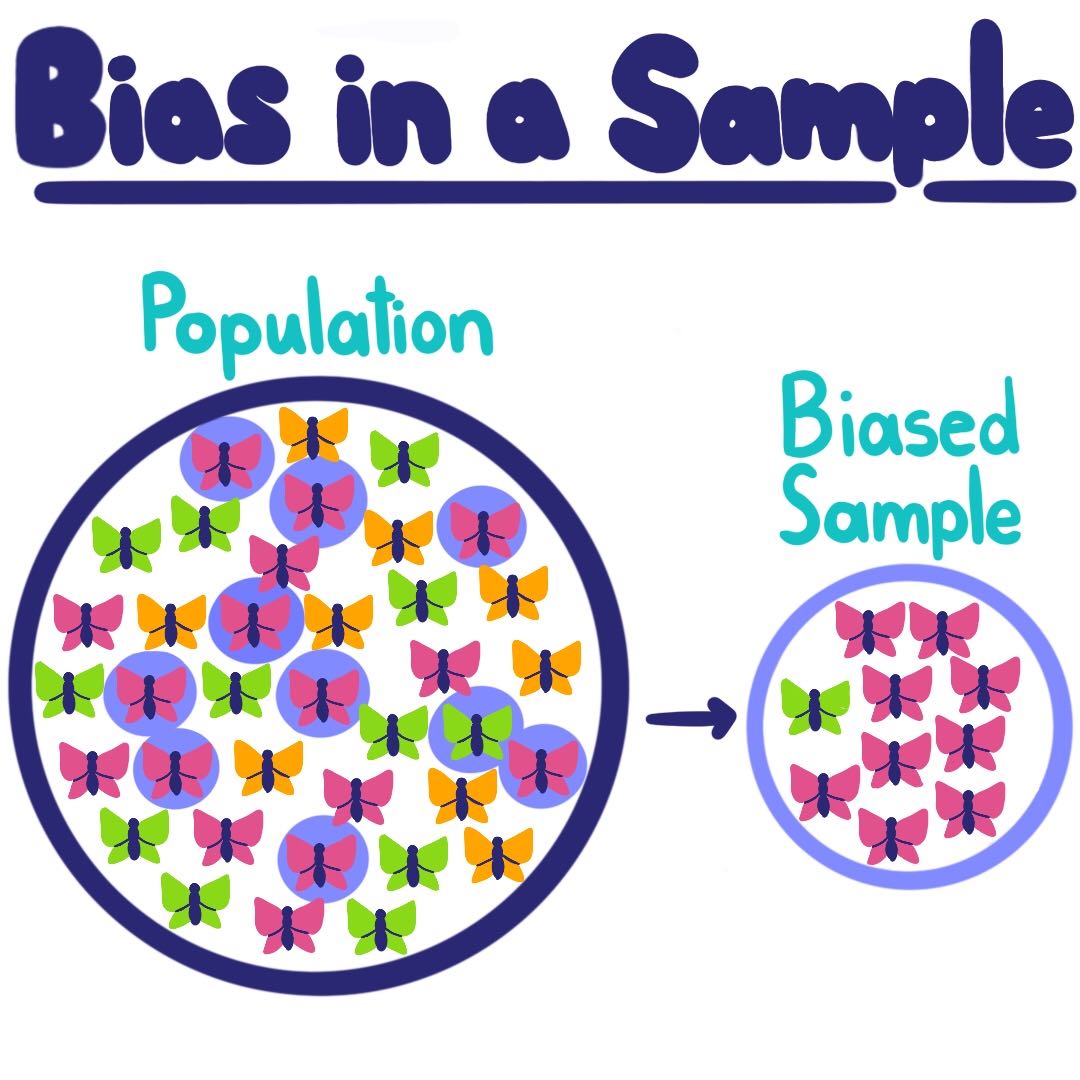
Image by Caroline Kulczycky

Based on the description of my study (above, in pink), which group of students is most likely to be under-represented?
Non-Response Bias
Another type of selection bias is called non-response bias. Like undercoverage, the result of non-response bias is that the subjects in our study are NOT representative of the target population.
Non-response bias is exactly what it sounds like. Subjects that have been selected for a study are sometimes unable or unwilling to participate. This is non-response.