Statistics: Quantitative vs. Qualitative Data

Interactive · 6 questions

Quantitative vs. Qualitative Data

When you see quantitative, hopefully you see the word quantity in there too. Quantitative data are data about quantities—numbers and measurements of things.

On the other hand, qualitative data doesn't involve numbers.

Let's look at a bunch of examples to practice distinguishing between these two types of information.

My coffee cup contains 1616 oz. of liquid.

Choose one answer

Video · + 1 min read

In this video, we learn the difference between quantitative and qualitative data.

Summary\large{\text{Summary}}

Quantitative data involves quantities (numbers, measurements) and is inherently numeric.

Qualitative data involves qualities—non-numerical data which is observed rather than measured.

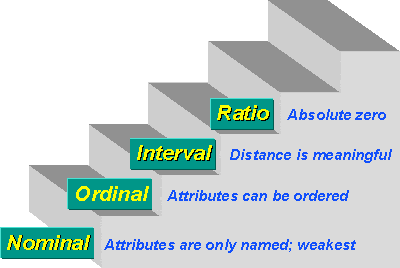
We can break down quantitative vs. qualitative data types even further by understanding their respective data levels. Let's look at qualitative data first!

Qualitative data involves qualities which can either be unordered or ordered. Nominal data is unordered qualitative data, such as the four seasons (summer, fall, winter, spring). Ordinal data is ordered qualitative data such as coffee sizes (small, medium, large). There is an ordering, but it doesn't mean much when it comes to actual measurements (think about it—how small is small?).

Select items which should be classified as nominal data.

Choose all correct answers

Video

(Video) Qualitative vs. Quantitative Data

by Mr. Lamb

Mr. Lamb has a good video explaining Qualitative vs. Quantitative data.

Summary\large{\text{Summary}}

He uses ping pong balls to describe the difference between the two types of data.

Qualitative is used to describe qualities of the ping pong ball or any other set of data. This is like saying they are white, or round, or have a star on them.

Quantitative is used to describe a quantity related to the ping pong ball or a different set of data. You can think about the number of ping pong balls, or talk about how they are 11 inch in diameter.

Read · 1 min

Quantitative vs. Qualitative Data

So, you have a set of data. Your co-worker tells you "Hey nifty data you got there, what type of data is it?" You sit there and think...what do they mean? It's data! Data is data! What they were probably asking you is if the data is quantitative or qualitative. These are both "q" words with almost the same letters, but I'm going to help you make a distinction between the two!

Quantitative Data

Quantitative data has a number associated with it. Whether it is a percentage, temperature, average, age, anything you can count, you can categorize it as quantitative data. Quantitative data is very helpful in making graphs, plots, or any other diagrams. I like to think of it as quantitative data has quantity, which easily distinguishes it from qualitative data!

Qualitative Data

Qualitative data has a quality associated with it (see how you can remember it?). Whether it is color, texture, smell, or anything that you can use one of your five senses for. Qualitative data is good for describing groups, and allowing your audience to paint a picture in their minds about what this data looks/feels/smells/tastes/sounds like. Qualitative data can also be graphed on plots, but these will be more of frequency plots to show the audience the frequency of each quality in a data set.

Illustrated · 1 min

Quantitative data is simply a measurement of something. Examples can be the length of a table or the temperature in the room.

Qualitative data is an aspect of something which cannot be measured numerically. Some examples are the color of a table or how nice a room looks.

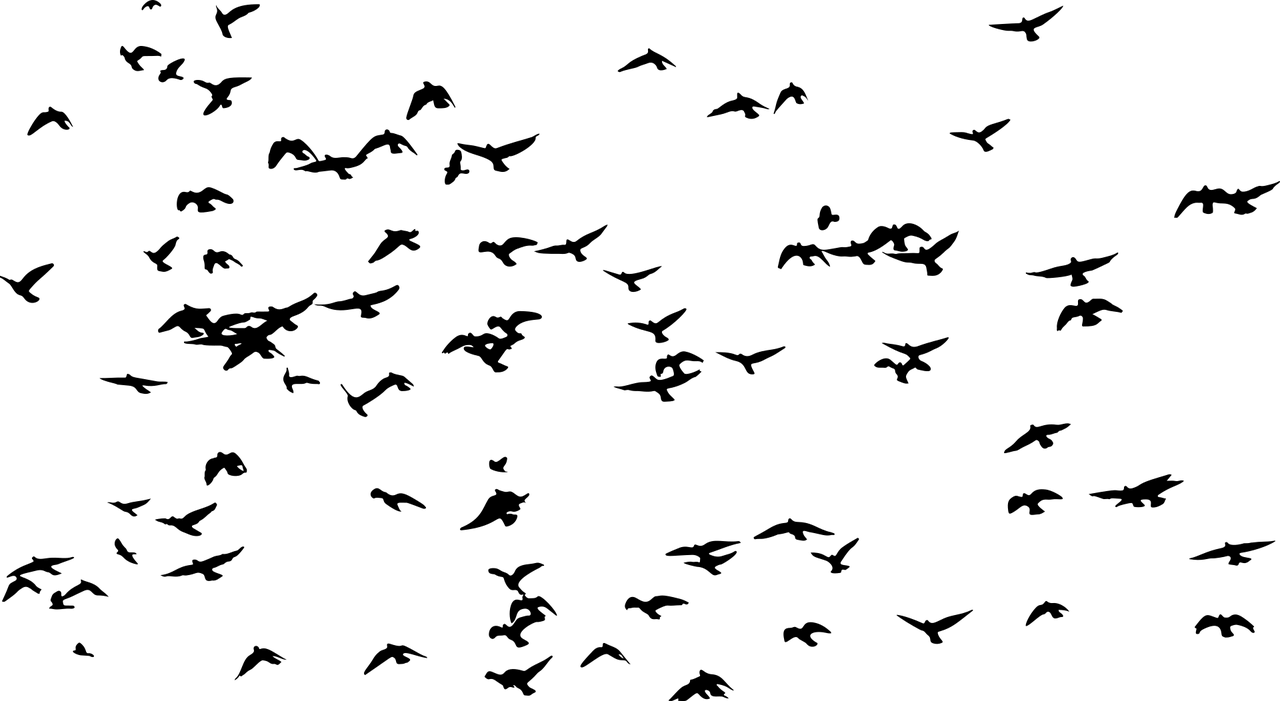
We can see this in action with the following picture

Picture of 92 birds

In the picture above, we can get some quantitative data by counting the number of birds in the picture (there are 9292). This is quantitative since we are taking a measurement for the number of birds in the picture.

On the other hand, we can get the qualitative data that all the birds are black. This is not a measurement but rather an observation about the data which can't be measured, so it is qualitative.

Type a concept, like “slope” or “photosynthesis”.

↑ ↓ to choose · Enter to openSearch explanations and problems