Rational functions are generalizations of polynomials. Specifically, they are of the form
R(x)=Q(x)P(x)=bmxm+⋯+b0anxn+⋯+a0,
for polynomials P(x) and Q(x), where Q(x) is not the zero polynomial. (Q(x)=0.)
For example, any polynomial is simply a rational function with its denominator being the polynomial Q(x)=1. Other examples include:
3x+52x2+1,x1,ex217x17+π.
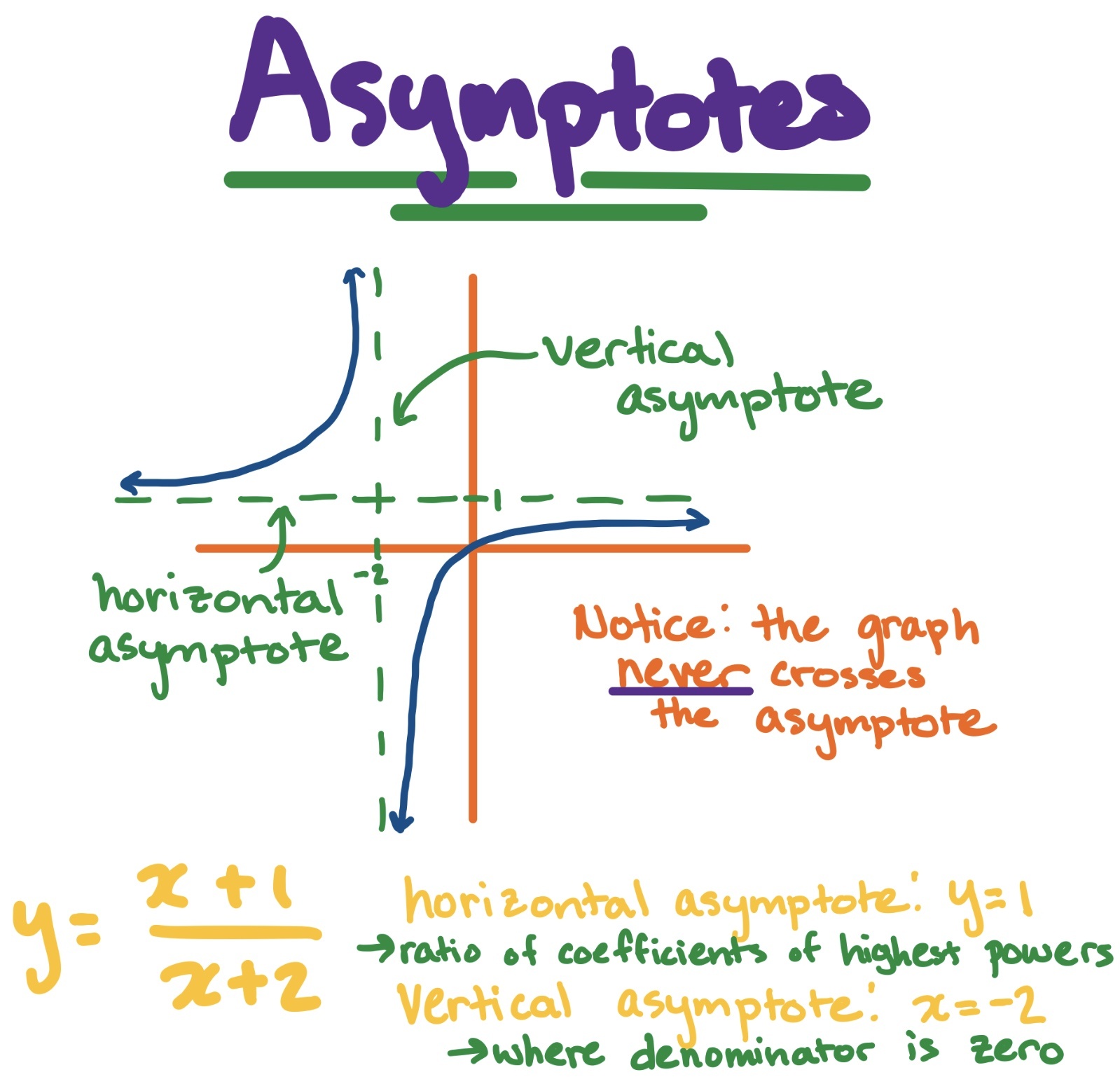
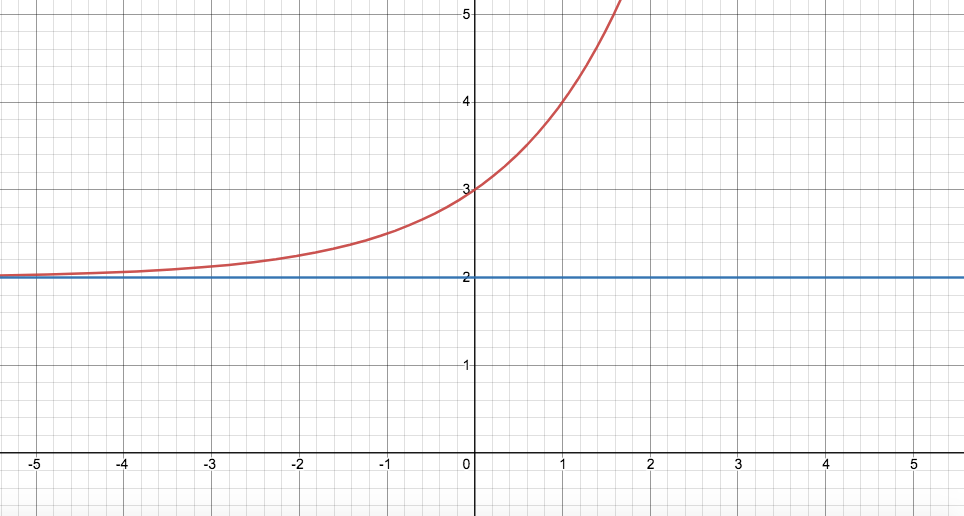
Rational functions also may have vertical and horizontal asymptotes. If r is a root of Q(x) but not of P(x), we say that R(x) has a vertical asymptote at x=r. Around this point the value of the function explodes to plus or minus infinity. If the degree of P is less than the degree of Q, then R has a horizontal asymptote of y=0. If R=c+S for some constant c, and S has the property that its numerator has a smaller degree than its denominator, S has a horizontal asymptote of y=0 and R of y=c.