Reflecting Polynomials Over the y-Axis
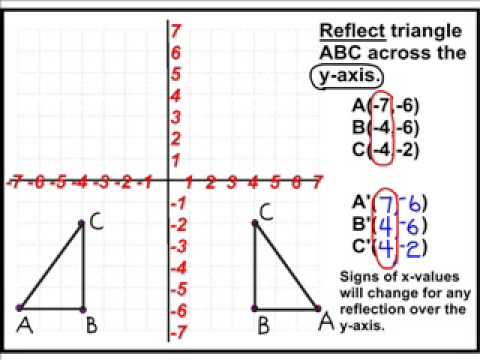
When we reflect a polynomial over the y-axis, we flip it across the vertical line where x=0. This means that every point on the graph of the polynomial moves to the opposite side of the y-axis. For example, if a point on the graph is at (2,3), after the reflection, it would move to (−2,3).
They key idea is that reflection over the y-axis changes the signs of the odd powers of x, but it keeps the signs of the even powers the same. So, in the equation y=x2+3x−4, the x2 stays positive because 2 is an even number, but the 3x changes to −3x because 1 is an odd number.
If the polynomial has only even powers of x like y=x2+4x4, reflecting it over the y-axis will not change the graph at all. This is because the even powers of x stay the same when we replace x with −x.
Reflecting polynomials over the y-axis helps us understand how the graph of a polynomial behaves when flipped. By practicing with different polynomials, you’ll become more comfortable with recognizing these changes!
In the next lesson, you will learn how to combine polynomial transformations.