Video · + 1 min read

+1 contributors

(Video) Horizontal and Vertical Shifts
by mathman1024

Here's a video by mathman1024 showing you how to quickly graph a square root function by looking at it's horizontal and vertical translations. The general form will be:
Here the is the horizontal translation because it is inside the square root part. A positive number shifts the graph to the left and a negative number shifts the graph to the right.
The is the vertical shift because it is outside the square root part. A positive number shifts the graph up and a negative number shifts the graph down.
The example he graphs is: . So first we notice the number inside the square is . Since this is the horizontal shift and it's positive we know the graph shifts to the left five units. Then the number outside the square is . This is the vertical shift and it's negative so we know the graph will shift down by four units.
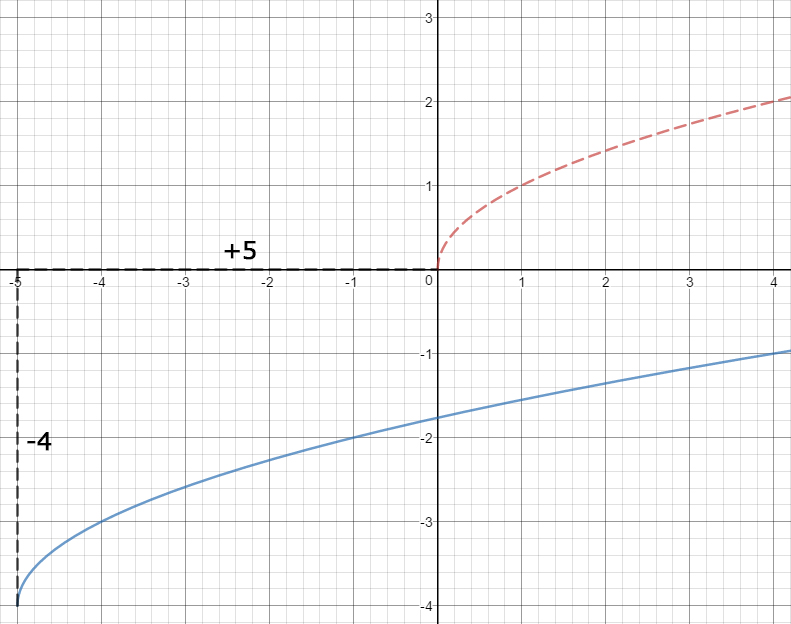
Graph made by Desmos
Test Yourself!
Graph
Here is what your graph should look like!
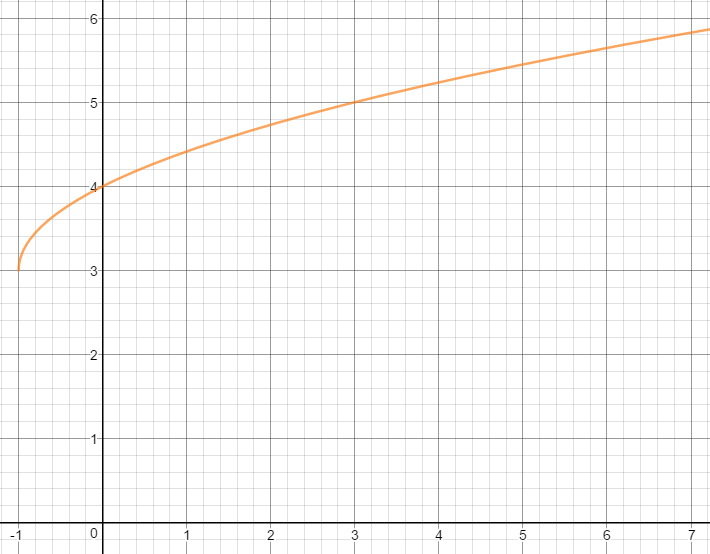
Graph made by Desmos