Illustrated · 1 min

+2 contributors


Concentration is a physical property. Image source: By FirstPrinciples CC BY 2.0, via Wikimedia Commons
Though there are 118 known elements, most of these elements are incredibly rare, and almost everything you see or interact with on a daily basis is made out of only a few elements. Oxygen is the most abundant element in both the Earth and your body. So why are you and the earth different? The answer is chemical and physical properties.
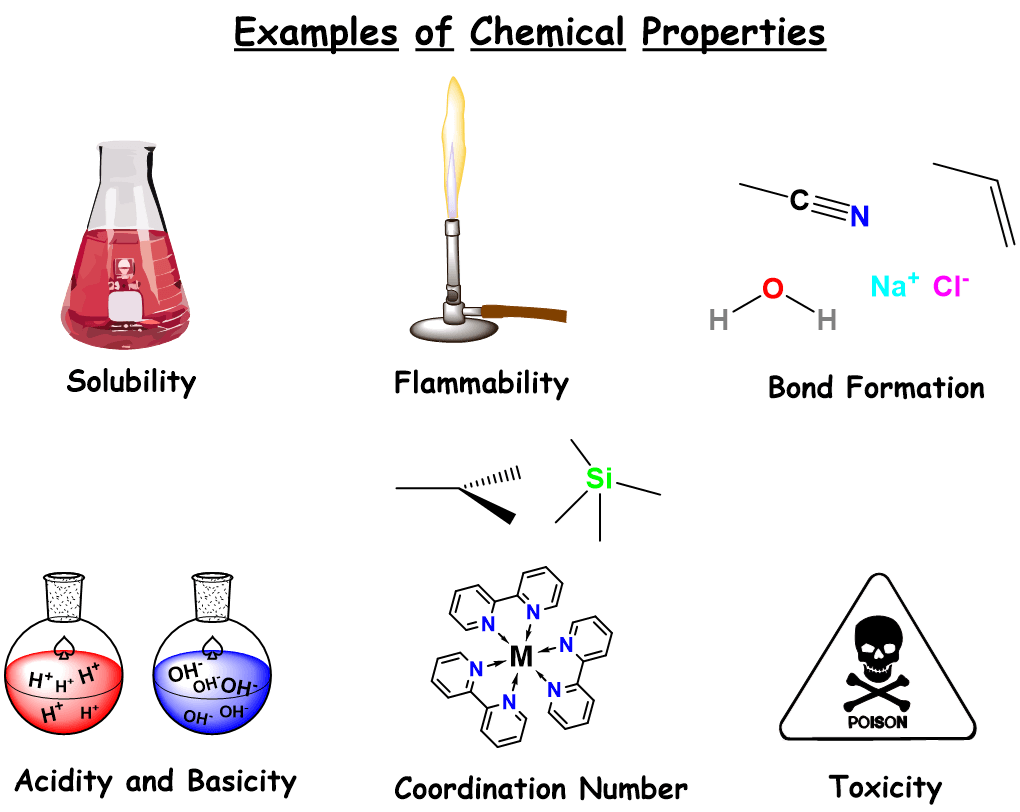
Simply put, properties are just testable descriptions of substances. Unlike the earth, you aren't large enough for your gravity to cause objects to orbit around you- that's a physical property. Also unlike the earth, the majority of your body is liquid- again, a physical property. When you're outside in the sunlight for a long time, you can get sunburnt, while the Earth has spent millennia outdoors without sunscreen. This is a chemical property. What's the difference between physical and chemical properties?
Physical properties are usually the general properties you notice most quickly about something. Size, state of matter, color, mass, density, and strength are all examples of physical properties. These values can be determined by tests that don't destroy the substance tested- noticing the color or size of an object doesn't change it in any way. The same element has different physical properties in different phases or in different compounds.

When ice melts, it is still water, it's just in a different form! This is an example of a physical property.